
Fast detection method for dihydro flavanol 4-reductase/leucocyanidin reductase in tree plant
A technology of cyanidin reductase and dihydroflavan, applied in the field of rapid detection of dihydroflavanol 4-reductase/leucocyanidin reductase in tea tree, can solve the problem of high cost, long detection time, enzyme The active method is cumbersome and other problems, and the effect of low cost, high accuracy and simple method is achieved
- Summary
- Abstract
- Description
- Claims
- Application Information
AI Technical Summary
Problems solved by technology
Method used
Image

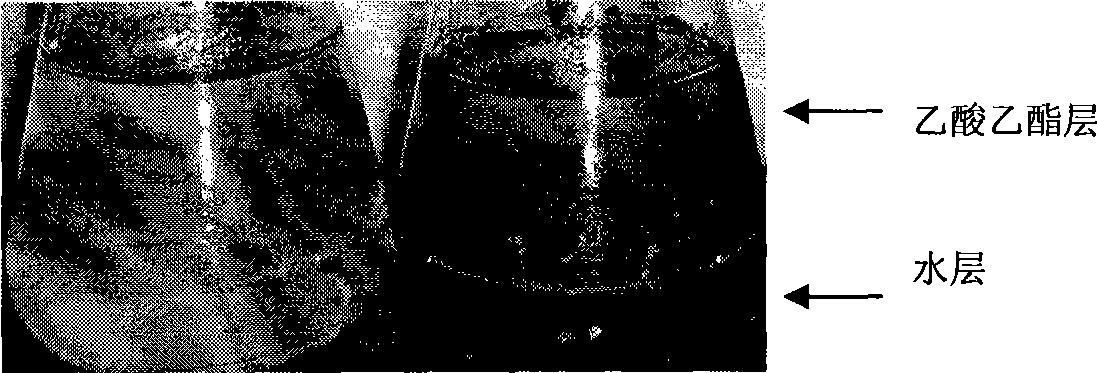
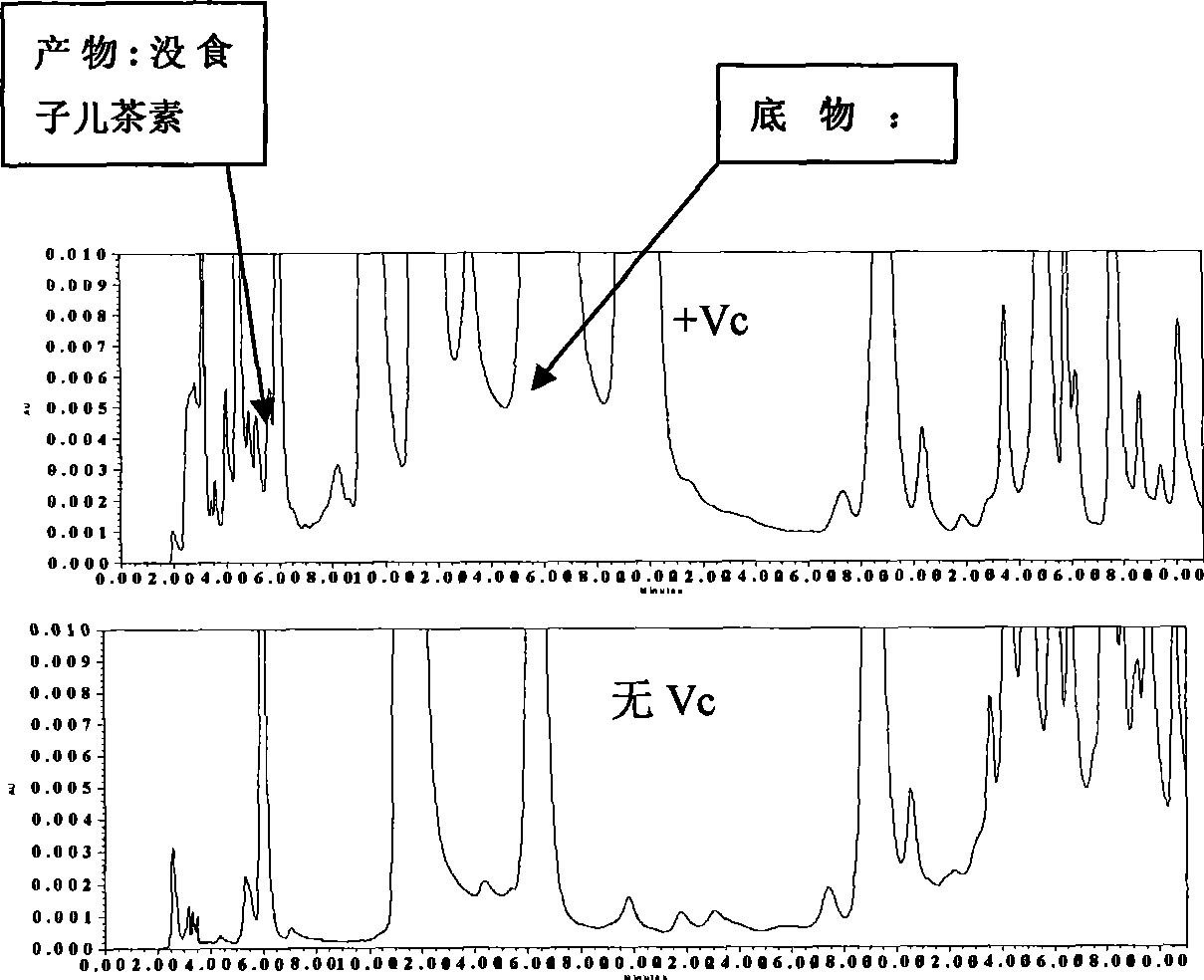
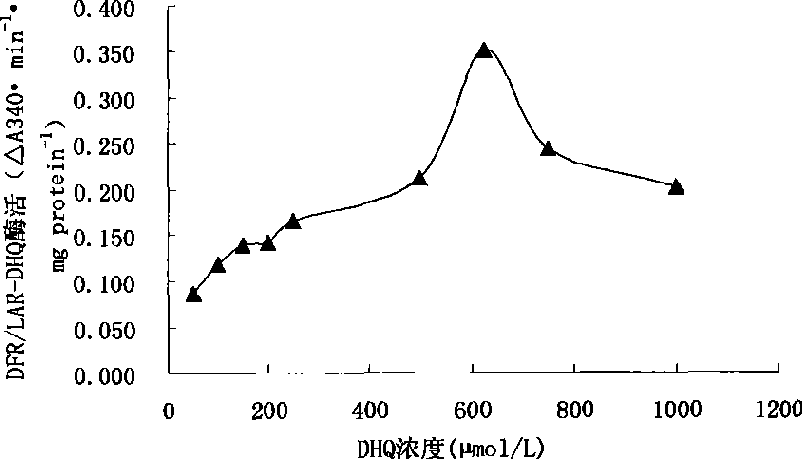
Examples
Embodiment 1
[0061] Major equipment:
[0062] 1. UV-Vis spectrophotometer; 2. Constant temperature water bath; 3. Electronic scale; 4. Centrifuge; 5. pH meter.
[0063] Materials and Reagents:
[0064] 1. Materials:
[0065] Tea tree fresh leaves, tender stems, roots and other materials. Store at -80°C for later use.
[0066] 2. Main reagents
[0067] (1) Polyvinylpyrrolidone (PVPP): It is used to adsorb and precipitate polyphenols in the crude enzyme solution to maintain a high activity of the enzyme protein.
[0068] (2) Quartz sand: increase friction and improve the extraction rate of enzyme protein.
[0069] (3) Phosphate buffer solution (PBS) of 0.1mol / LpH7.0:
[0070] Solution A: Weigh sodium dihydrogen phosphate (NaH 2 PO 4 ) 27.8 grams, dissolved in 1000 milliliters of distilled water, set aside.
[0071] Solution B: Weigh disodium hydrogen phosphate (Na 2 HPO 4· 7H 2 (0) 53.62 grams, be dissolved in the distilled water of 1000 milliliters, standby.
[0072] Just befor...
Embodiment 2
[0096] Main equipment: same as embodiment 1
[0097] Materials and Reagents:
[0098] 1. Material: Same as Example 1
[0099] 2. Main reagents
[0100] (1) 0.1mol / L Phosphate buffer solution (PBS) of pH6.5:
[0101] Solution A: Weigh sodium dihydrogen phosphate (NaH 2 PO 4 ) 27.8 grams, dissolved in 1000 milliliters of distilled water, set aside.
[0102] Solution B: Weigh disodium hydrogen phosphate (Na 2 HPO 4 .7H 2 (0) 53.62 grams, be dissolved in the distilled water of 1000 milliliters, standby.
[0103] Just before use, take 68.5 ml of solution A and 31.5 ml of solution B, mix and dilute to 200 ml with water. Then under the pH meter, use 0.1mmol / L hydrochloric acid or sodium hydroxide solution to accurately adjust the pH value of the solution to 6.5, which is 0.1mol / L pH6.5 phosphate buffer solution (PBS).
[0104] (2) 3mmol / L pyridine hydrochloride (CYA) solution: Weigh 1 mg of CYA, add 1 ml of methanol and shake until completely dissolved, and store at 4°C in ...
PUM
 Login to View More
 Abstract
Description
Claims
Application Information
 Login to View More