Capacitive type proximity sensor

一种接近传感器、传感器的技术,应用在转换传感器输出、采用电/磁装置传递传感构件、仪器等方向

一种接近传感器、传感器的技术,应用在转换传感器输出、采用电/磁装置传递传感构件、仪器等方向

CN101896794AActive Publication Date: 2010-11-24KONINK PHILIPS ELECTRONICS NV

Image

Smart Image Click on the blue labels to locate them in the text.
Viewing Examples
Smart Image
  • Capacitive type proximity sensor
  • Capacitive type proximity sensor
  • Capacitive type proximity sensor

Examples

Experimental program
Comparison scheme
Effect test

Embodiment Construction

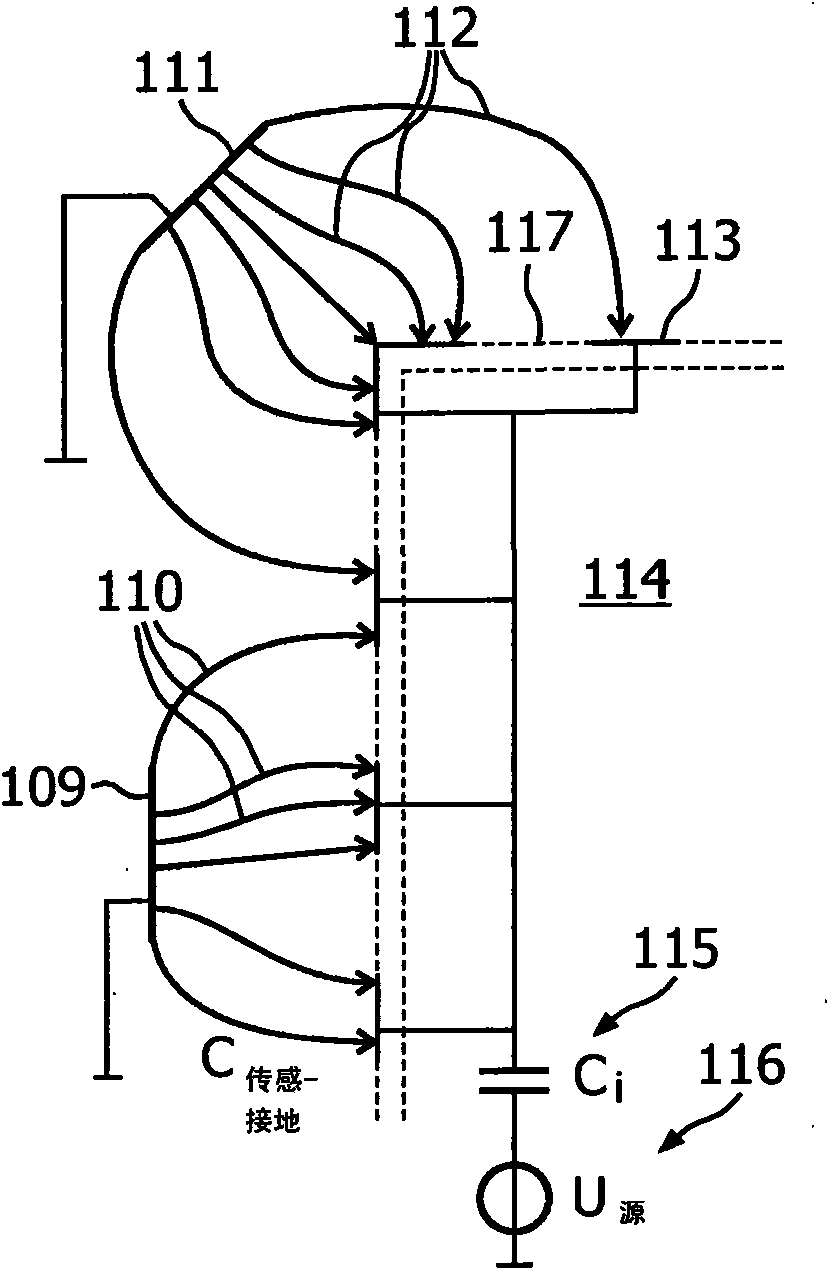
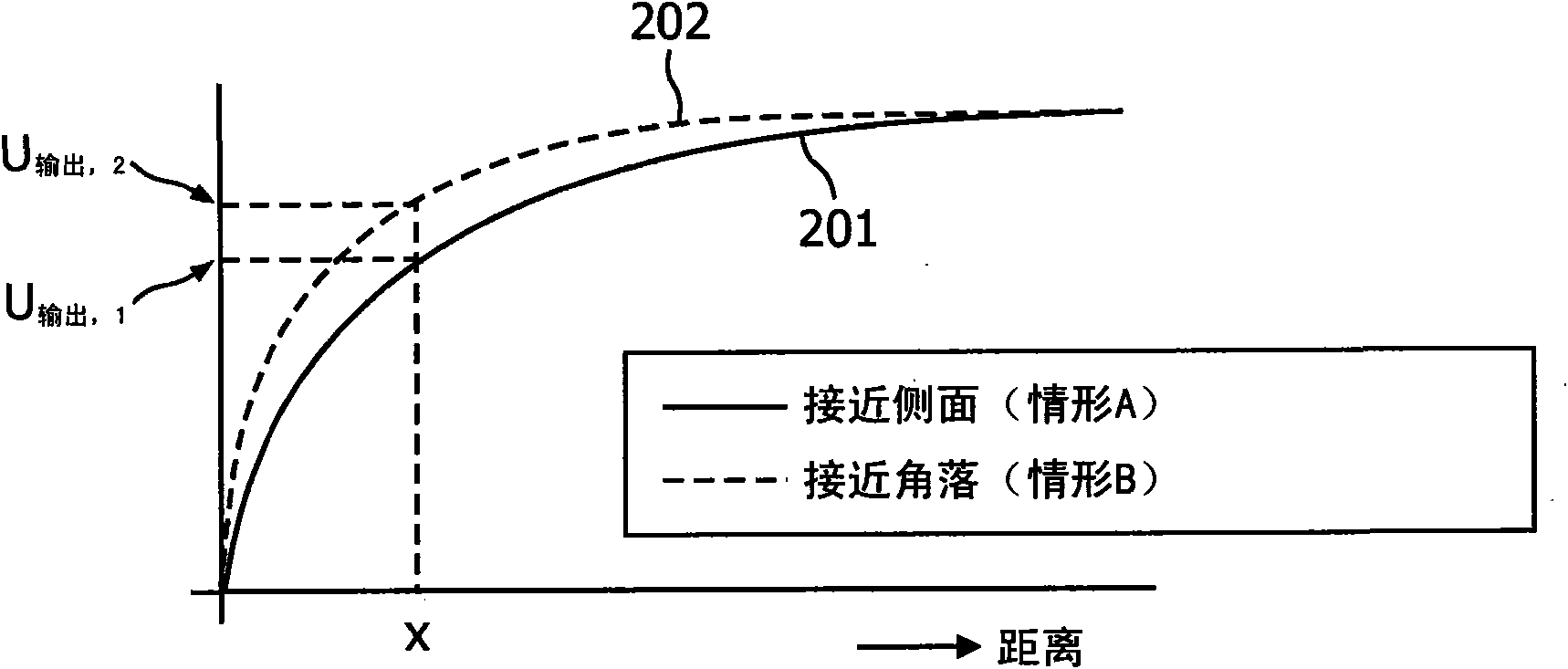
[0092] The present invention introduces another structure of the sensing electrode whose effect on the sensor characteristics is to reduce its characteristic range. The sensor characteristic range remains within a narrower band, resulting in less variation in braking distances.

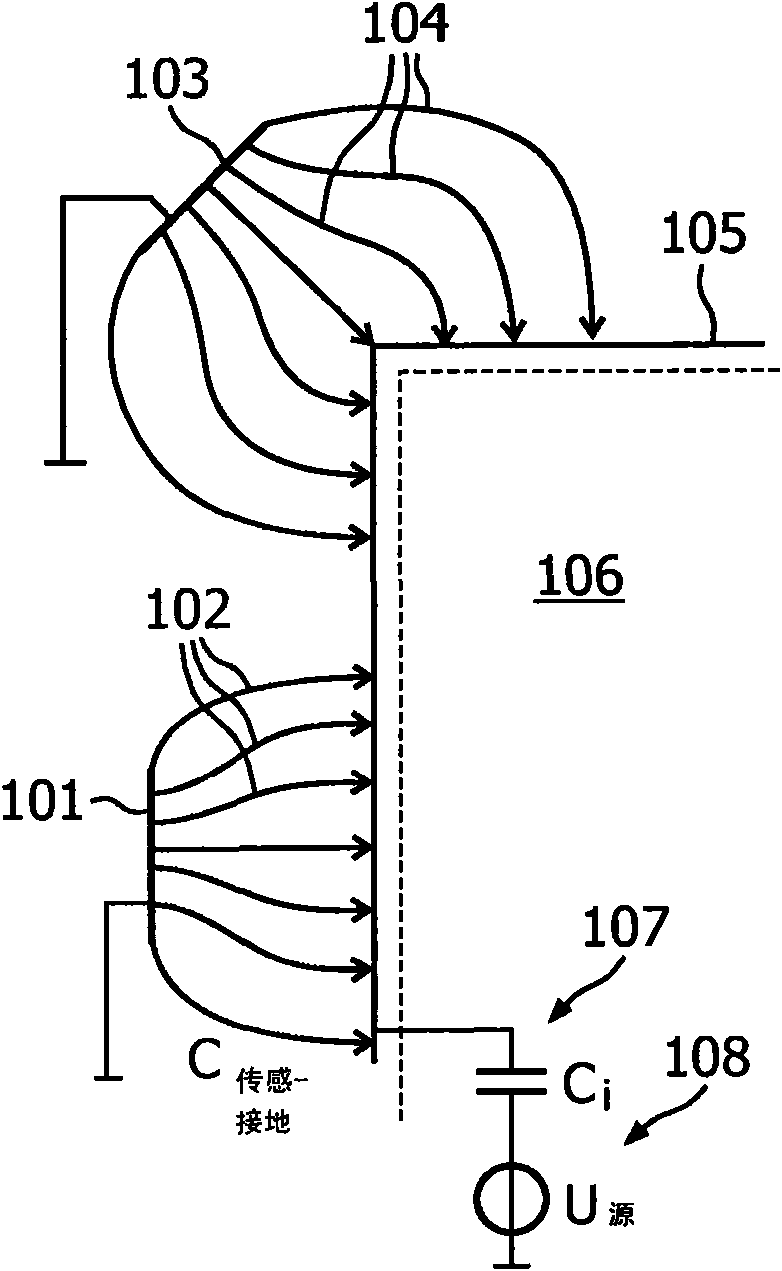
[0093] The sensor electrodes of the anti-collision sensor have a 3-dimensional structure. Sensor sensitivity at the edges and corners of the electrodes will vary significantly compared to the larger flat areas of the structure. The present invention introduces a change to this behavior by modifying the electrode structure especially at the larger flat areas of the sensor electrodes. The main problem with existing technologies is that the sensitivity of object proximity sensor structures at flat areas is significantly greater than the sensitivity of object proximity sensors at corners or edges. The present invention uses a sensor electrode structure with electrodes maintained near edges and corners, ...

the structure of the environmentally friendly knitted fabric provided by the present invention; figure 2 Flow chart of the yarn wrapping machine for environmentally friendly knitted fabrics and storage devices; image 3 Is the parameter map of the yarn covering machine
Login to View More

PUM

No PUM Login to View More

Abstract

It is provided a capacitive type proximity sensor, comprising a sensing electrode, whereas the sensing electrode has a surface with electroconductive areas 113 and not-electroconductive areas 117, whereas the sensor is adapted for measuring an electrical field 110, 112 between the sensing electrode and an object 109, 111. Further it is described an apparatus for medical x-ray diagnosis and / or x-ray therapy and / or nuclear diagnosis / therapy, e.g. SPECT, a system for medical x-ray diagnosis and / or x- ray therapy and / or nuclear diagnosis / therapy, e.g. SPECT, a method for avoiding collision between an apparatus for medical x-ray diagnosis and / or x-ray therapy and / or nuclear diagnosis / therapy, e.g. SPECT, and an object, a programme element and a computer readable medium. It is disclosed a capacitance type proximity sensor whose sensitivity of approaching objects has an improved independence from the special geometry of the sensor itself.

Description

technical field [0001] The present invention relates to capacitive proximity sensors, devices for medical x-ray diagnosis and / or x-ray therapy and / or nuclear diagnosis / therapy (eg SPECT), for medical x-ray diagnosis and / or x-ray therapy and / or A system for nuclear diagnosis / therapy (eg SPECT), a method for avoiding collisions between a device for medical x-ray diagnosis and / or x-ray therapy and / or nuclear diagnosis / therapy (eg SPECT) and an object. Background technique [0002] Capacitive proximity sensors are used centrally for distance detection purposes and are characterized by a flat, mostly circular or square sensing electrode. A linear measurement range is obtained using a guard electrode, which is typically on the order of one-third the size of the sensor. The same sensing technology is used on Philips Medical devices for collision avoidance purposes, featuring a larger measurement range than the sensor size. [0003] To detect the approach of an object, this techno...

Claims

the structure of the environmentally friendly knitted fabric provided by the present invention; figure 2 Flow chart of the yarn wrapping machine for environmentally friendly knitted fabrics and storage devices; image 3 Is the parameter map of the yarn covering machine
Login to View More

Application Information

Patent Timeline
24 Nov 2010
Publication
CN101896794A
IPC
G01D5/241; H03K17/955
CPC
G01D5/24; A61B6/102; A61B6/4441; G01D5/2417
Inventors
A·H·M·布洛姆; C·海因克斯