

Series-excited motor
A series excitation motor and rear end cover technology, applied in the mechanical field, can solve problems such as detachment, copper insert detachment, carbon brush not working properly, etc., to prolong service life, not easy to move axially, easy to process, install and disassemble Effect
- Summary
- Abstract
- Description
- Claims
- Application Information
AI Technical Summary
Problems solved by technology
Method used
Image

Examples
Embodiment Construction
[0026] The following are specific embodiments of the present invention and in conjunction with the accompanying drawings, the technical solutions of the present invention are further described, but the present invention is not limited to these embodiments.
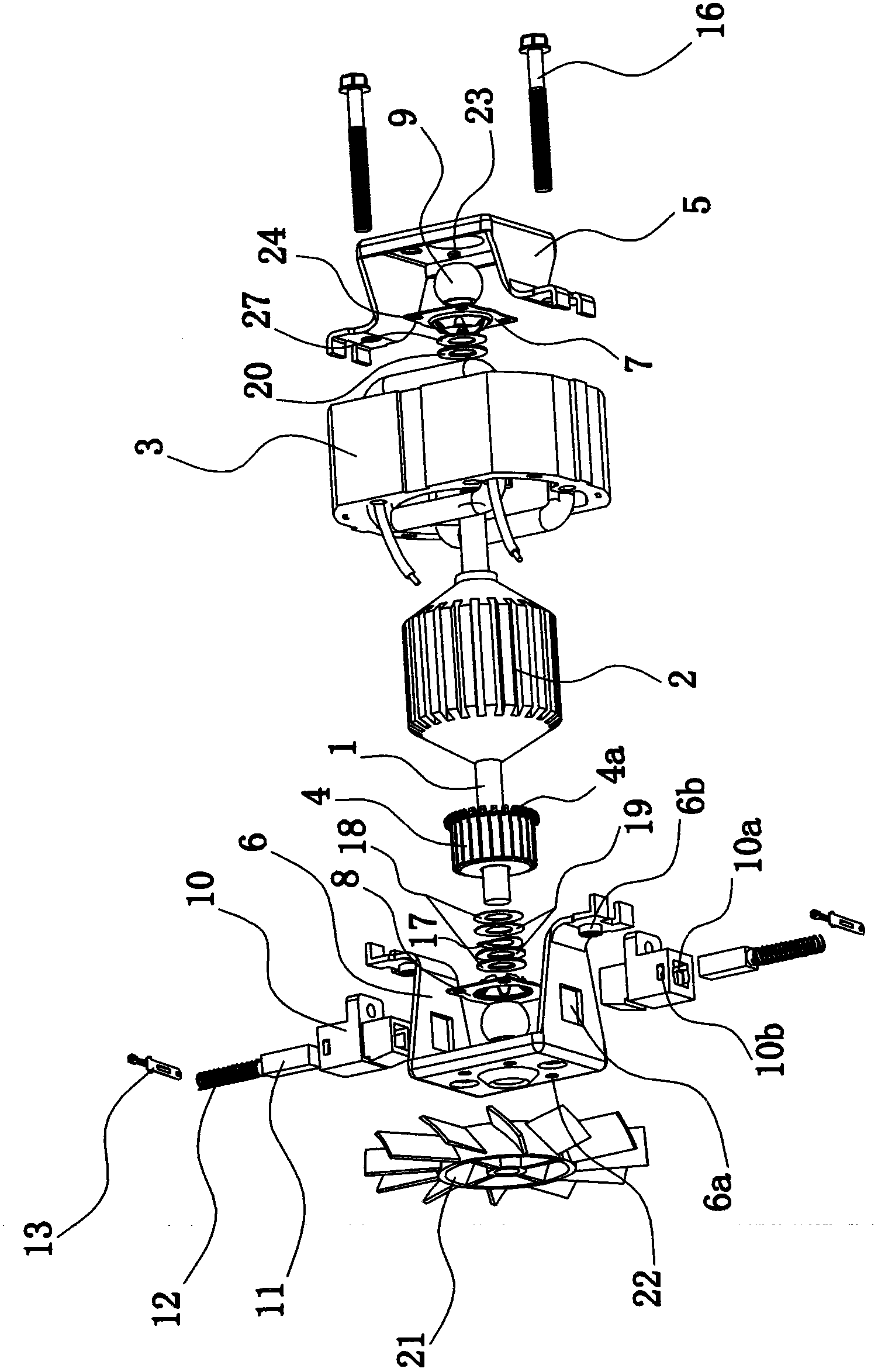
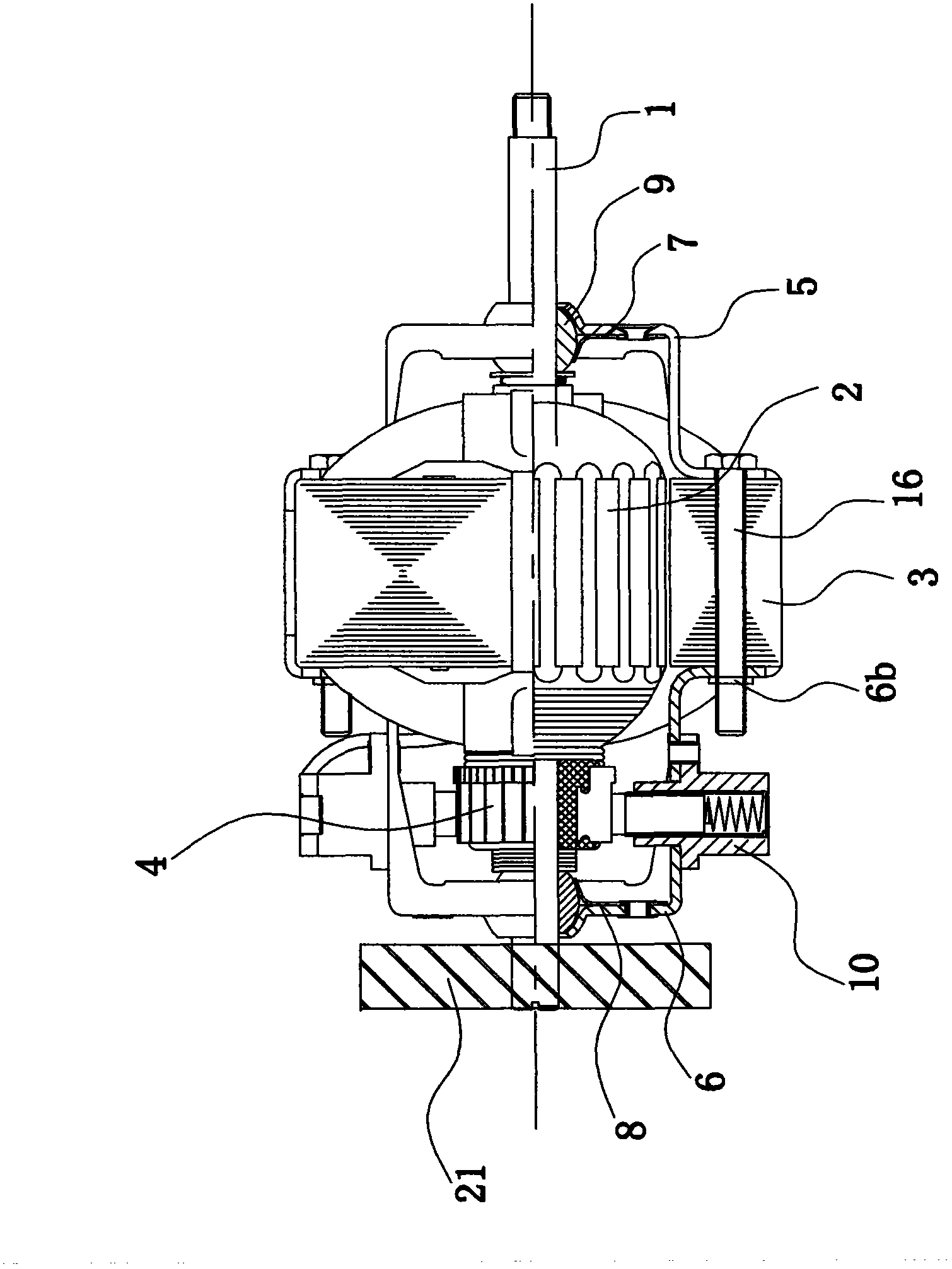
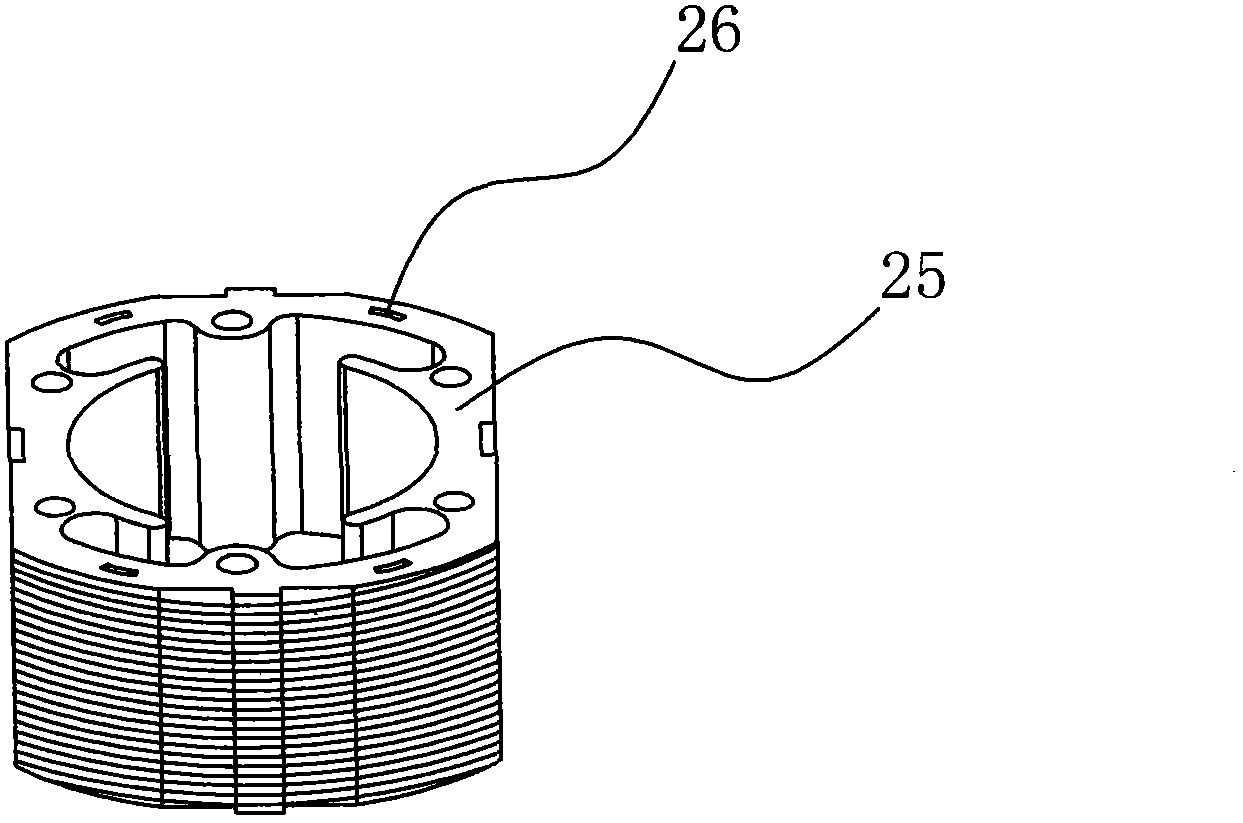
[0027] Such as figure 1 and 2 As shown, the series-excited motor includes a rotating shaft 1, carbon brushes, a rotor 2, a stator 3, a commutator 4, and front and rear end covers 5, 6, and the rotor 2, stator 3 and commutator are sleeved on the rotating shaft 1. 4 is located between the front and rear end covers 5, 6 and the rotor 2 is located in the stator 3, the commutator 4 is located between the rotor 2 and the rear end cover 6, the front and rear end covers 5, 6 are fixedly connected to the stator 3, The inboards of front and rear end covers 5 and 6 are fixedly connected with front and rear bearing sleeves 7 and 8 respectively, and bearings 9 are respectively installed between front and rear bearing sleeves 7 and 8 a...
PUM
 Login to View More
 Abstract
Description
Claims
Application Information
 Login to View More