[0010] (1)
Rework, that is, reinstall the components with large deviations after rectification on the spot, such as re-drilling holes near the original holes, which obviously destroys the stress of the components again, and the fastness and stability of the newly opened holes is also uncertain;
[0011] (2) Replacement, that is, replacing components that cannot be installed with new components, which undoubtedly causes waste and increases installation costs;
[0012] (3) Forced installation, that is, workers forcibly pry open the pendant or connector for installation on site, resulting in deformation of the component, unstable state, and more difficult three-dimensional adjustment of the wall tiles
During the adjustment process, the adjusting screw bearing the
heavy load must also reciprocate in the aluminum
alloy thread of the connecting piece. There is no doubt that the strength and
hardness of the screw is greater than that of the aluminum
alloy profile, so the adjusting screw rotates in the connecting piece thread. In the process, the aluminum
alloy thread must be the first to be worn or damaged, so that the bearing point of the wall brick will inevitably become loose and unstable, which will bring safety hazards to the entire structure;
[0016] 3. In more cases, due to the above-mentioned errors or other factors, a stuck state is formed between the pendant and the connecting piece after installation, that is, the relative longitudinal displacement of the two cannot occur
In this way, the adjustment of the wall tiles cannot be carried out, and the source of the adjustment space and adjustment resistance cannot be observed or judged at all, and the specific bearing point of the weight of the wall tiles is also unknown.
[0017] When the above situation occurs, the pendant should be removed, replaced and reinstalled, but if the installation is continued without rectification, the wall tiles will not be able to achieve the effective shelving required by the design. Once affected by external forces such as vibrations and collisions, it will become more unstable. 1. The damage to the wall tiles caused by unstable factors will eventually cause the wall tiles to break or even fall, posing a major safety
hazard;
[0018] 4. If some wall tiles need to be replaced after installation, it will not be able to be properly installed with the same structural method, which will bring great trouble to future use and maintenance;
[0019] 5. Two sets of aluminum alloy parts are used for installation, the amount of aluminum is relatively large, and wall bricks and components are reworked and scrapped from time to time, which not only increases the installation cost, but also does not conform to the strategy of developing a resource-saving national economy
On the contrary, after being fastened, the pendant, the supporting plate and the connecting piece become a component with certain elasticity, so there will be a certain deformation after being stressed, so that the pendant will generate an outward prying force at the part connected to the wall brick, while the wall brick and the pendant They are all rigid materials, and the
adhesive is also brittle after curing, and does not have
cushioning properties, so the prying force generated by this deformation can easily cause the special glue to detach and be brittle;
[0038] 2. If some wall tiles need to be replaced after installation, it will not be able to be properly installed with the same structure, which will bring great trouble to future use and maintenance;
In short, the current installation method and load-bearing structure of dry-hanging wall tiles have certain defects, and there are no targeted solutions and technical solutions. Therefore, related safety hazards always exist, and it has become a major problem that has always plagued relevant technical personnel.
[0041] However, with the progress of the times, professional technologies in all walks of life are constantly being updated, and people's market demand for dry-hanging wall tiles is also increasing, but it is the core technology that can effectively improve the safety and convenience of dry-hanging wall tile installation. Still unresolved, all kinds of safety accidents related to dry hanging of wall tiles still occur from time to time
For such problems that affect industrial upgrading and
restrict energy saving,
environmental protection, and efficient modernization, there is no reasonable solution at present, and the present invention fills the gap in this field


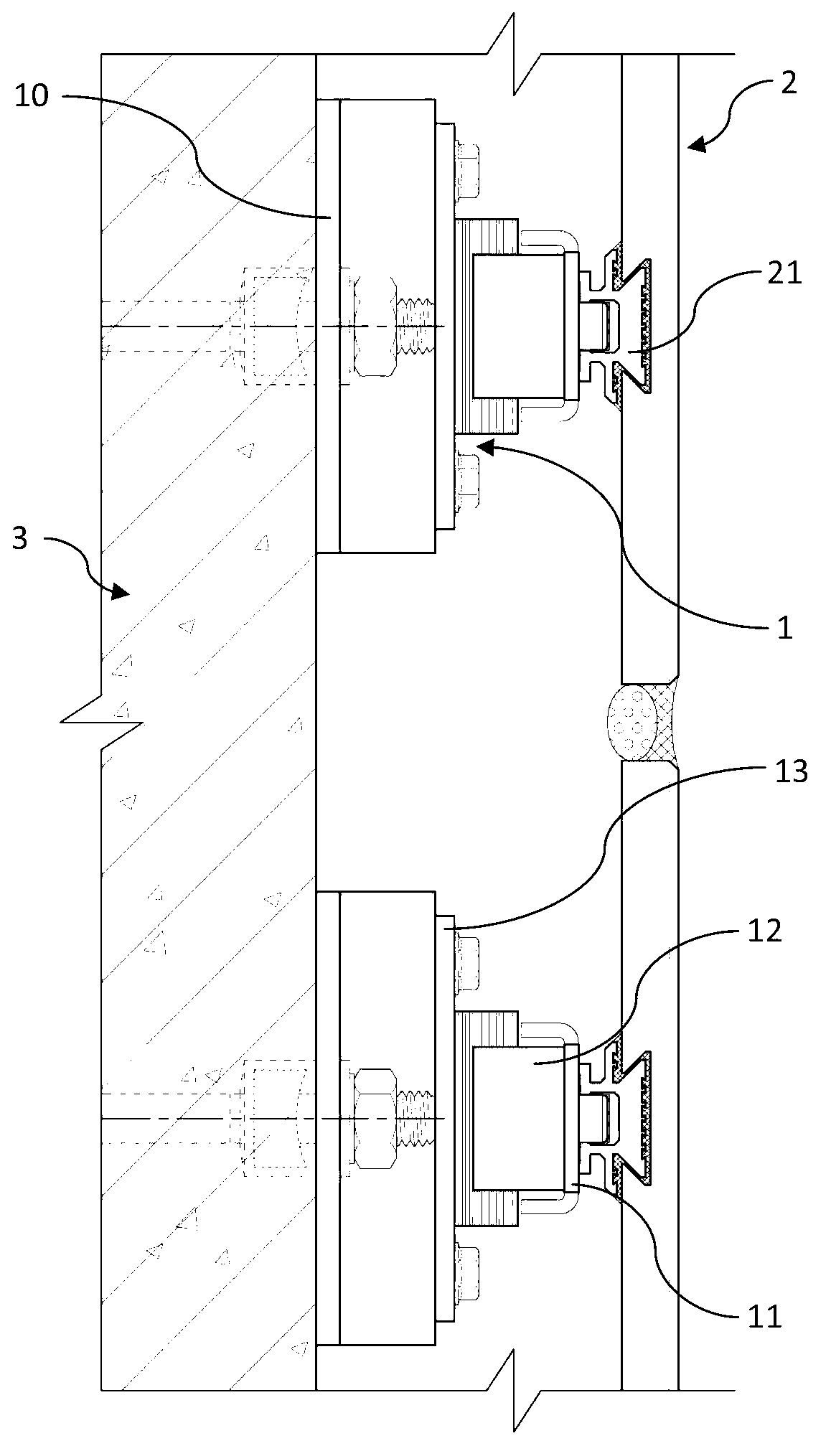
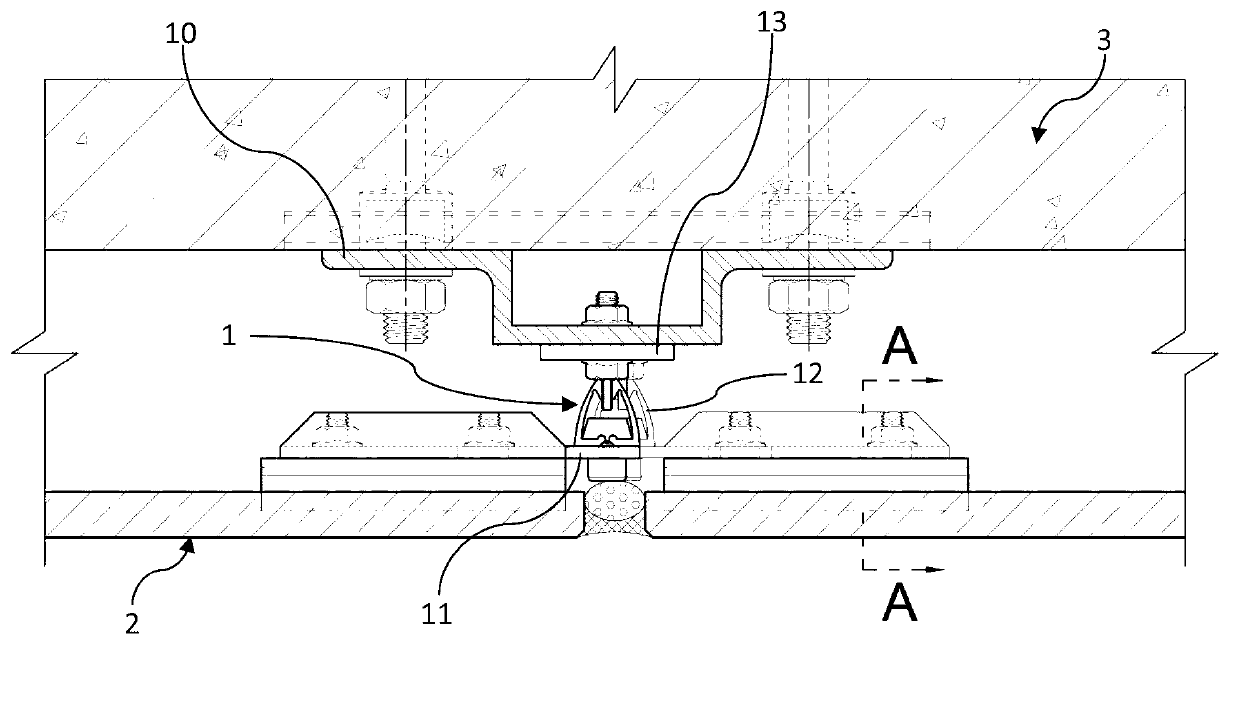
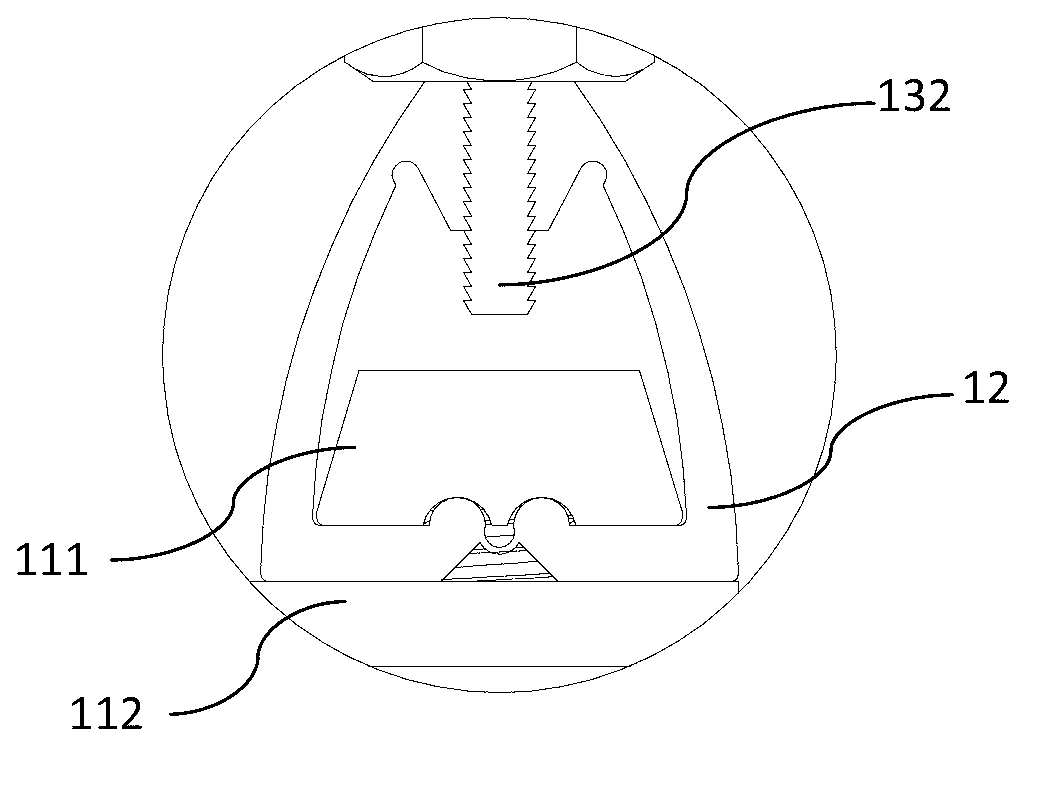
 Login to View More
  Login to View More