

Method for judging and selecting dim light tolerance
A low-light, crop-resistant technology, applied in the fields of botanical equipment and methods, horticultural methods, plant cultivation, etc., to shorten the selection cycle, enhance convenience and operability, and speed up the selection progress.
- Summary
- Abstract
- Description
- Claims
- Application Information
AI Technical Summary
Problems solved by technology
Method used
Image

Examples
Embodiment 1
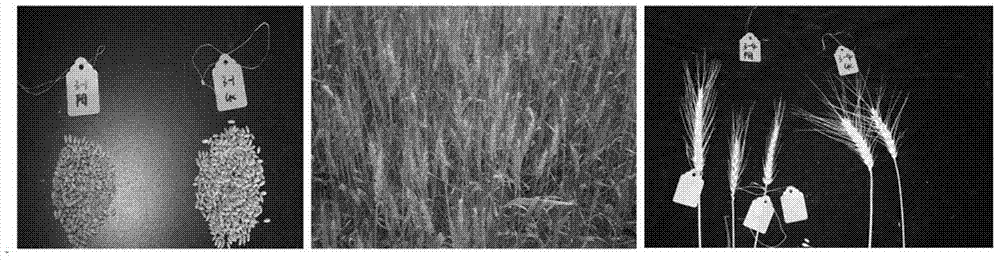
[0048] The winter wheat varieties tested were Shijiazhuang 8, Shi 4185, Luohan 2, Shixin 828, Jimai 32, Ningmai 16, Shixin 733, Xifeng 20, and Henong 825. Sowed on October 14, 2011, the sowing density was 200,000 / mu; according to urea 450kg / hm 2 , diammonium hydrogen phosphate 225kg / hm 2 Apply basal fertilizer; mark the AD value at the flag-raising stage after sowing, and perform low-light treatment when the AD value is -2-2cm; the low-light is 10% of the normal light. figure 1 It is a photo related to the low light stress treatment of this embodiment.
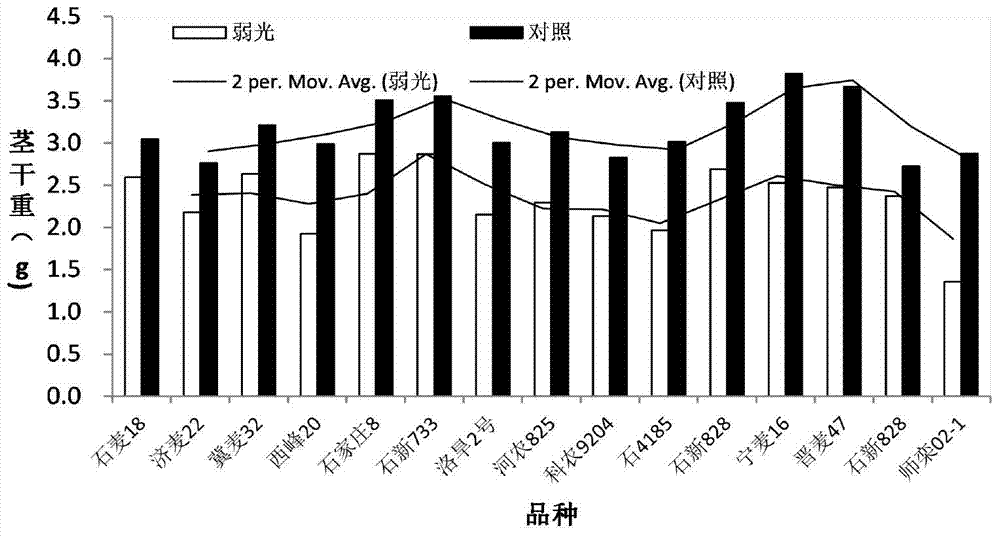
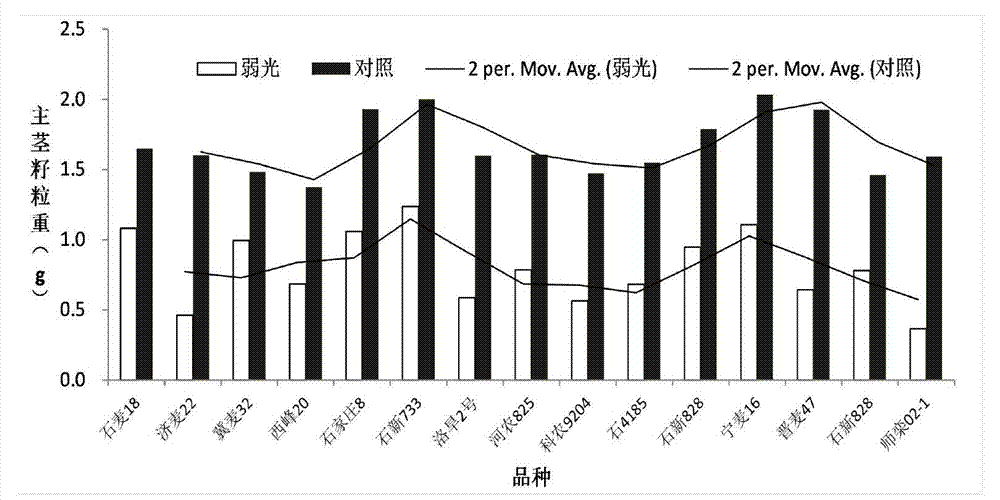
[0049] Analysis 1. The effect of low light stress treatment on the yield and biomass of different wheat varieties during the microspore development stage.
[0050] When the crops are mature, the main stems with the AD value marked between -2cm and 2cm in the early reproductive growth period are harvested from the base of the stems together with the spikes, and the dry weight of the main stems, grain weight, non-grain stem dr...
PUM
 Login to View More
 Abstract
Description
Claims
Application Information
 Login to View More