Check patentability & draft patents in minutes with Patsnap Eureka AI!

Treatment method for naphthalene-derivative-containing wastewater

A treatment method and derivative technology, which can be used in water/sewage multi-stage treatment, oxidized water/sewage treatment, water/sludge/sewage treatment, etc. The effect of reducing COD value and being easy to promote and apply

Inactive Publication Date: 2015-12-23
ZHEJIANG QICAI ECO TECH CO LTD
View PDF2 Cites 0 Cited by
  • Summary
  • Abstract
  • Description
  • Claims
  • Application Information

AI Technical Summary

Problems solved by technology

[0007] (4) High toxicity. H acid belongs to polycyclic aromatic hydrocarbons and has strong biological toxicity. If the waste water is discharged directly without treatment, it will seriously pollute the environment and cause great harm to the human body;
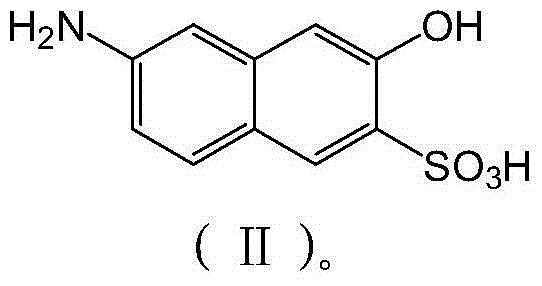
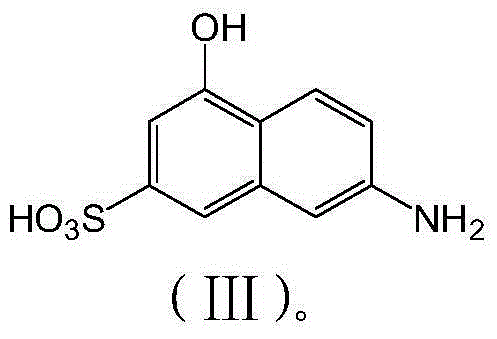
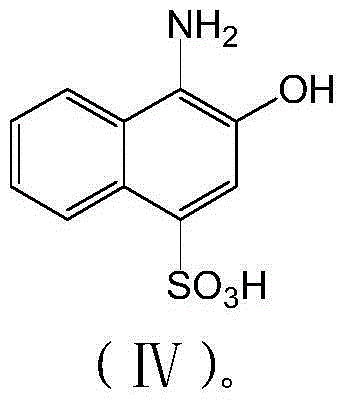
[0015] The above-mentioned wastewaters all contain naphthalene derivatives, which belong to organic wastewater with high concentration of organic matter, high toxicity, high acidification, and high salt content. The wastewater treatment methods in the prior art have unsatisfactory treatment effects

Method used

the structure of the environmentally friendly knitted fabric provided by the present invention; figure 2 Flow chart of the yarn wrapping machine for environmentally friendly knitted fabrics and storage devices; image 3 Is the parameter map of the yarn covering machine
View more

Image

Smart Image Click on the blue labels to locate them in the text.
Viewing Examples
Smart Image
  • Treatment method for naphthalene-derivative-containing wastewater
  • Treatment method for naphthalene-derivative-containing wastewater
  • Treatment method for naphthalene-derivative-containing wastewater

Examples

Experimental program
Comparison scheme
Effect test

Embodiment 1

[0047] H acid isolation mother liquor wastewater (hereinafter referred to as H acid wastewater), black, COD=26030mg / L, pH=2.

[0048] (1) Wet oxidation: adjust the H acid waste water to pH=7, put it into a wet oxidation kettle after filtration, raise the temperature to 250°C and pressure 6MPa, pass air into it for oxidation for 2 hours, then cool down, and the air flow rate is 40L / h.

[0049] It was measured that the kettle wastewater was orange-yellow, pH=4.5, COD=1883mg / L, NH 3 - N = 164.2 mg / L.

[0050] (2) Adsorption: adjust the waste water from step (1) to neutrality (pH=7), add activated carbon with a mass fraction of 0.1% (based on the quality of the waste water after pH adjustment), stir and adsorb for 0.5h and then filter , the obtained filtrate is almost colorless and transparent, COD=150mg / L, salt content 4%.

[0051](3) Concentrated crystallization: the filtrate is treated by electrodialysis (tap water is used as the water in the concentrated chamber) to obtain c...

Embodiment 2

[0055] H acid wastewater, black, COD=26030mg / L, pH=2.

[0056] (1) Wet oxidation: adjust the pH of the H-acid wastewater to 8, filter it and pour it into a wet oxidation kettle, raise the temperature to 220°C and the pressure 3MPa, pass oxygen into it for 1 hour and then cool down.

[0057] It was measured that the kettle wastewater was orange-yellow, pH=4, COD=2483mg / L, NH 3 -N=145.0 mg / L.

[0058] (2) Adsorption: adding massfraction in the waste water out of the still of step (1) is 0.1% diatomite (taking the quality of the waste water out of the still as a benchmark) to absorb for 45min, filter to obtain a light yellow treatment solution, then adjust the pH to 6.0, the color turns yellow, then add mass fraction of 0.1% activated carbon (based on the quality of the waste water from the kettle) to absorb for 30min, filter to obtain a slightly yellow treatment solution (solid rate is 3.60%), and its COD=845mg / L , NH 3 - N = 80 mg / L.

[0059] (3) Concentrated crystallizatio...

Embodiment 3

[0061] H acid wastewater, black, COD=26030mg / L, pH=2.

[0062] (1) Wet oxidation: adjust the pH of the H-acid wastewater to 8, filter it and pour it into a wet oxidation kettle, raise the temperature to 220°C and the pressure to 3MPa, and let it oxidize with air for 2 hours before cooling down.

[0063] It was measured that the kettle wastewater was orange-yellow, pH=4, COD=4983mg / L, NH 3 - N = 200 mg / L.

[0064] (2) Adsorption: adding mass fraction in the waste water out of the kettle in step (1) is 0.2% diatomite (taking the quality of the waste water out of the kettle as a benchmark) to absorb for 45min, suction filtration to obtain a light yellow treatment solution, and then adjust the pH To 7.0, the color turns yellow, and the mass fraction is 0.1% activated carbon (based on the quality of the waste water from the kettle) to absorb for 30min, and suction filtration obtains a slightly yellow treatment solution (solid rate is 3.60%), and its COD=1845mg / L.

[0065] (3) C...

the structure of the environmentally friendly knitted fabric provided by the present invention; figure 2 Flow chart of the yarn wrapping machine for environmentally friendly knitted fabrics and storage devices; image 3 Is the parameter map of the yarn covering machine
Login to View More

PUM

No PUM Login to View More

Abstract

The invention discloses a treatment method for naphthalene-derivative-containing wastewater. The treatment method includes the following steps that 1, under the conditions of the pressure of 0.1 MPa to 8 MPa and the temperature of 100 DEG C to 280 DEG C, wet oxidation is carried out on the naphthalene-derivative-containing wastewater, and treated fluid is obtained; 2, aftertreatment is carried out on the treated fluid, and outlet water is obtained. The treatment method further includes the step of treating the outlet water obtained through aftertreatment in any one of the following modes: the outlet water obtained through aftertreatment is concentrated, and inorganic salt and concentrated liquid are obtained; electrodialysis is carried out on the outlet water obtained through aftertreatment, strong brine and fresh water are obtained, the strong brine is directly applied or concentrated to be subjected to salt recycling and then used, and the fresh water is biochemically treated or reclaimed water is reused; the outlet water obtained through aftertreatment flows through a bipolar membrane, a corresponding acid solution and a corresponding alkali solution are obtained, then reusing is carried out, and the outlet water obtained after acid and alkali recycling is biochemically treated or reclaimed water is reused. By means of the treatment method for the naphthalene-derivative-containing wastewater, components in the wastewater can be recycled, and meanwhile the COD value of the wastewater can be efficiently reduced.

Description

technical field [0001] The invention relates to the technical field of wastewater treatment, in particular to a method for treating wastewater containing naphthalene derivatives. Background technique [0002] Naphthalene is an important chemical raw material. Many organic products are synthesized from naphthalene through a series of reactions, and a large amount of wastewater containing naphthalene derivatives is produced during the synthesis process. [0003] For example: H-acid wastewater is produced by the H-acid separation process, which is a typical organic wastewater with high concentration, high chroma and high biological toxicity. The main organic pollutants in H-acid separation mother liquor wastewater are naphthalene and naphthalene derivatives, and the main inorganic substance is sodium sulfate. Compared with other wastewater containing naphthalene-based organic substances, it has its particularity: [0004] (1) The composition of the pollutants is complex and th...

Claims

the structure of the environmentally friendly knitted fabric provided by the present invention; figure 2 Flow chart of the yarn wrapping machine for environmentally friendly knitted fabrics and storage devices; image 3 Is the parameter map of the yarn covering machine
Login to View More

Application Information

Patent Timeline
no application Login to View More
Patent Type & Authority Applications(China)
IPC IPC(8): C02F9/06C02F9/04C02F9/14C02F1/78C02F101/32
Inventor 赵瑞强尚官郧李小伟张静
Owner ZHEJIANG QICAI ECO TECH CO LTD
Features
  • R&D
  • Intellectual Property
  • Life Sciences
  • Materials
  • Tech Scout
Why Patsnap Eureka
  • Unparalleled Data Quality
  • Higher Quality Content
  • 60% Fewer Hallucinations
Social media
Patsnap Eureka Blog
Learn More