
Line source time domain electromagnetic response numerical calculation method based on meshless method
A technology of time-domain electromagnetic and gridless method, which is applied in calculation, complex mathematical operation, electrical digital data processing, etc., to achieve the effect of good smoothness and high simulation accuracy
- Summary
- Abstract
- Description
- Claims
- Application Information
AI Technical Summary
Problems solved by technology
Method used
Image

Examples
Embodiment
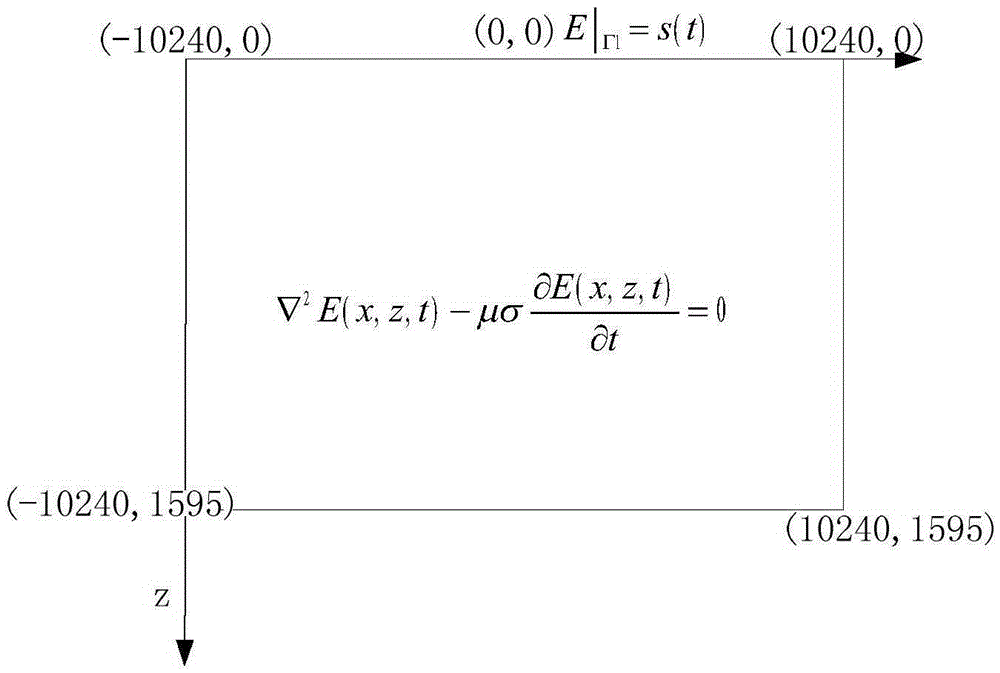
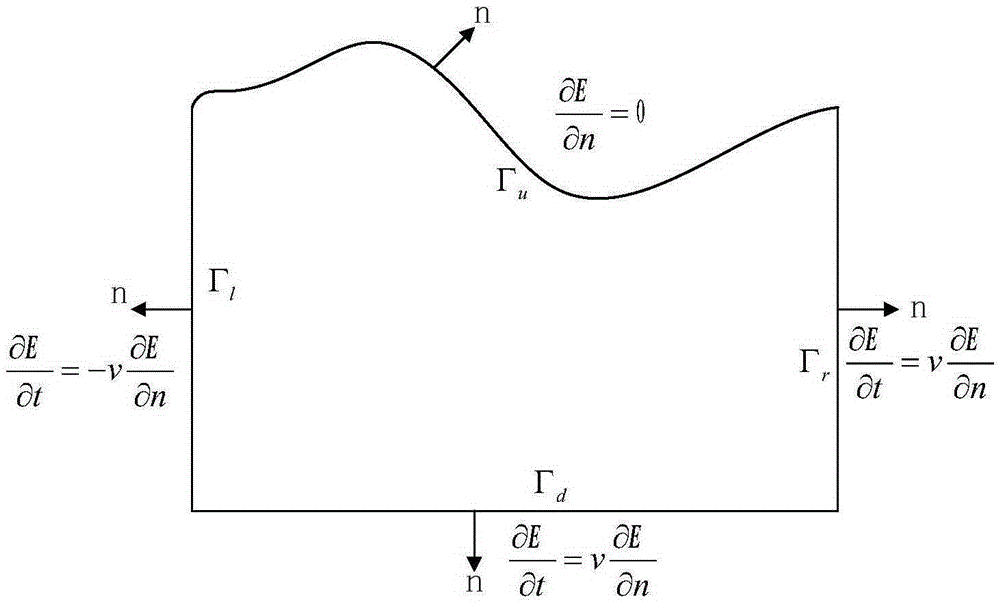
[0034] see Figure 5 combine figure 1 As shown, a numerical calculation method of time-domain electromagnetic response of line source based on mesh-free method, including:
[0035] 1) Set model parameters, including node settings, electrical parameter settings, background grid settings, and initial field value settings;
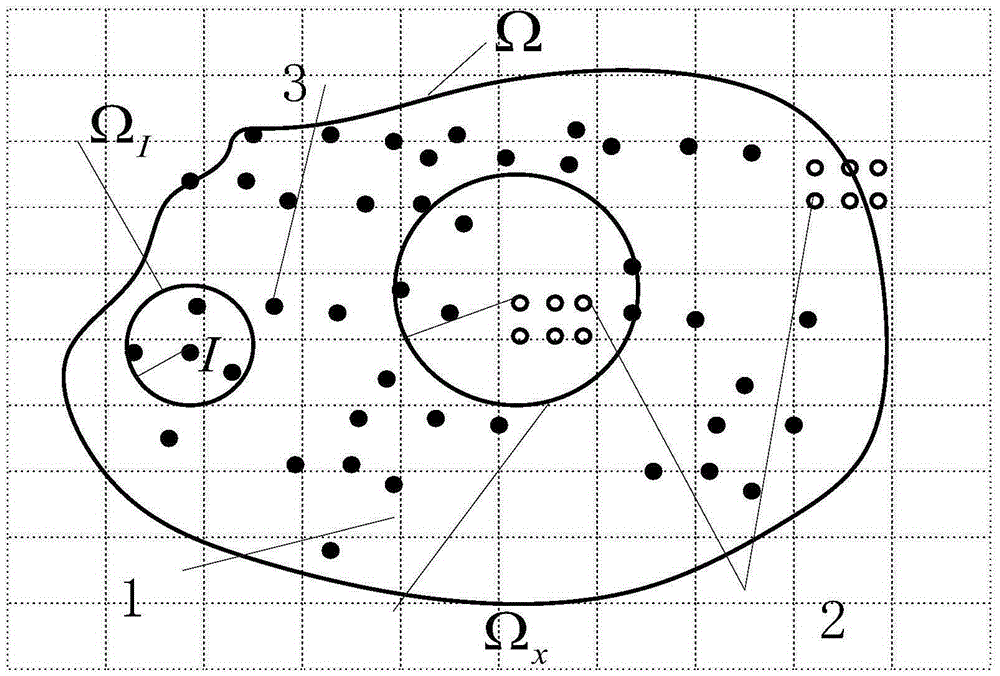
[0036] Such as figure 1 Meshless Gaussian points, field nodes, domain of influence Ω shown I , the local domain Ω x A schematic diagram of the background unit, including the solution domain Ω in the background integral network 1, including nodes 3 represented by black dots, and Gaussian integration points or calculation points 2 represented by hollow circles, within the solution domain Ω of a background integral network 1, Influence domain Ω I Refers to the influence area of a node, the influence domain Ω I The center of is the field node, and the local domain Ω x Then it is the area selected for the least square fitting of the calculation point, and...
PUM
 Login to View More
 Abstract
Description
Claims
Application Information
 Login to View More