Method for evaluating occluded hydrocarbon content of shale with chloroform bitumen A

A technology of chloroform bitumen and retained hydrocarbons, applied in the field of oilfield exploration

CN106153490AActive Publication Date: 2016-11-23CHINA PETROLEUM & CHEM CORP +1
3 Cites 5 Cited by

Patent Information

Authority / Receiving Office
CN · China
Current Assignee / Owner
Publication Date
2016-11-23

Smart Images

  • Figure 1
    Figure 1
Patent Text Reader

Abstract

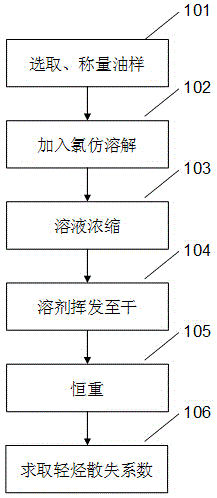
The invention provides a method for evaluating the content of retained hydrocarbons in shale by using chloroform bitumen A. The method comprises: step 1, selecting and weighing a crude oil sample of a certain quality; step 2, adding chloroform to the crude oil sample and dissolving it into a mixed solution ; Step 3, concentrate the mixed solution in a distiller lower than or equal to 85°C; Step 4, transfer the concentrated solution to a weighing bottle with constant weight, and volatilize to dryness at a temperature less than or equal to 40°C ; Step 5, carry out the constant weight of the volatilized crude oil that is contained in the weighing bottle; The amount of crude oil taken above is its light hydrocarbon loss coefficient. The method of using chloroform bitumen A to evaluate the content of retained hydrocarbons in shale can conveniently and quickly express the loss of light hydrocarbons in shale with chloroform bitumen A in shale with similar organic parent material and similar evolution degree, and quantitatively describe the content of retained hydrocarbons in shale.
Need to check novelty before this filing date? Find Prior Art

Description

technical field

[0001] The invention relates to the technical field of oil field exploration, in particular to a method for evaluating the retained hydrocarbon content in shale by using chloroform bitumen A. Background technique

[0002] The amount of hydrocarbon retained in source rocks is one of the core issues in the calculation of hydrocarbon expulsion amount and the study of hydrocarbon expulsion efficiency in the process of oil and gas resource evaluation, and it is also a key parameter for shale oil and gas resource potential evaluation and resource evaluation. How to study the amount of retained hydrocarbon in source rocks has always been a difficult point in the field of petroleum geology. Several commonly used parameters have some difficulties in quantitative research. For example, the current measurement methods of porosity and oil saturation are not suitable for rich and mature rocks. Shale with organic matter; while the pyrolysis parameters have light hydrocarbo...

Examples

Embodiment Construction

[0022] In order to make the above and other objects, features and advantages of the present invention more comprehensible, the preferred embodiments are listed below and shown in the accompanying drawings in detail as follows.

[0023] Such as figure 1 as shown, figure 1 It is a flow chart of the method for evaluating the retained hydrocarbon content in shale by using chloroform bitumen A of the present invention. The method determines the loss of light hydrocarbons of shale chloroform bitumen A with the source rock, the same organic matter type and the same evolution degree as the proportion of crude oil in the shale lost in the process of distillation and concentration, including the following steps:

[0024] In step 101, an oil sample is selected and weighed. Oil samples in shale are selected to determine the organic matter type, hydrocarbon generation characteristics and thermal evolution degree of organic matter in the surrounding source rocks, so as to determine the ap...