
Metal-organic framework nanocrystal loaded polyurethane foam as well as preparation and application thereof
A metal-organic framework and polyurethane foam technology, which is applied in the preparation of organic compounds, organic chemistry, and carboxylic acid nitrile preparation, to achieve the effects of improving dispersion, good catalytic effect, and increasing specific surface area
- Summary
- Abstract
- Description
- Claims
- Application Information
AI Technical Summary
Problems solved by technology
Method used
Image

Examples
Embodiment 1
[0054] Example 1 Metal Organic Framework UiO-66-NH 2 Synthesis
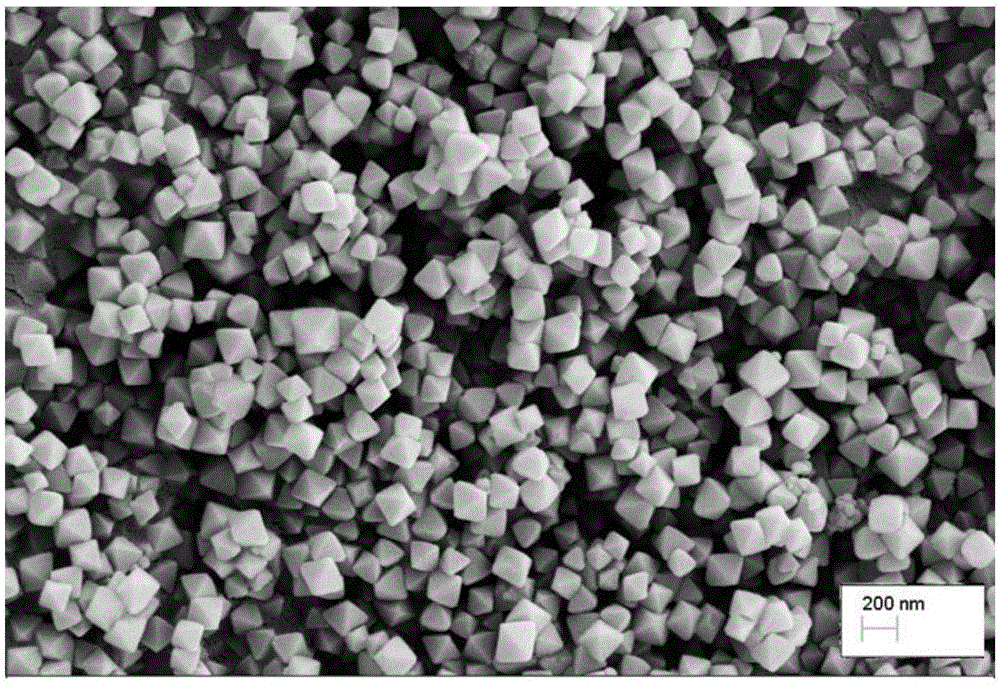
[0055] Dissolve the organic ligand 2-aminoterephthalic acid, zirconium tetrachloride, and acetic acid in N,N-dimethylformamide solvent, keep the temperature at 120°C for 24 hours, and cool down to room temperature to obtain light yellow nano-sized crystals, centrifuge, Drying; wherein the ratio of organic ligand 2-aminoterephthalic acid, zirconium tetrachloride, acetic acid and N,N-dimethylformamide solvent addition is 0.04mmol: 0.04mmol: 2mmol: 1.6ml, the obtained crystal See in description figure 1 .
Embodiment 2
[0056] Example 2 metal organic framework MIL-101-NH 2 -Synthesis of (Fe)
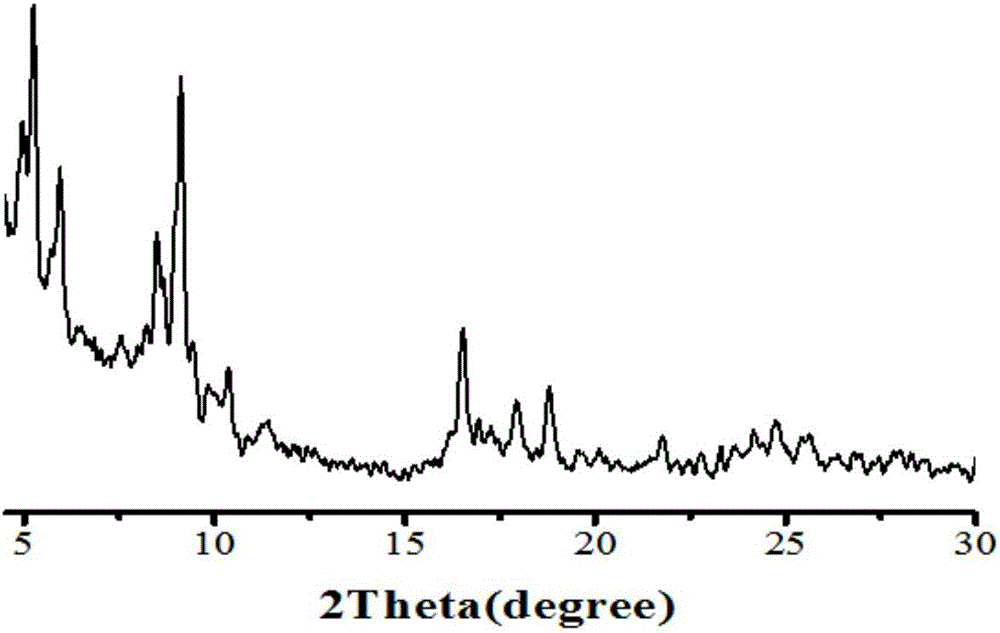
[0057] The organic ligand 2-aminoterephthalic acid (1.09g, 6mmol) and ferric chloride hexahydrate (1.08g, 4mmol) were dissolved in 20mL DMF, placed in a crystallization axe, and kept at 110°C for 16h. Cool down to room temperature to obtain gray nanoscale crystals, centrifuge, wash with DMF and ethanol in turn, and dry at 120 degrees Celsius for 24 hours to obtain MIL-101-NH 2 -(Fe) crystalline powder, XRD results see figure 2 .
Embodiment 3
[0058] The synthesis of embodiment 3 polyether diol type polyurethane prepolymer
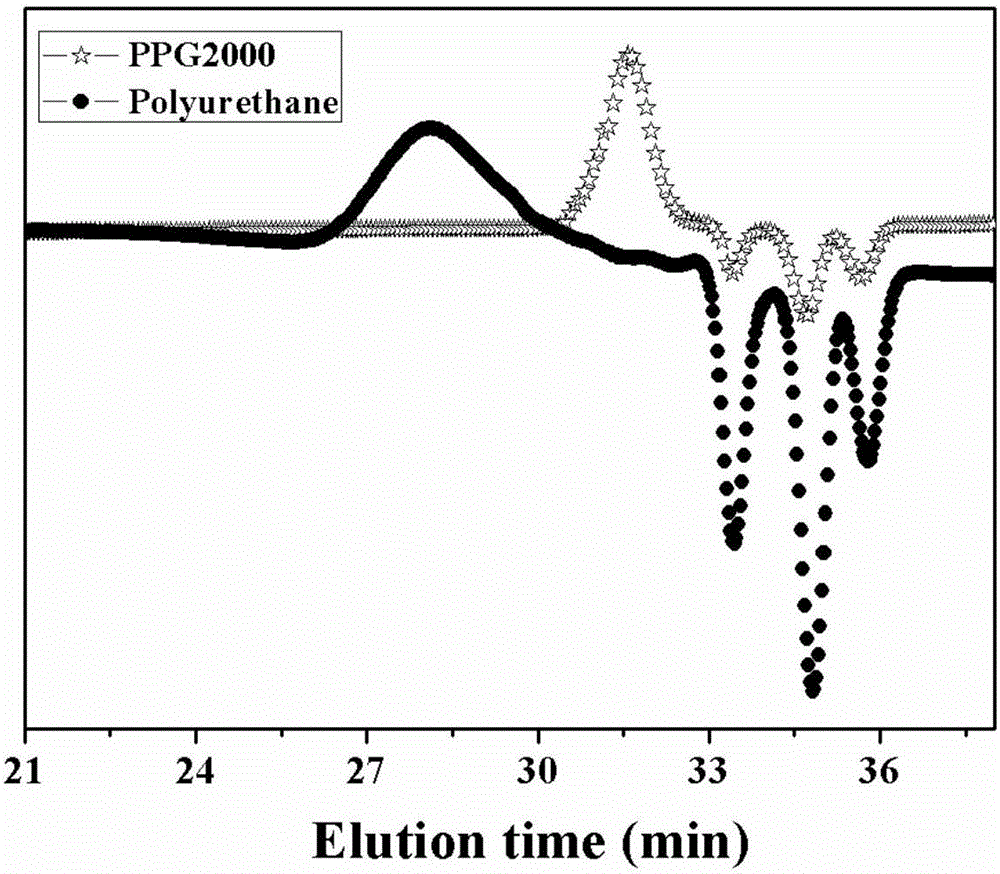
[0059] Add 37g of 4,4-diphenylmethane diisocyanate (MDI) and 63g of PPO (polypropylene oxide) with a molecular weight of 2000 into the reaction vessel in sequence, stir at 80°C, and react at constant temperature for 4 hours, then stop Heating, removing unreacted small molecules by vacuum distillation to obtain a prepolymer with NCO=10-11, viscosity 2000-3000mPa.s, GPC curve see image 3 , see the NMR spectrum Figure 4 .
PUM
| Property | Measurement | Unit |
|---|---|---|
| density | aaaaa | aaaaa |
| density | aaaaa | aaaaa |
| density | aaaaa | aaaaa |
Abstract
Description
Claims
Application Information
 Login to View More