For a double-action
interrupter that uses a fixed shaft type transmission rod as a
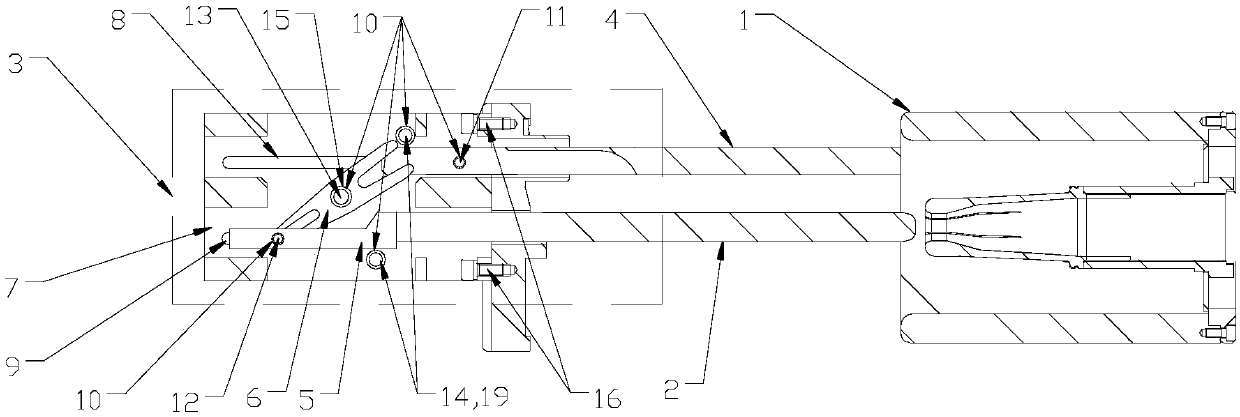
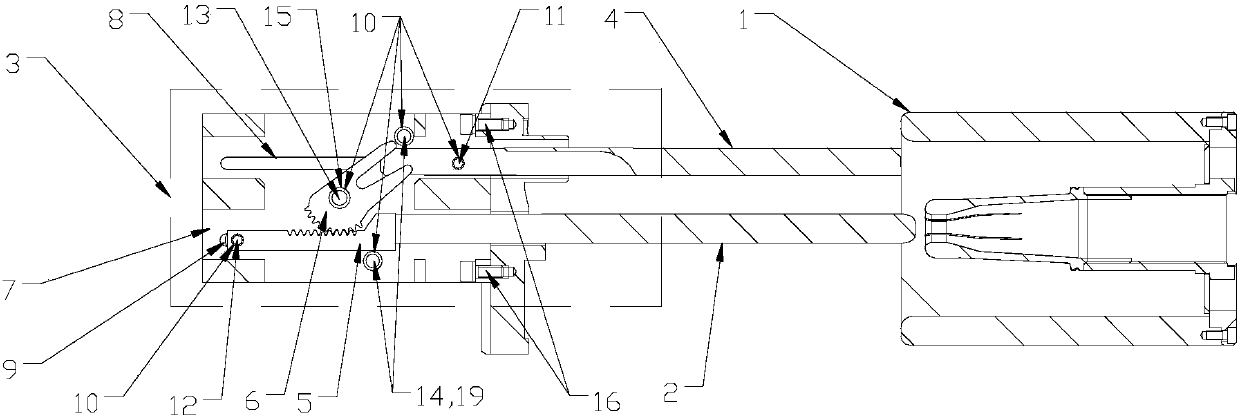
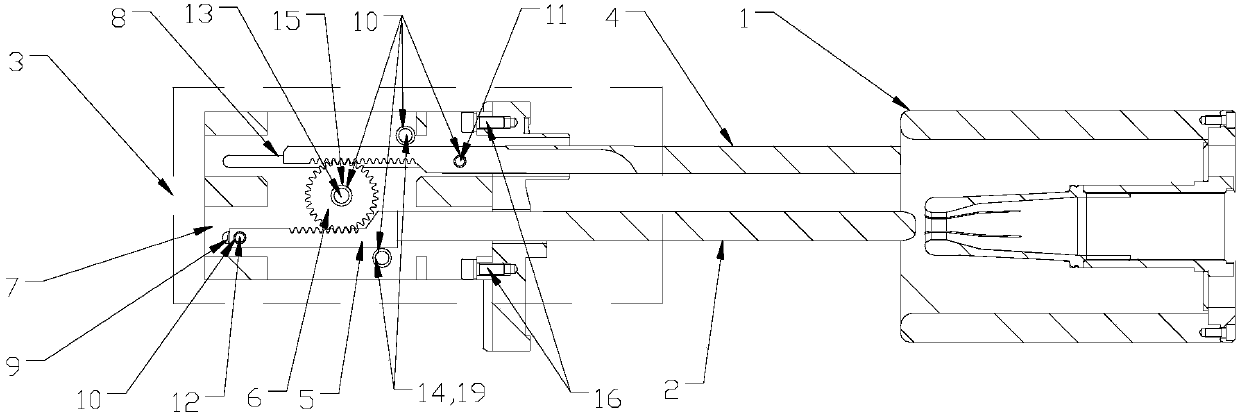
relative motion transmission device, two independent splints are usually used to form a guide rail through a stud fastening method, such as the "switching device" disclosed in
Chinese patent CN104380418A. The rotating shaft transmission rod and the double-action opposite
moving parts are fixed in it. Since the installation position of the double-action
interrupter transmission device is located in the core part of the
interrupter, a large amount of heat will be generated when breaking, and the components of the guide rail have different
thermal expansion coefficients. , after a long time and many times of breaking operations, the guide rail fasteners are susceptible to loosening due to repeated drastic changes in temperature, which will have a fatal
impact on the reliability of the circuit breaker; secondly, the double splint fastening method During the opening and closing operation of the moving structure, relying on the internal through groove formed by the
processing of the splint to guide the push-pull rods on the driving side and the driven side, this puts forward high requirements on the
machining accuracy and coordination of the clips that make up the guide rail. In addition, , when the double-action interrupter is applied to the horizontal circuit breaker structure, due to the effect of gravity, the two sides of the double-action interrupter produce a certain deflection respectively, so that when the contacts on both sides of the double-action interrupter open and close In the case of non-coaxial movement, after multiple opening and closing cycles of the arc extinguishing chamber, the reversing transmission structure of the double-acting arc extinguishing chamber is often caused by the non-coaxial movement of the push-pull rod and the related guide parts of the internal guide groove. The interference (such as the collision between the edge of the push-pull rod and the inner support column of the guide rail) appears stuck or even stuck, which greatly affects the reliability of the double-action interrupter; again, the fixed shaft transmission in the fastening method of the combined splint There is sliding friction between the rod and the guide rail wall when the rod rotates. The fixed parts (such as shaft pins) between the fixed shaft transmission rod and the guide rail are prone to wear after repeated breaking operations, which in turn causes the fixed shaft transmission rod and the guide rail to produce relative friction. Displacement, which affects the stability of the arc extinguishing chamber
[0004] In order to solve the influence of gravity deflection when the arc extinguishing chamber is used in horizontal circuit breakers, and to improve the non-coaxial movement of the contacts on both sides of the arc extinguishing chamber when they open and close, the patent "
Circuit Breaker with Bonded
Bushing Insulators" (US2004251237A1) proposes an insulating The supporting cylinder structure bridges the contacts on both sides of the arc extinguishing chamber through the insulating supporting cylinder, thereby reducing the
impact of the deflection of the contacts on both sides of the arc extinguishing chamber due to gravity on the opening and closing of the arc extinguishing chamber through the guiding effect of the insulating support cylinder. Influence, the above patents to a certain extent improve the influence of gravity on the double-action interrupter used in the horizontal circuit breaker structure when opening and closing operations, the movement of the contacts on both sides is not the same axis, but compared with the fully
open structure of the contacts on both sides, When the breaking time interval is short (such as T100s reclosing), a large amount of heat will accumulate inside the insulating cylinder and cannot be discharged in time, which will weaken the
recovery speed of the medium between the fractures in the insulating cylinder. The accumulation of breaking and decomposing dust will also easily deteriorate the insulation performance of the arc extinguishing gas between the fractures during subsequent breaking, and affect the reliability of the subsequent breaking process. The structure of the arc extinguishing chamber has been reduced to a certain extent


 Login to View More
  Login to View More