fpga static timing analysis method
A technology for static timing analysis and timing devices, applied in CAD circuit design, instrumentation, calculation, etc., to achieve the effect of increasing the operating frequency and reducing the delay of logic and wiring
- Summary
- Abstract
- Description
- Claims
- Application Information
AI Technical Summary
Problems solved by technology
Method used
Image

Examples
Embodiment Construction
[0023] The present invention will be further described in detail below in conjunction with the examples.
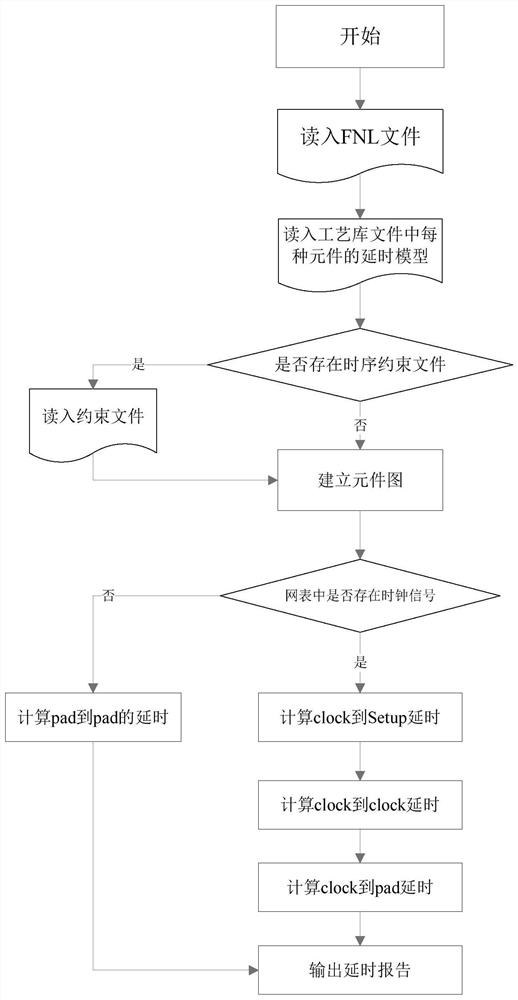
[0024] Such as figure 1 As shown, the present invention relates to an algorithm for FPGA static timing analysis. The purpose of this algorithm is to find the critical paths that make chip timing invalid and play a decisive role in chip performance faster. It uses an exhaustive analysis method (existing method) to extract all timing paths that exist in the entire circuit, examine whether the signal meets the requirements of timing constraints when passing through these paths, and find out violations by analyzing the maximum path delay and the minimum path delay. Timing constraint error.
[0025] The key point of the design of timing analysis program is the establishment of directed acyclic graph (hereinafter referred to as graph) and the calculation of critical path. First, the establishment of the graph is divided into two stages. After each element is read in and a no...
PUM
 Login to View More
 Abstract
Description
Claims
Application Information
 Login to View More