
An embedded convolutional neural network acceleration method based on ARM
A convolutional neural network and convolutional neural technology, applied in the field of embedded convolutional neural network acceleration, can solve problems such as inefficiency, achieve the effect of wide use space and improve computing efficiency
- Summary
- Abstract
- Description
- Claims
- Application Information
AI Technical Summary
Problems solved by technology
Method used
Image

Examples
Embodiment Construction
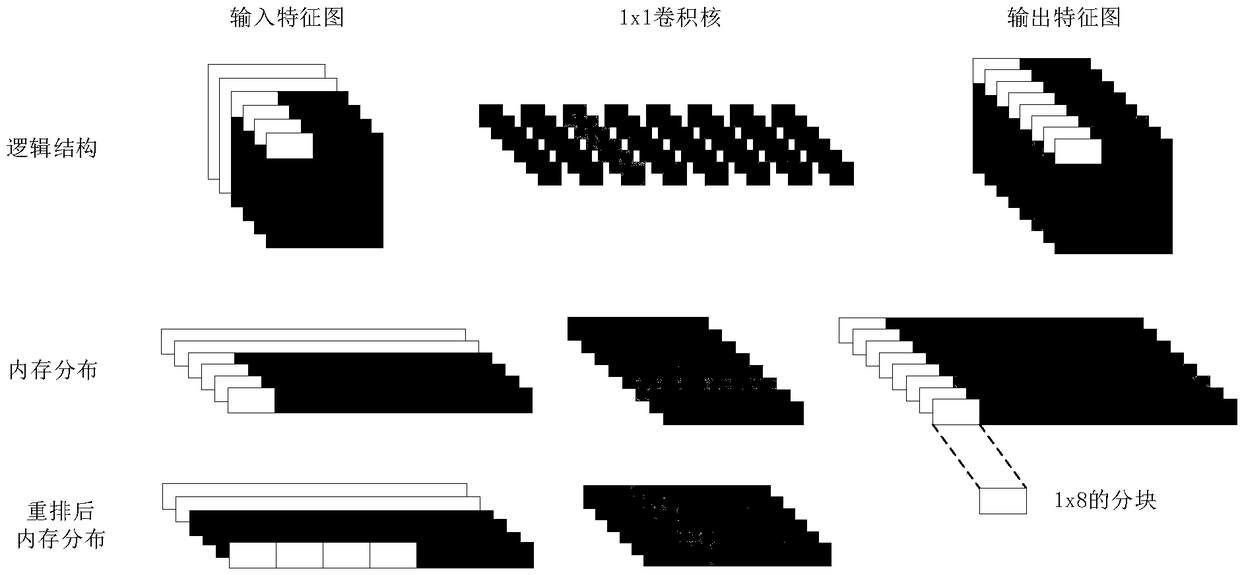
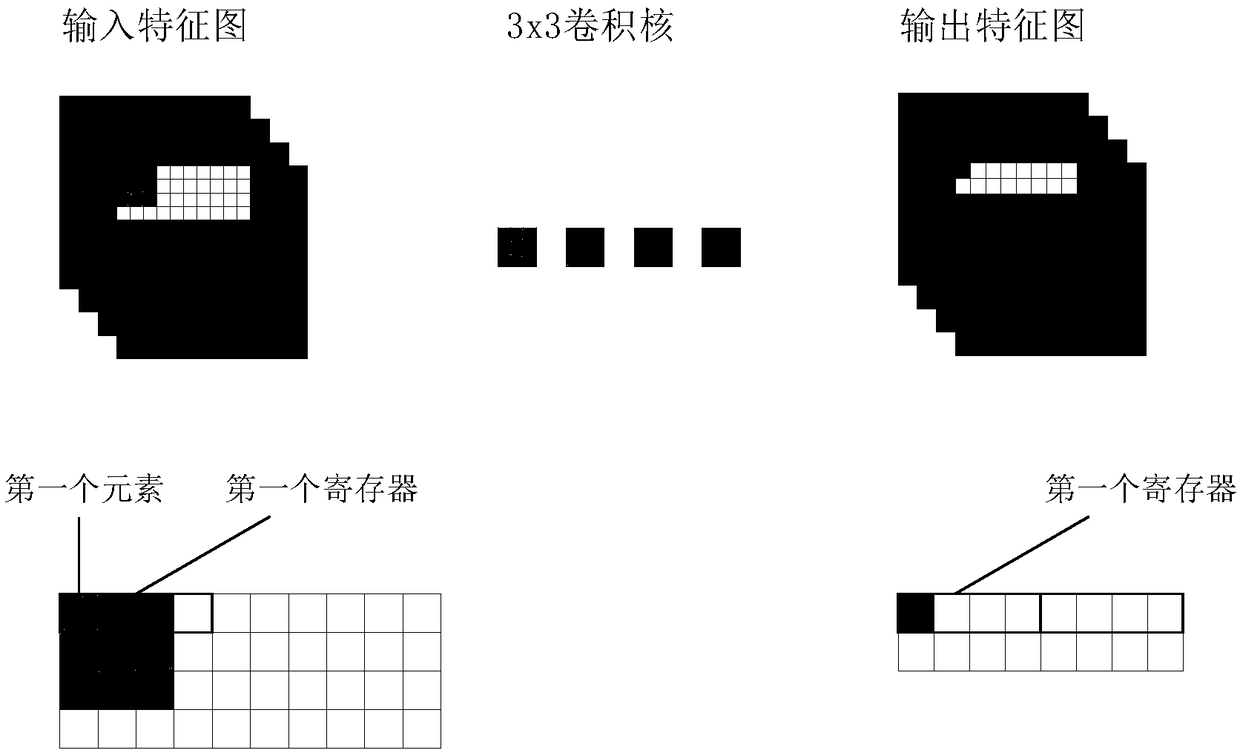
[0035] The optimization method of the present invention will be further described in detail in conjunction with the drawings and MobileNetV1 below, but the present invention is also applicable to other neural networks using 1×1 convolution and 3×3 depth separable convolution.
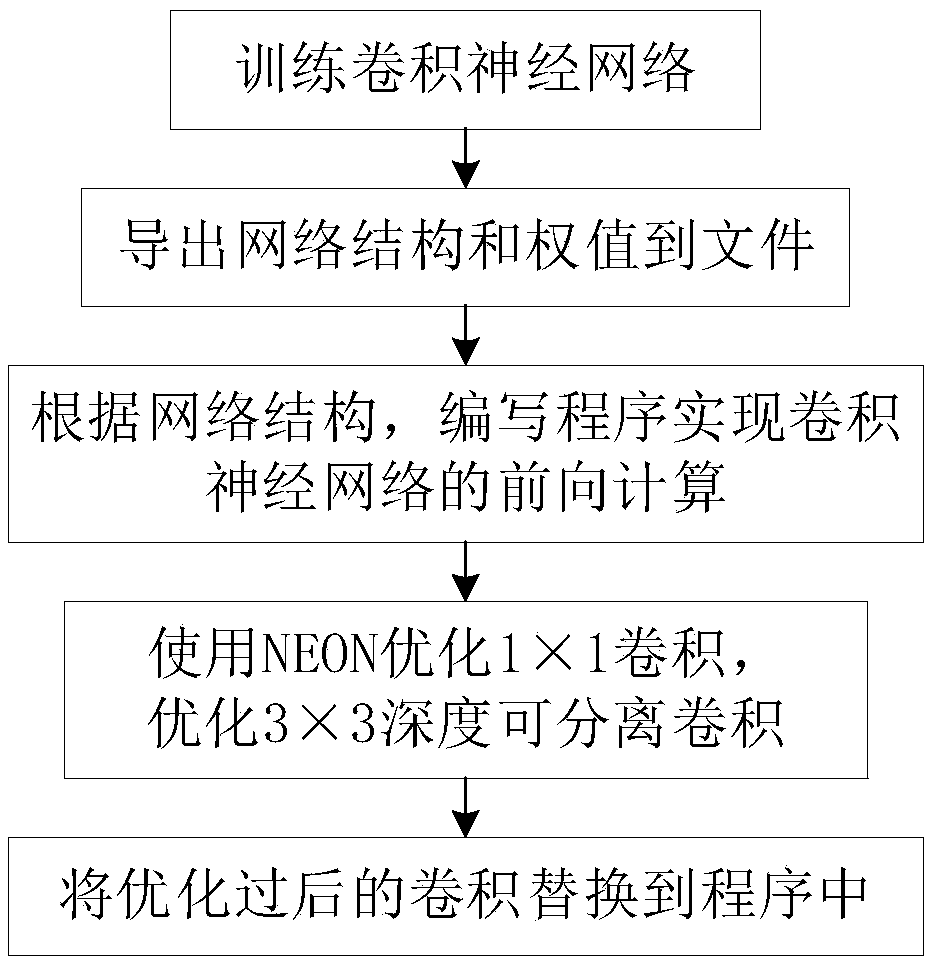
[0036] like image 3 As shown, the ARM-based embedded convolutional neural network acceleration method provided by the present invention comprises the following steps:
[0037] Step 1, use Caffe or other deep learning frameworks to train the lightweight convolutional neural network MobileNetV1.
[0038] Step 2, export the trained MobileNetV1 network structure and weights to a file.
[0039] Step 3, the design program imports the weight file, and realizes the forward calculation of the neural network according to the trained network structure. Different layers in the neural network can be represented by different functions. Function parameters include layer specification parameters, input feature maps,...
PUM
 Login to View More
 Abstract
Description
Claims
Application Information
 Login to View More