A detection kit, detection method and application of prostate specific antigen

A detection kit, prostate-specific technology, applied in biological tests, measuring devices, material inspection products, etc., can solve problems such as limitations and cumbersome steps

CN110208538BActive Publication Date: 2022-02-25LINYI UNIVERSITY
14 Cites 0 Cited by

Patent Information

Authority / Receiving Office
CN · China
Patent Type
Patents(China)
Current Assignee / Owner
Publication Date
2022-02-25

Smart Images

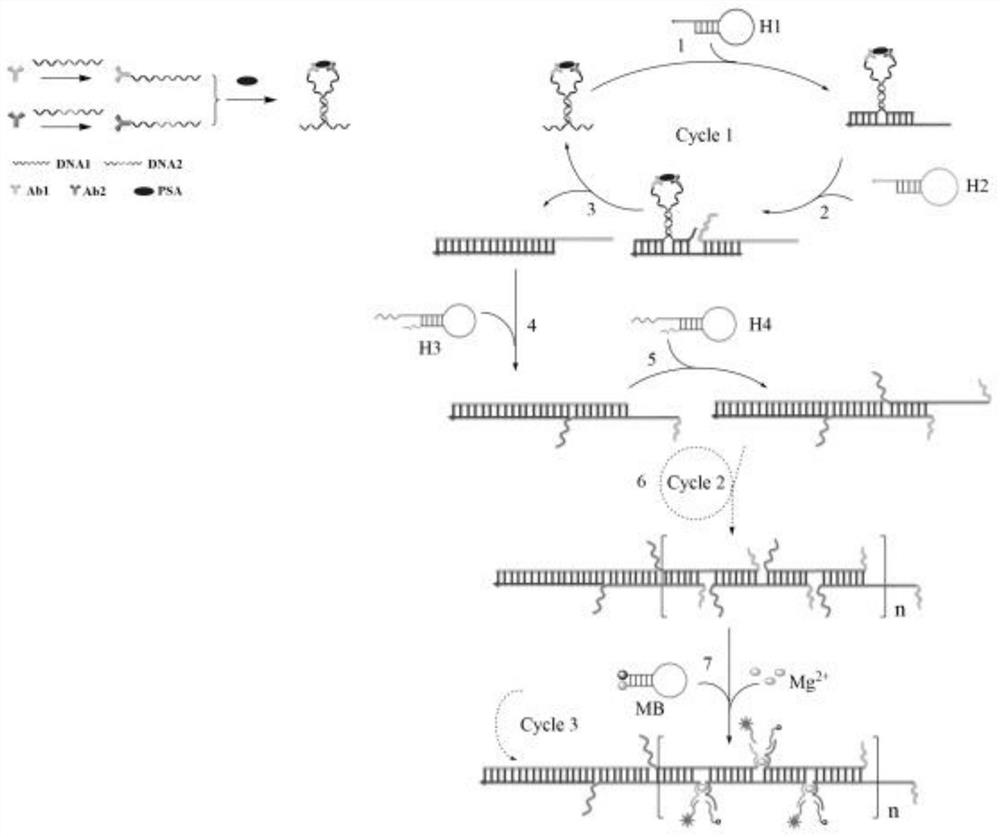
  • Figure 1
    Figure 1
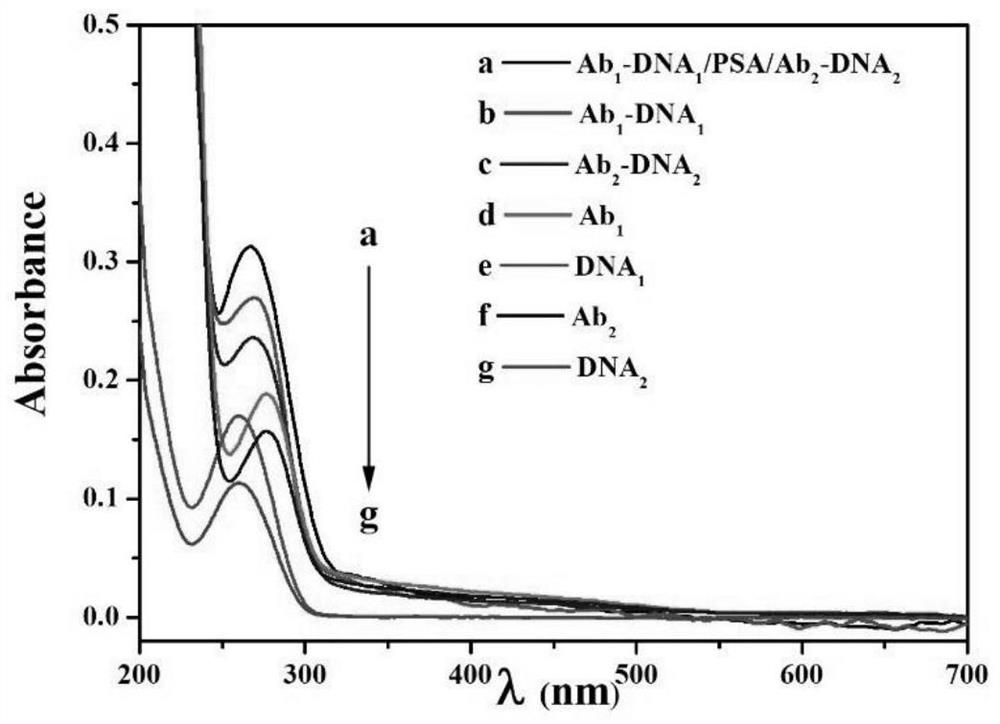
  • Figure 2
    Figure 2
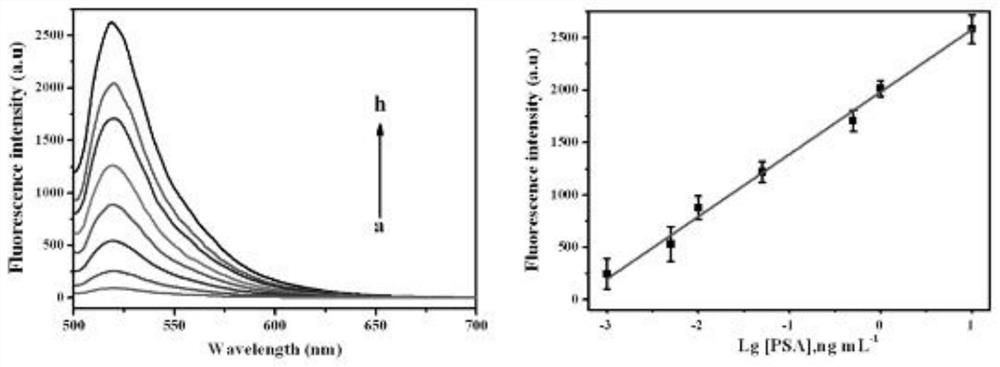
  • Figure 3
    Figure 3
Patent Text Reader

Abstract

The invention provides a prostate specific antigen detection kit, detection method and application, and relates to the technical field of antigen detection. The kit and detection method of the present invention use the secondary antibody to modify the DNA, and connect it with the antigen in an adjacent position to form a Y-shaped antigen-antibody-DNA hybrid chain, which is used as a signal converter to convert the antigen input into the DNA signal output; at the same time, the chain substitution reaction Combined with the hybridization chain reaction, the two-stage amplification of the signal is realized; each adjacent two-terminal sequence (hairpin DNAH3 and hairpin DNA H4) on the long-chain DNA assembles to form a magnesium ion DNase, and the enzyme in the presence of magnesium ions The molecular beacon in the cutting solution, the disconnected molecular beacon is released and emits fluorescence, and the new molecular beacon is combined with magnesium ion DNase to be cut, and the fluorescent signal is cyclically amplified to realize the third round of signal amplification, greatly Improved detection efficiency and sensitivity, enabling a detection limit of 0.73pg mL ‑1 .
Need to check novelty before this filing date? Find Prior Art

Description

technical field

[0001] The invention belongs to the technical field of antigen detection, and in particular relates to a detection kit, detection method and application of prostate specific antigen. Background technique

[0002] Antigen detection has important reference value in clinical diagnosis. Surface molecules of human and animal cells: including various differentiation antigens (such as CD antigens), allotype antigens (blood group antigens or MHC antigens), virus-associated antigens and tumor-associated temperament antigens on the cell surface. The detection of these antigens is of great significance to the classification of various cells, the study of differentiation process and function, the diagnosis and pathogenesis of various immune-related diseases.

[0003] Currently, antigen detection methods mainly include traditional enzyme-linked immunoassay (ELISA), radioimmunoassay (RIA), fluorescence immunoassay (FIA), chemiluminescence immunoassay (CLIA), and automated...

Examples

Embodiment 1

[0050] Equipment: high-speed refrigerated centrifuge (16R, Zhuhai Heima Medical Instrument Co., Ltd.), ultrapure water machine (SybergyUV, Merck Millipore), ultraviolet-visible spectrophotometer (Cary60, Agilent Technologies, USA), fluorescence spectrophotometer ( F-4600, Japan Hitachi High-Tech Corporation), agarose horizontal electrophoresis tank (DYCP-31DN, Beijing Liuyi).

[0051] Reagents used: PSA antibody, SMCC (succinimide-4-(N-maleimide)cyclohexane-1-1 hydroxyester), TCEP (tris(2-carboxyethyl)phosphine), mercapto Modified DNA1, thiol-modified DNA2, MB (DNA is biosynthesized by Bao, MB contains an rA base that can be recognized by ionase and is modified with FAM and BHQ groups).

[0052] 1. Antibody modified DNA

[0053] Antibody and SMCC (suitable molar ratio 1:10-20) were reacted in PBS buffer at room temperature for 2 hours, then purified with filter membrane (molecular weight cut-off 10,000MW), washed three times with PBS buffer; Add 2 μL TCEP (100 mM) to sulfhyd...