A Time Delay Estimation Method for Underwater Acoustic Channel Based on Image Deconvolution

A technology for underwater acoustic channel and time delay estimation, which is applied to digital transmission systems, electrical components, transmission systems, etc., to achieve efficient channel estimation, improve time delay estimation accuracy, and save energy.

CN110602016BActive Publication Date: 2022-01-07HARBIN ENG UNIV
10 Cites 0 Cited by

Patent Information

Authority / Receiving Office
CN · China
Patent Type
Patents(China)
Current Assignee / Owner
Publication Date
2022-01-07

Smart Images

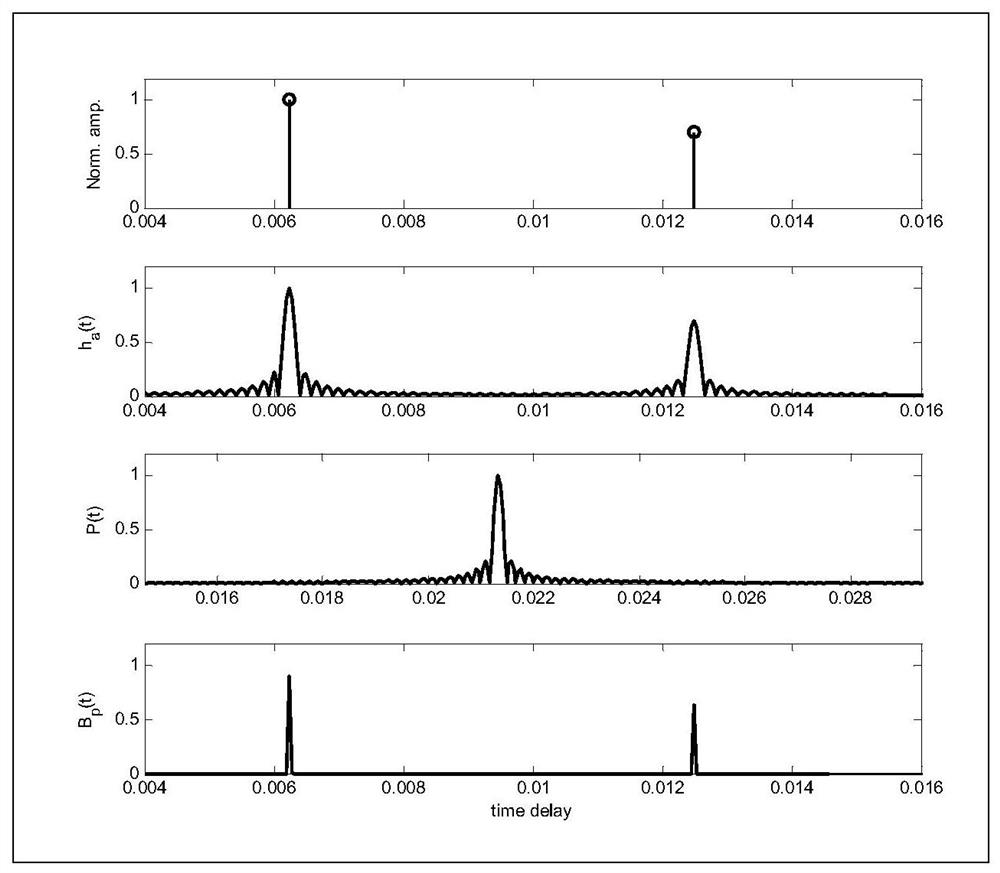
  • Figure 1
    Figure 1
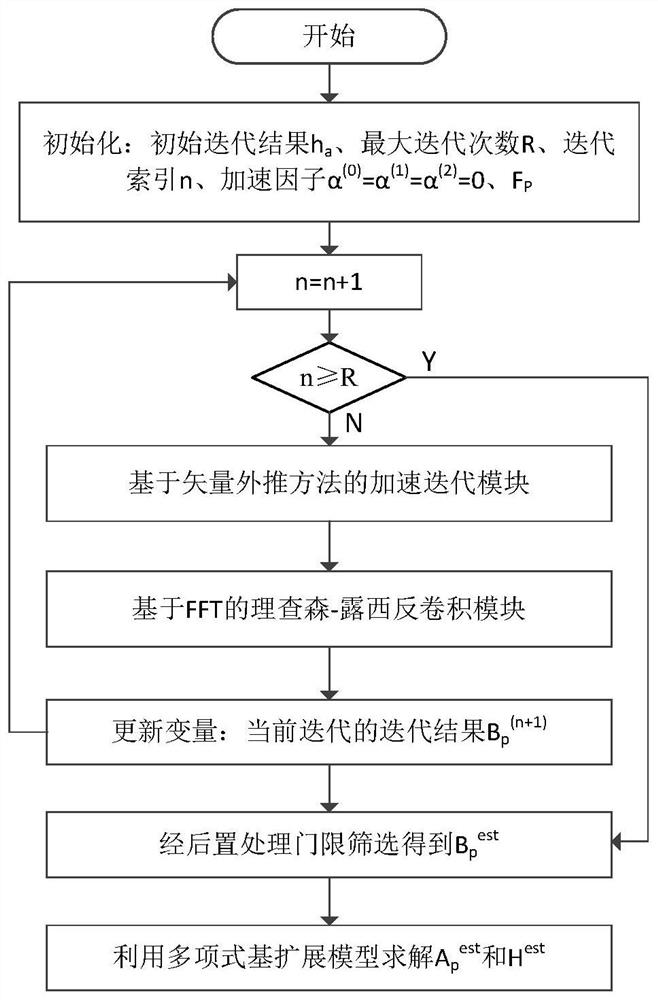
  • Figure 2
    Figure 2
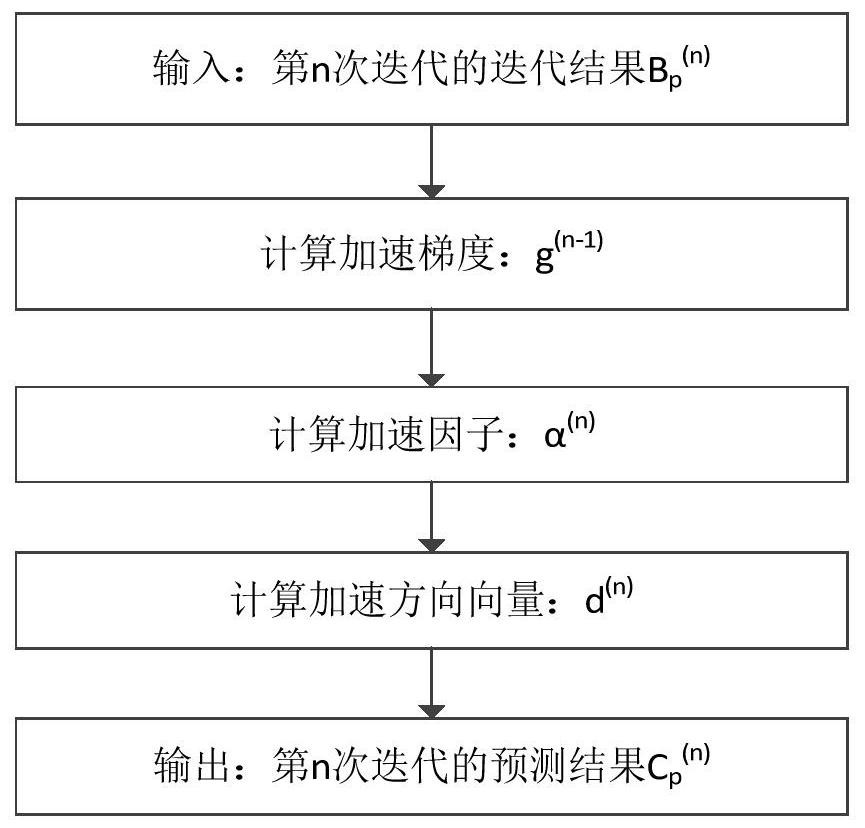
  • Figure 3
    Figure 3
Patent Text Reader

Abstract

The invention provides an underwater acoustic channel time delay estimation method based on image deconvolution. At the receiving end of the system, the OFDM frequency domain observation signal is subjected to pilot compensation and fast inverse Fourier change to obtain the time domain channel response; the time domain channel response is used as the iterative result of the previous iteration, and is input to the acceleration based on the vector extrapolation method The iterative module obtains the accelerated prediction result; the prediction result is input to the fast Fourier transform-based Richardson-Lucy deconvolution module to obtain the iterative result of the current iteration; after the preset number of iterations is performed, the final iteration The results are sent to the post-processing threshold module to screen out the final channel delay estimation results, and the polynomial basis expansion model is used to solve the frequency domain form of the channel path amplitude and channel function. The invention significantly improves the time delay estimation accuracy of the underwater acoustic OFDM channel, and the time delay estimation performance is also excellent in the case of Doppler frequency shift, and can be used to realize high-efficiency and high-precision underwater acoustic channel estimation.
Need to check novelty before this filing date? Find Prior Art

Description

technical field

[0001] The invention relates to a method for estimating time delay of an underwater acoustic channel. Background technique

[0002] In recent years, due to the high bandwidth utilization and low complexity of Orthogonal Frequency Division Multiplexing (OFDM) technology, it has been widely used in underwater acoustic communication systems. In practical applications, most underwater acoustic OFDM systems use coherent receivers. The accuracy of channel estimation, especially the accuracy of channel delay estimation, becomes very important.

[0003] However, due to its low computational complexity, the popular Orthogonal Matching Pursuit (OMP) channel estimation based on compressed sensing has an unavoidable inherent disadvantage: when calculating the inner product function, there is a problem of large main lobe width similar to traditional beamforming. The good news is that the image deconvolution technique (DCV), which is currently being applied to the directi...

Examples

Embodiment Construction

[0035] The following examples describe the present invention in more detail. A. CP-OFDM system

[0036] The OFDM system involved in the present invention adopts a cyclic prefix mode. Suppose an OFDM symbol block contains K subcarriers, the transmitted symbol on each subcarrier is s(k), and the number of pilot subcarriers is N p , the pilot interval is D. The duration of an OFDM symbol block is T, and the duration of the cyclic prefix is ​​T cp , the carrier frequency is f c .

[0037] Assuming that the channel remains unchanged for two symbol durations, the channel model in this paper is a multipath channel with L paths, and the amplitude and delay of each path are A p and τ p (p=1,2,...,L), and assume that the residual Doppler shift after channel Doppler compensation is f d . After the signal at the receiving end is sampled and removed from the cyclic prefix operation (assuming that the length of the cyclic prefix is ​​greater than the maximum channel delay), it is se...