
FISH probe groups for detecting novel coronavirus SARS-CoV-2 and preparation method and application thereof
A coronavirus, sars-cov-2 technology, applied in the field of FISH probe set for detection of the new coronavirus SARS-CoV-2, can solve the problems of missed detection rate, virus quantification and localization, etc., and improve the insufficient detection ability of NCP , high sensitivity and strong specificity
Patent Information
- Authority / Receiving Office
- CN · China
- Patent Type
- Applications(China)
- Current Assignee / Owner
- Publication Date
- 2020-06-09
Smart Images
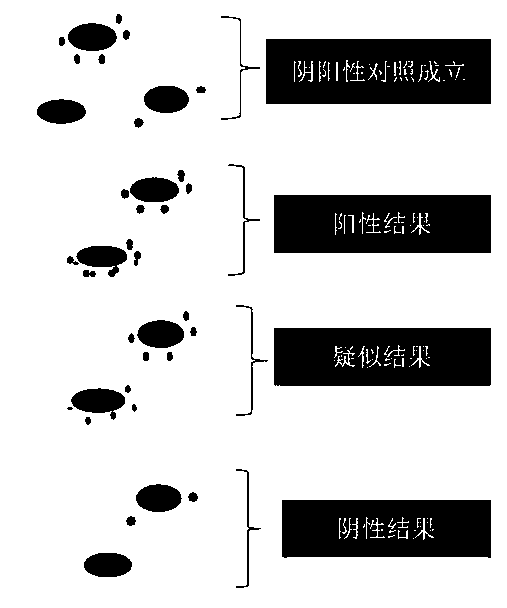
Figure 1 
Figure 2 
Figure 3
Abstract
Description
technical field
[0001] The invention relates to the technical field of nucleic acid detection, in particular to a FISH probe set, system, chip, and preparation method and use thereof for detecting the novel coronavirus SARS-CoV-2. Background technique
[0002] New coronavirus pneumonia (CoronaVirusDisease2019, COVID-19) referred to as new coronary pneumonia, refers to the pneumonia caused by the 2019 new coronavirus infection (SARS-CoV-2). The clinical manifestations of novel coronavirus pneumonia are mainly fever, fatigue, and dry cough, and upper respiratory symptoms such as nasal congestion and runny nose are rare. About half of the patients developed dyspnea more than a week later, and severe cases rapidly progressed to acute respiratory distress syndrome, septic shock, metabolic acidosis that was difficult to correct, and coagulation dysfunction. Some patients had mild onset symptoms without fever, and mostly recovered after 1 week; most patients had a good prognosis, ...
Examples
Embodiment 1
[0054] The novel coronavirus (SARS-CoV-2) genome (Genebank accession number MN988668.1) with a relatively conserved sequence was selected as the template.
[0055] The present embodiment provides a kind of FISH probe group that detects SARS-CoV-2, comprises:
[0056]1) The first fluorescent probe set targets the S gene, including DNA probes with nucleotide sequences as described in SEQ ID NO.1-SEQ ID NO.5; 2) The second fluorescent probe set uses E Genes as targets, including DNA probes with nucleotide sequences as shown in SEQ ID NO.6-SEQ ID NO.9; 3) The third fluorescent probe group, targeting M genes, including nucleotide sequences as shown in The DNA probe shown in SEQ ID NO.10-SEQ ID NO.13; 4) The fourth fluorescent probe group, with the ORF 3a gene as the target, including nucleotide sequences such as SEQ ID NO.14-SEQ ID NO .17 the DNA probe; 5) the fifth fluorescent probe group, with the N gene as the target, including DNA probes whose nucleotide sequences are respecti...
Embodiment 2
[0066] This embodiment provides a FISH probe set, including: 1) the first fluorescent probe set, targeting the S gene, including RNAs whose nucleotide sequences are respectively described in SEQ ID NO.33-SEQ ID NO.37 Probe; 2) The second fluorescent probe group, which targets the E gene, includes RNA probes whose nucleotide sequences are respectively shown in SEQ ID NO.38-SEQ ID NO.41; 3) The third fluorescent probe The group targets the M gene and includes RNA probes whose nucleotide sequences are shown in SEQ ID NO.42-SEQ ID NO.45; 4) the fourth fluorescent probe group targets the ORF 3a gene and includes The nucleotide sequences are RNA probes shown in SEQ ID NO.46-SEQID NO.49; 5) The fifth fluorescent probe group, which targets the N gene, includes nucleotide sequences such as SEQID NO.50- The RNA probe shown in SEQ ID NO.54; 6) the sixth fluorescent probe group, with the ORF 1ab gene as the target, including RNAs whose nucleotide sequences are shown in SEQ ID NO.55-SEQ ID...
Embodiment 3
[0070] This embodiment provides a method for preparing the FISH probe set in Example 1, comprising the following steps:
[0071] S1, designing the probe sequence of the first fluorescent probe group complementary to the S gene sequence, the probe sequence of the second fluorescent probe group complementary to the E gene sequence, and the third fluorescent probe group complementary to the M gene sequence Probe sequence, the probe sequence of the fourth fluorescent probe group complementary to the ORF 3a gene sequence, the fifth fluorescent probe group complementary to the N gene sequence, and the sixth fluorescent probe group complementary to the ORF 1ab gene sequence at least two fluorescent probe sets.
[0072] S2, optimizing the probe sequences of the first fluorescent probe group, the second fluorescent probe group, the third fluorescent probe group, the fourth fluorescent probe group, the fifth fluorescent probe group and the sixth fluorescent probe group Finally, DNA pro...