Photo-stimulation mounting device with rotatable light source and method thereof

A rotating light source, light stimulation technology, applied in application, climate change adaptation, fish farming, etc., can solve the problems of light stimulation device easily falling off, frequent disassembly of jumper boards and LEDs, and brain damage of biological robots. controlled experiment, high practical application value, and the effect of reducing brain injury

CN112655602BActive Publication Date: 2022-03-11YANSHAN UNIV
6 Cites 0 Cited by

Patent Information

Authority / Receiving Office
CN · China
Patent Type
Patents(China)
Current Assignee / Owner
Publication Date
2022-03-11

Smart Images

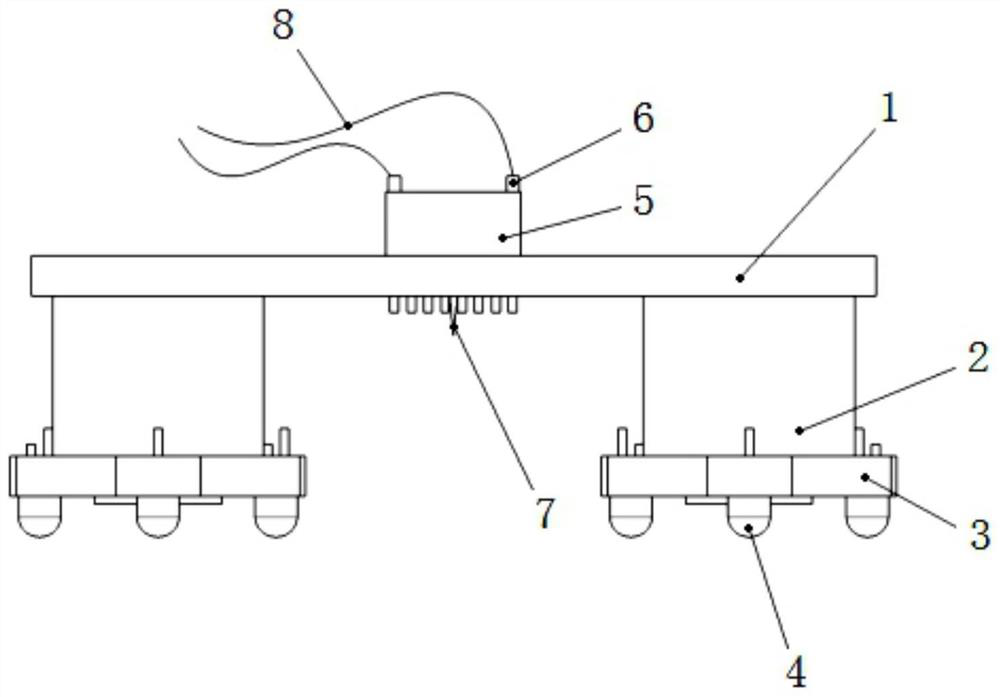
  • Figure 1
    Figure 1
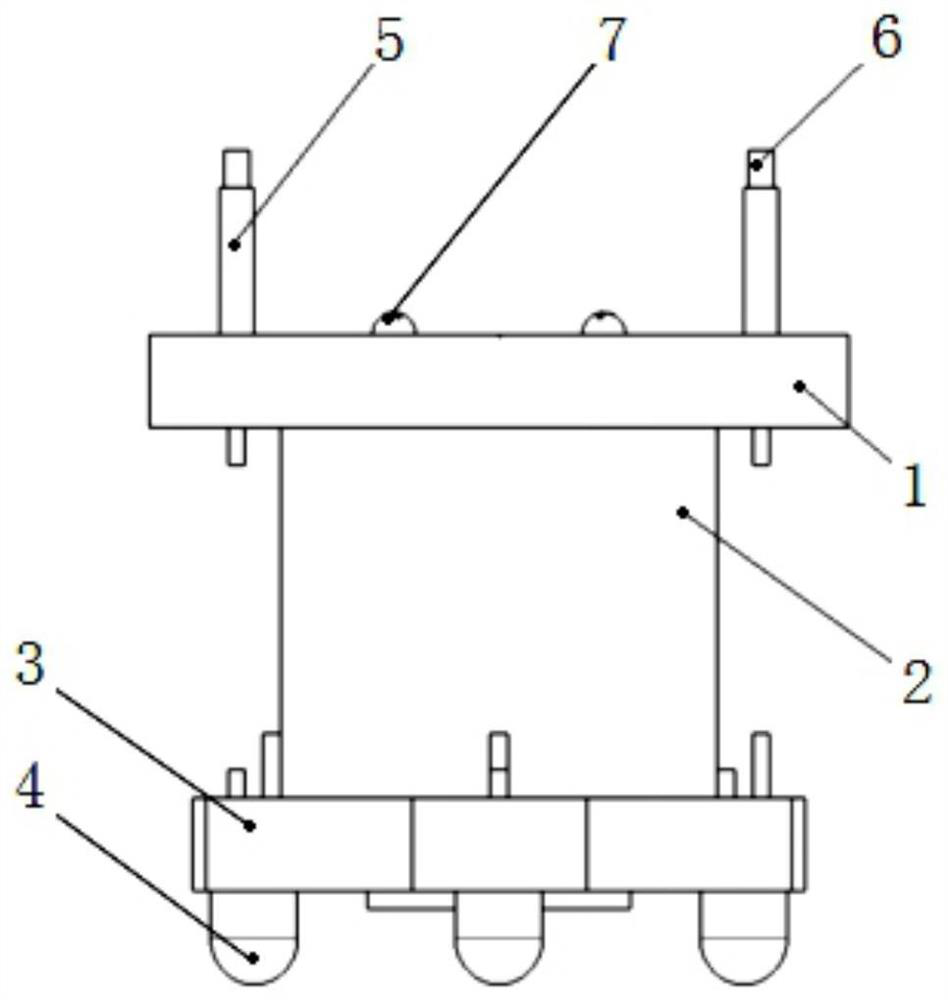
  • Figure 2
    Figure 2
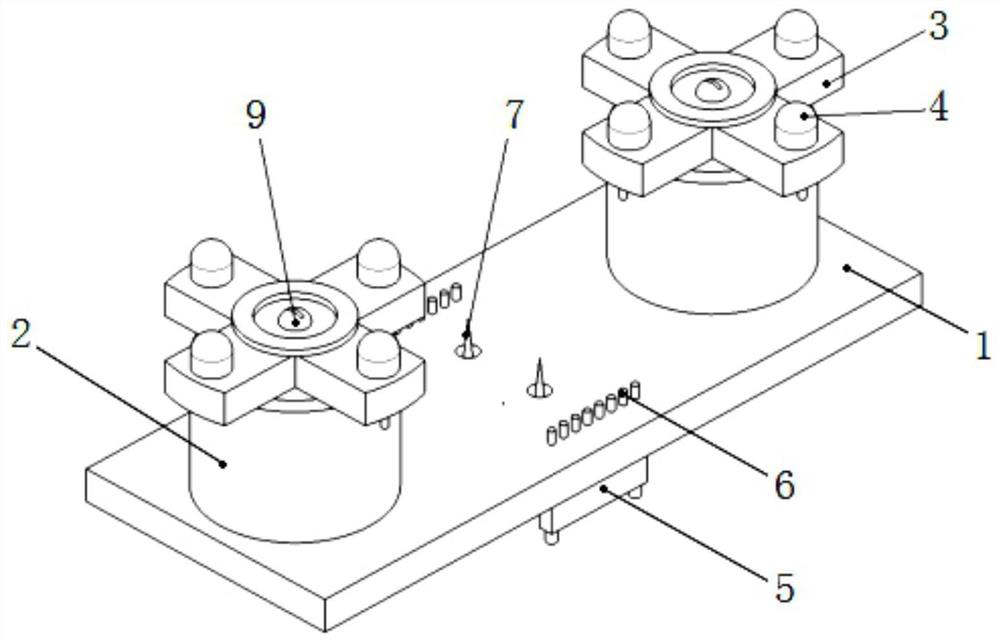
  • Figure 3
    Figure 3
Patent Text Reader

Abstract

The present invention relates to a photo-stimulation mounting device for a rotatable light source and a method thereof. The device includes a mounting board, a concentric line pipe, a rotating assembly, LEDs, female headers, pin headers, fastening screws, screws and wires; The carrying board is a rectangular universal board with concentric conduits; the concentric conduits allow the wires to be connected to the positive and negative poles of the LEDs; the four LEDs with different wavelengths are welded at the bottom of the cross-shaped rotating assembly, and the required The LED is rotated to a specified position, and the rotating assembly is fixed with a fastening screw; the pin row, the female row and the wire are used as a conduction circuit for lighting the LED; the screw fixes the device on the carp head. The invention solves the problem of using different wavelengths of LED light to stimulate the carp robot. It can not only rotate the LED with the required wavelength to the designated position, but also reduce the brain damage caused by the replacement of the device to the animal, and can also perform light control more conveniently. Experiments show that the invention can be applied to the control of the motion of aquatic animal robots by different wavelength light stimuli.
Need to check novelty before this filing date? Find Prior Art

Description

technical field

[0001] The invention relates to the technical field of biological control, in particular to a photo-stimulation mounting device with a rotatable light source and a method thereof. Background technique

[0002] Humans can control biological behavior by applying relevant signals through control technology to realize human-controllable biological robots, which are mainly used in ecological environment research, landform and terrain exploration, disaster search and rescue, anti-terrorism investigation, etc., and have broad application prospects.

[0003] With the rapid development of biological control technology, it has become a new and important technical means to realize biological control by light stimulation of biological robots. Chongqing University designed a non-invasive mouse movement control system based on ultrasonic stimulation combined with epidermal electrical stimulation and LED light-assisted stimulation. etc., Motion control of non-invasive mous...

Examples

Embodiment Construction

[0025] In order to more clearly illustrate the technical solutions in the embodiments of the present invention or the prior art, the following will briefly introduce the drawings that need to be used in the description of the embodiments or the prior art. Obviously, the accompanying drawings in the following description These are some embodiments of the present invention. Those skilled in the art can also obtain other drawings based on these drawings without creative work.

[0026] It should be noted that in the description of the present invention, the terms "upper", "lower", "top", "bottom", "side", "other side", "left", "right" etc. indicate The orientation or positional relationship is based on the orientation or positional relationship shown in the drawings, and is only for the convenience of describing the present invention and simplification of the description, and does not mean that devices or elements must have a specific orientation, be constructed and operated in a s...