Global dynamic smooth path planning method based on optimized A-STAR algorithm

A path planning and dynamic smoothing technology, which is applied to road network navigators, measuring devices, instruments, etc., can solve problems such as smoothing processing, large memory usage, and large computational load

CN114166235APending Publication Date: 2022-03-11FUJIAN UNIV OF TECH
0 Cites 0 Cited by

Patent Information

Authority / Receiving Office
CN · China
Current Assignee / Owner
Publication Date
2022-03-11

Smart Images

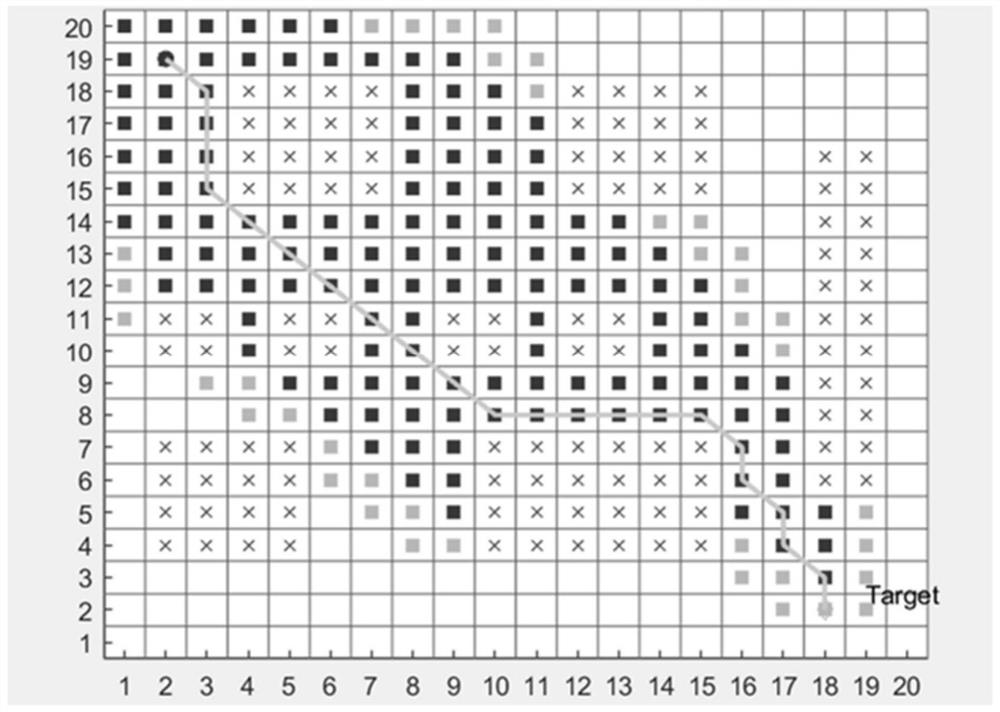
  • Figure 1
    Figure 1
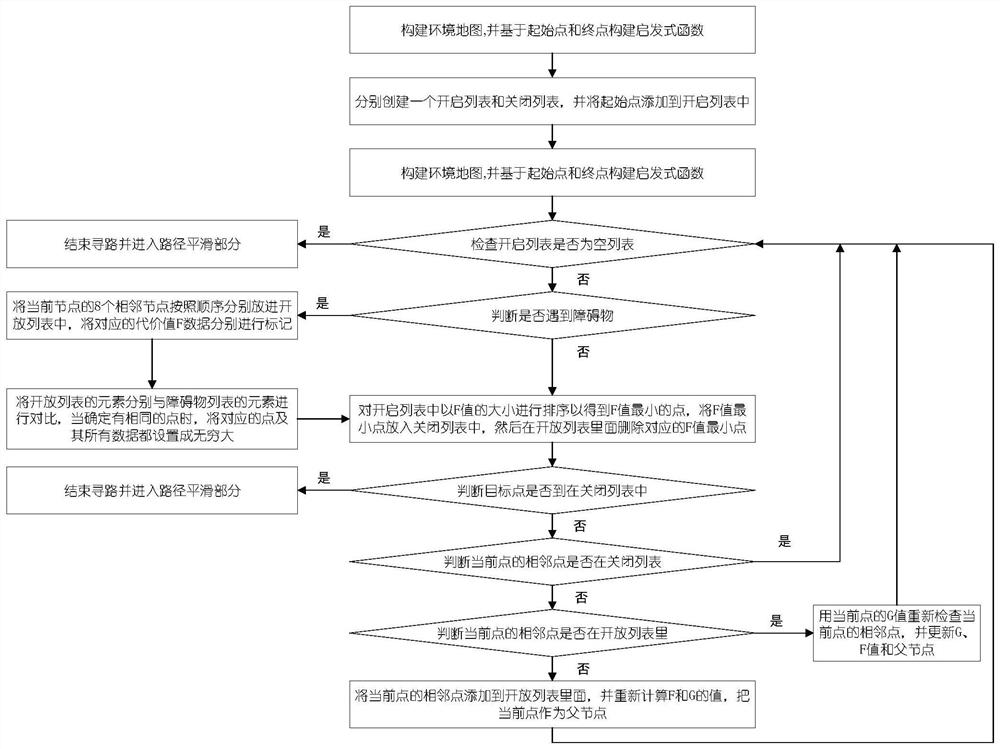
  • Figure 2
    Figure 2
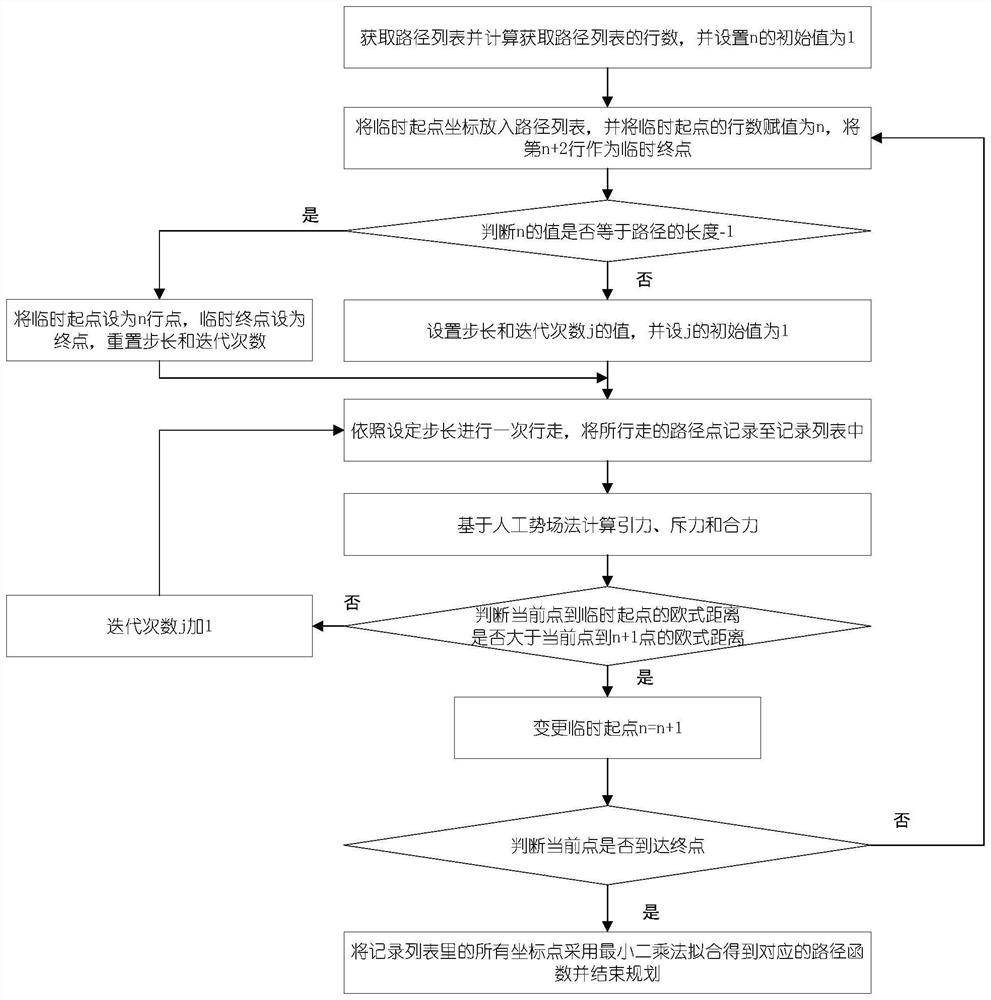
  • Figure 3
    Figure 3
Patent Text Reader

Abstract

The invention discloses a global dynamic smooth path planning method based on an optimized A-STAR algorithm, and the method comprises the steps: carrying out the rectangular processing of an obstacle at an earlier stage, finding a path in a barrier-free region through employing a conventional A * algorithm, employing the optimized A * algorithm when the obstacle is encountered, adding the path to a path list for calculation according to a selected path point after the path planning is completed for the first time, and carrying out the calculation of the path point. And then path smoothing processing is carried out by using an artificial potential field method. According to the method, not only can the searched path be ensured to have smoothness and real-time obstacle avoidance capability, but also the path-finding efficiency is improved on the basis of ensuring global optimum.
Need to check novelty before this filing date? Find Prior Art

Description

technical field

[0001] The invention relates to the technical field of dynamic path planning, in particular to a global dynamic smooth path planning method based on an optimized A-STAR algorithm. Background technique

[0002] The A* algorithm is a classic heuristic algorithm, which can efficiently find the optimal path from the starting point to the target point in a static environment. This algorithm is simple in program and easy to implement. At present, during the operation of the traditional A* algorithm, two lists, the Open list and the Close list, need to be maintained. A* needs to calculate the surrounding nodes of the current position during the pathfinding process. When encountering an obstacle, it will re-find the path near the starting point, and repeat until the search width exceeds the obstacle width, and then continue to Therefore, there will be a large number of useless nodes that need to be calculated, resulting in excessive computation, excessive memory usa...

Examples

Embodiment Construction

[0076] In order to make the purpose, technical solutions and advantages of the embodiments of the present application clearer, the technical solutions in the embodiments of the present application will be clearly and completely described below in conjunction with the drawings in the embodiments of the present application.

[0077] Path planning is one of the key technologies in the field of autonomous mobile robots, and a lot of research work has been carried out on this technology. The path planning of autonomous mobile robots can be divided into static path planning and dynamic path planning. Among them, the A* algorithm and the Dijkstra algorithm are mainly used in known static scenes, while the artificial potential field method, D* algorithm, and dynamic window method are mostly used in dynamic scenes with unknown environments. At the same time, with the rapid development of artificial intelligence in recent years, intelligent algorithms such as ant colony algorithm, genet...