
Double-feeding speed varying salient-pole synchronous motor
A synchronous motor, salient pole technology, applied in the direction of synchronous generator, etc., can solve the problem of unrealizable structure
- Summary
- Abstract
- Description
- Claims
- Application Information
AI Technical Summary
Problems solved by technology
Method used
Image

Examples
Embodiment Construction
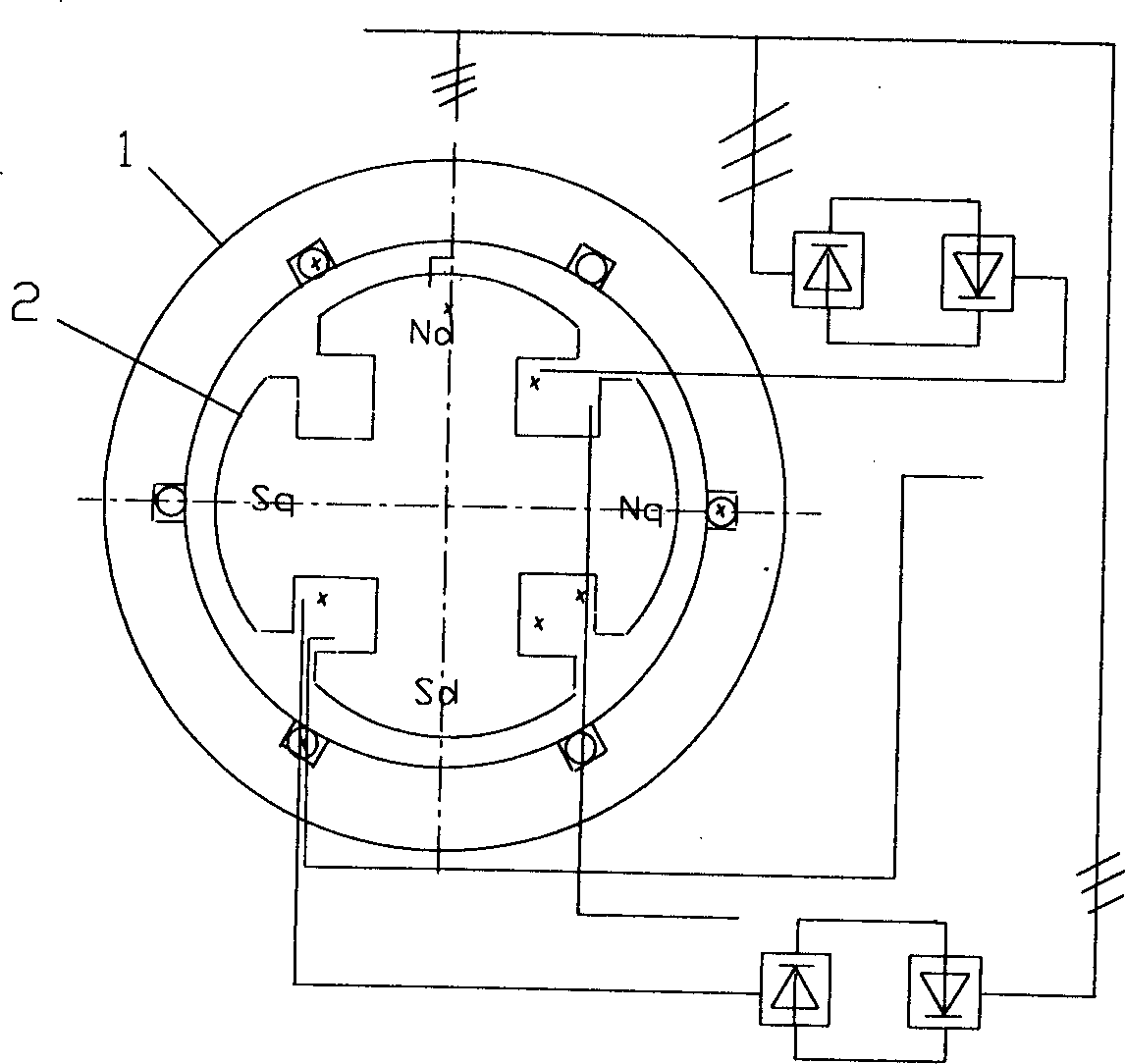
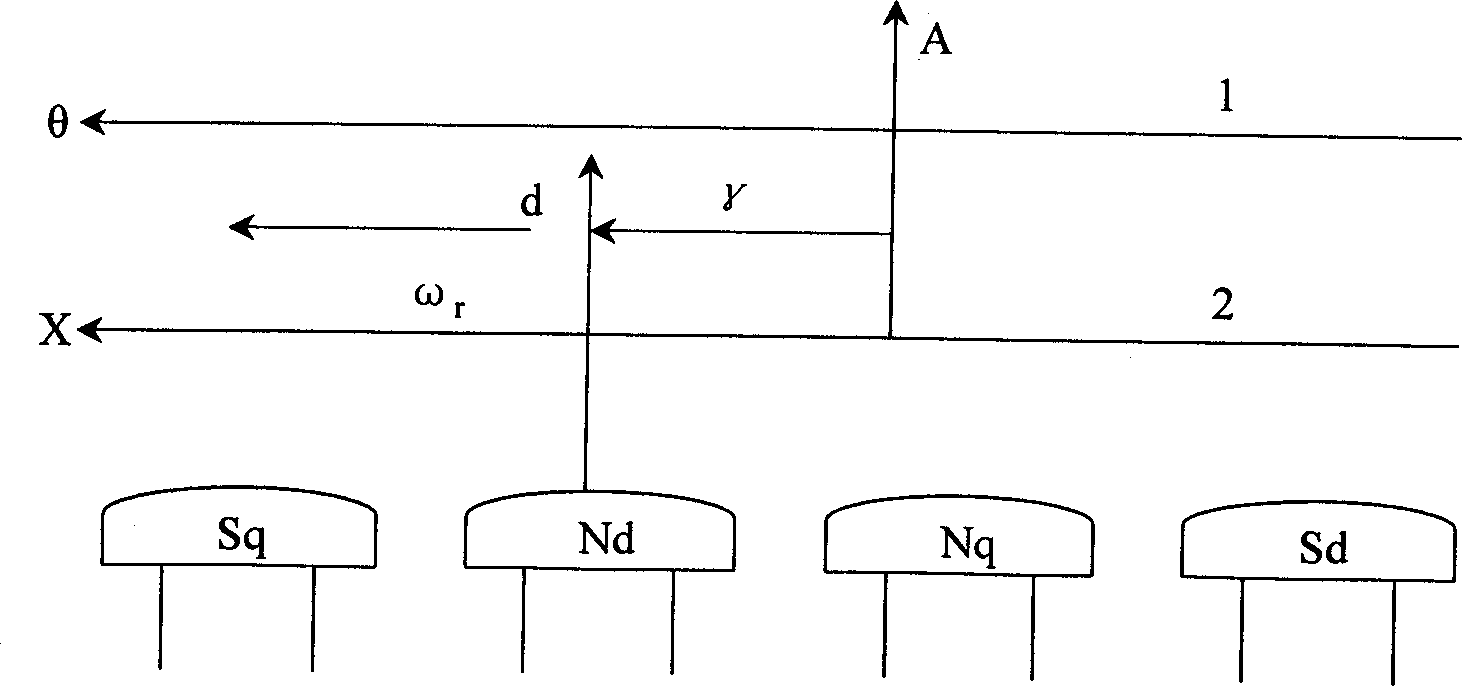
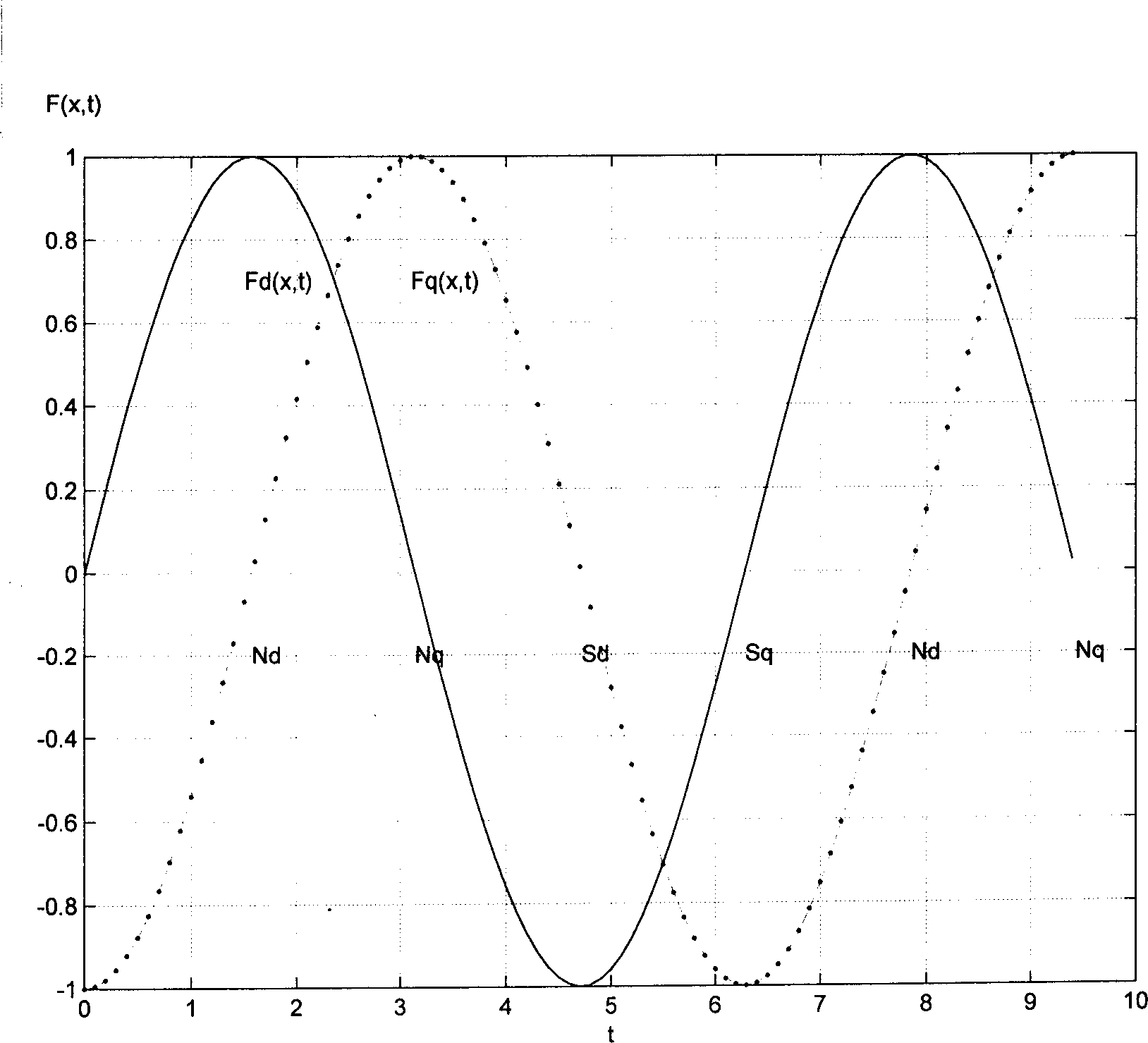
[0044] by Figure 4 The doubly-fed variable-speed salient-pole synchronous motor shown is taken as an example for implementation description. The number of pole pairs of the motor is P=2, the number of slots of the stator is Z=48, the stator is a three-phase symmetrical winding, and the number of parallel branches is a. The rotor has d, q two-phase windings, and the number of magnetic pole pairs is 2P=4, wherein the magnetic poles of the d-phase winding are Nd and Sd respectively, and the magnetic poles of the q-phase winding are Nq and Sq respectively, and the d and q two-phase excitation windings are in space The phase difference is 90° electrical angle, and the time difference is 90° electrical angle. The d and q two-phase excitation windings form an orthogonal winding, and corresponding damping windings are installed on the magnetic poles. The stator is powered by a symmetrical three-phase AC power supply, and the two-phase excitation windings of the rotor d and q are res...
PUM
 Login to View More
 Abstract
Description
Claims
Application Information
 Login to View More