
Low stressed self anchoring method for group anchor steel tension cables
A steel strand, low-stress technology, applied in the direction of cable-stayed bridges, bridge parts, bridge forms, etc., can solve the problems of heavy lifting equipment, high brittleness, low safety reserve, etc., and achieve effective anchorage area increase and fatigue resistance performance Improvement, fatigue performance improvement effect
- Summary
- Abstract
- Description
- Claims
- Application Information
AI Technical Summary
Problems solved by technology
Method used
Image

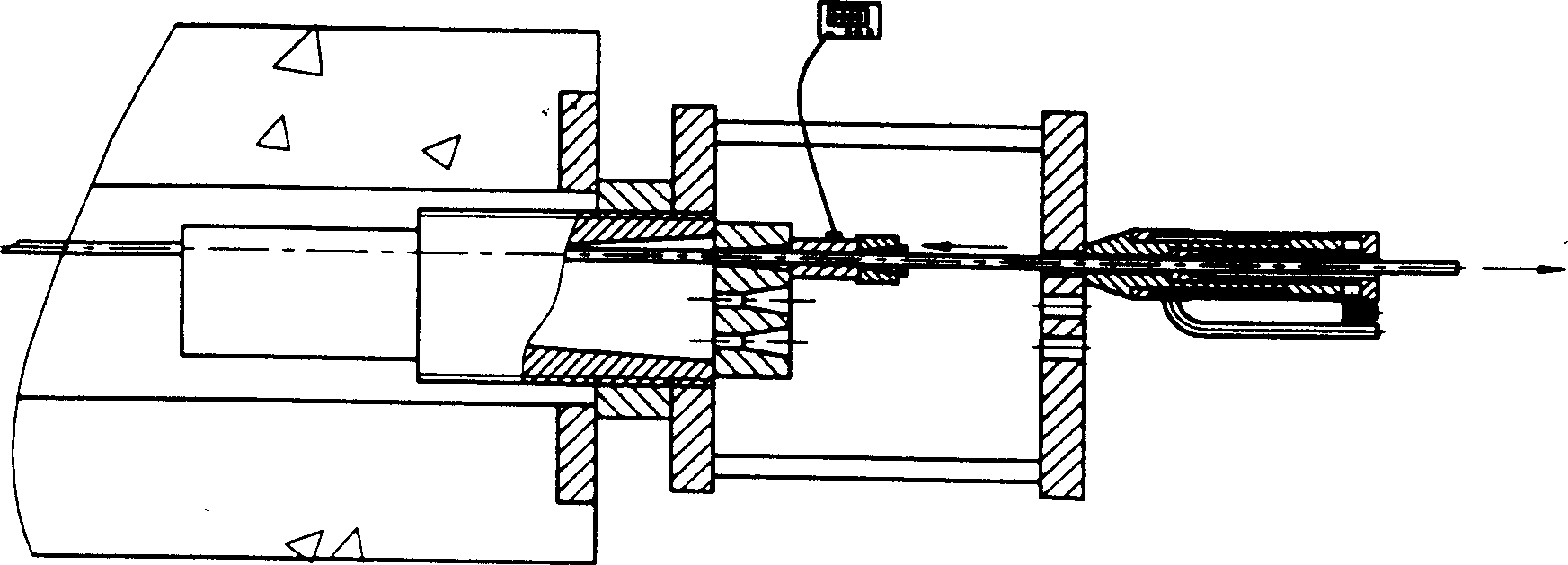
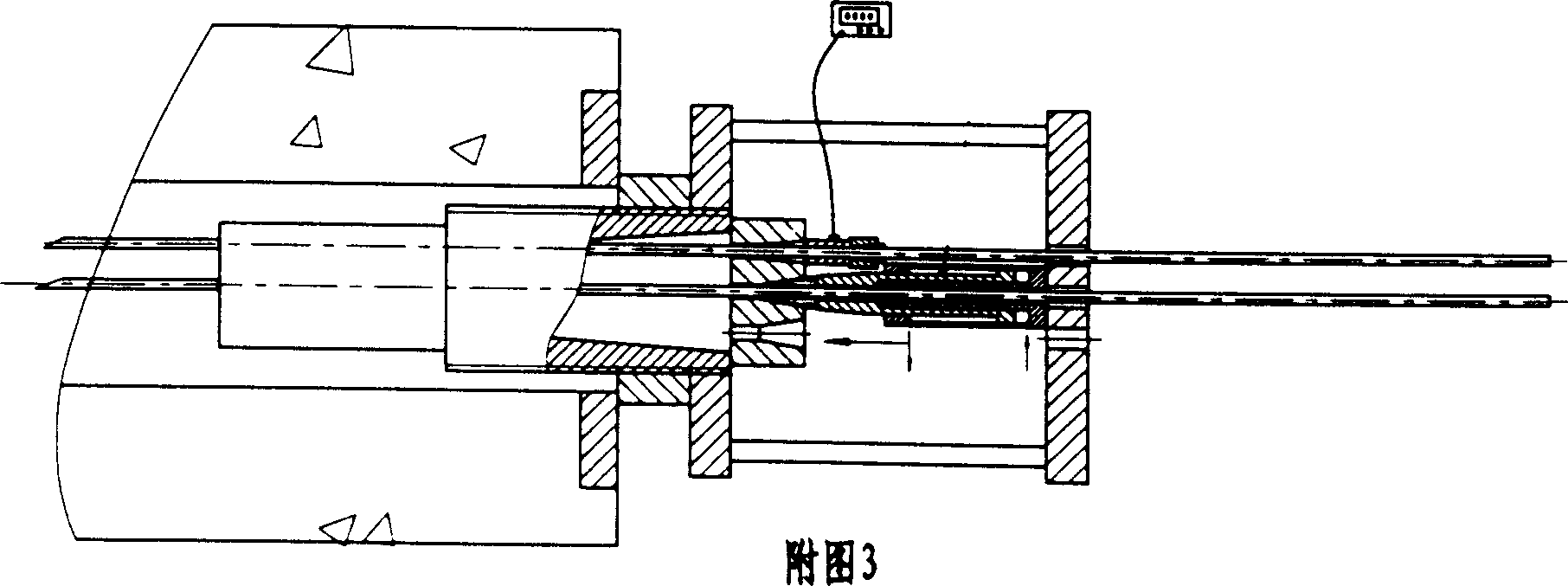
Examples
Embodiment approach
[0034] The best implementation mode of the present invention is:
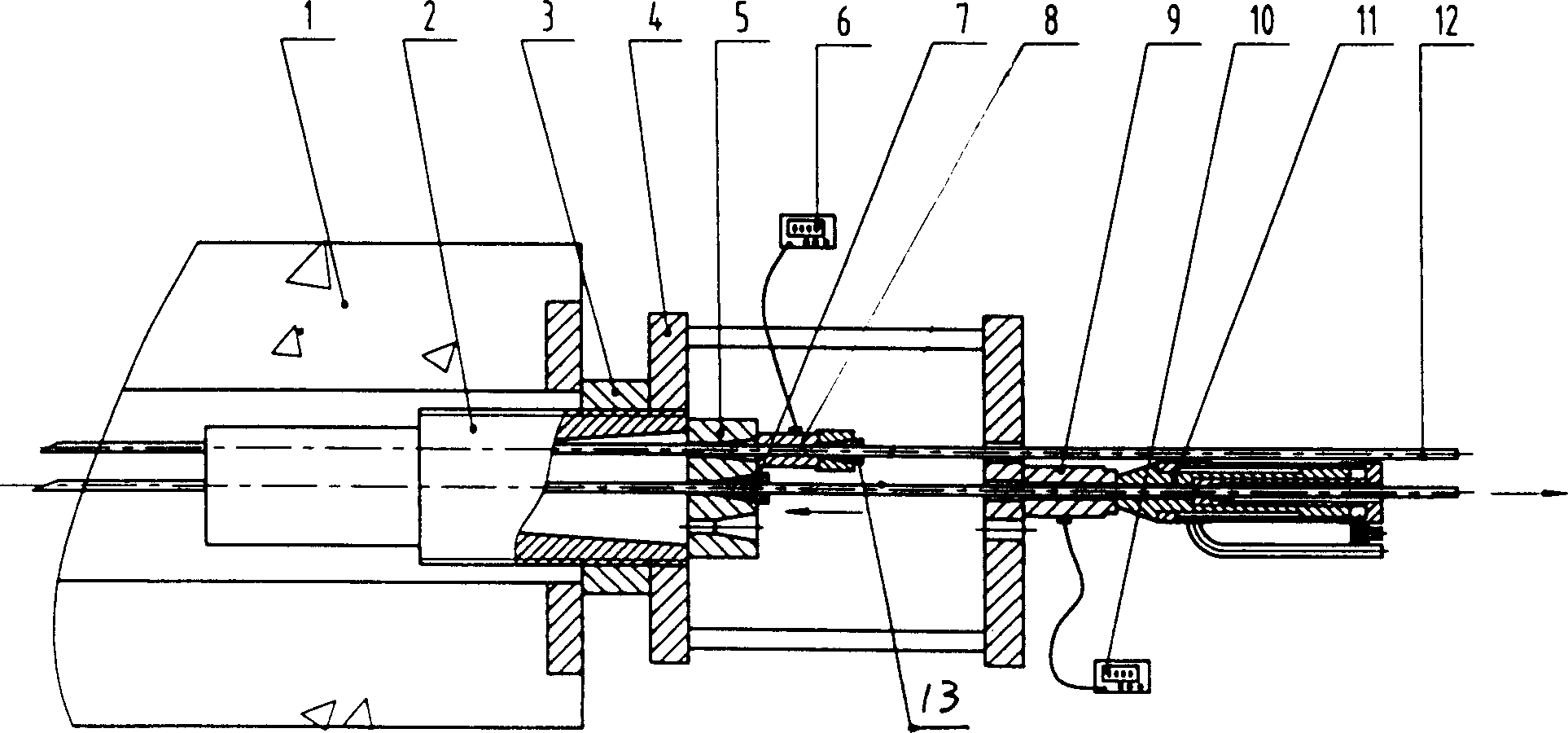
[0035] (1), install reaction force frame 4, make it be connected with supporting cylinder 2 by threaded connection; Single-hole force sensor 8 is installed on the first tensioned steel strand 12, and is connected with digital strain gauge 6, installs single Hole tool anchor assembly 13, then zero-adjust the digital strain gauge 6, use a single-hole front clip jack 13 to push against the inner side of the reaction frame 4, stretch the first steel strand 12 to the designed force value, and tighten it with a tool the tool clip in the tool anchor assembly 13;
[0036] (2), install the single-hole force sensor 9 on the second steel strand 12, and connect it with the digital strain gauge 10, and adjust zero, push the outer end surface of the reaction force frame 4 with the front clip jack 11 of the single hole Perform tensioning so that the force value displayed by the digital strain gauge 6 is consistent with the f...
PUM
 Login to View More
 Abstract
Description
Claims
Application Information
 Login to View More