
Engine disconnect clutches having torque converter feed-through activation for vehicle powertrains
a technology of torque converter and powertrain, which is applied in the direction of fluid coupling, hybrid vehicles, gearing, etc., can solve the problems of torque multiplication of impeller torque, and achieve the effect of reducing gross vehicle weight and simplifying the powertrain system
- Summary
- Abstract
- Description
- Claims
- Application Information
AI Technical Summary
Benefits of technology
Problems solved by technology
Method used
Image

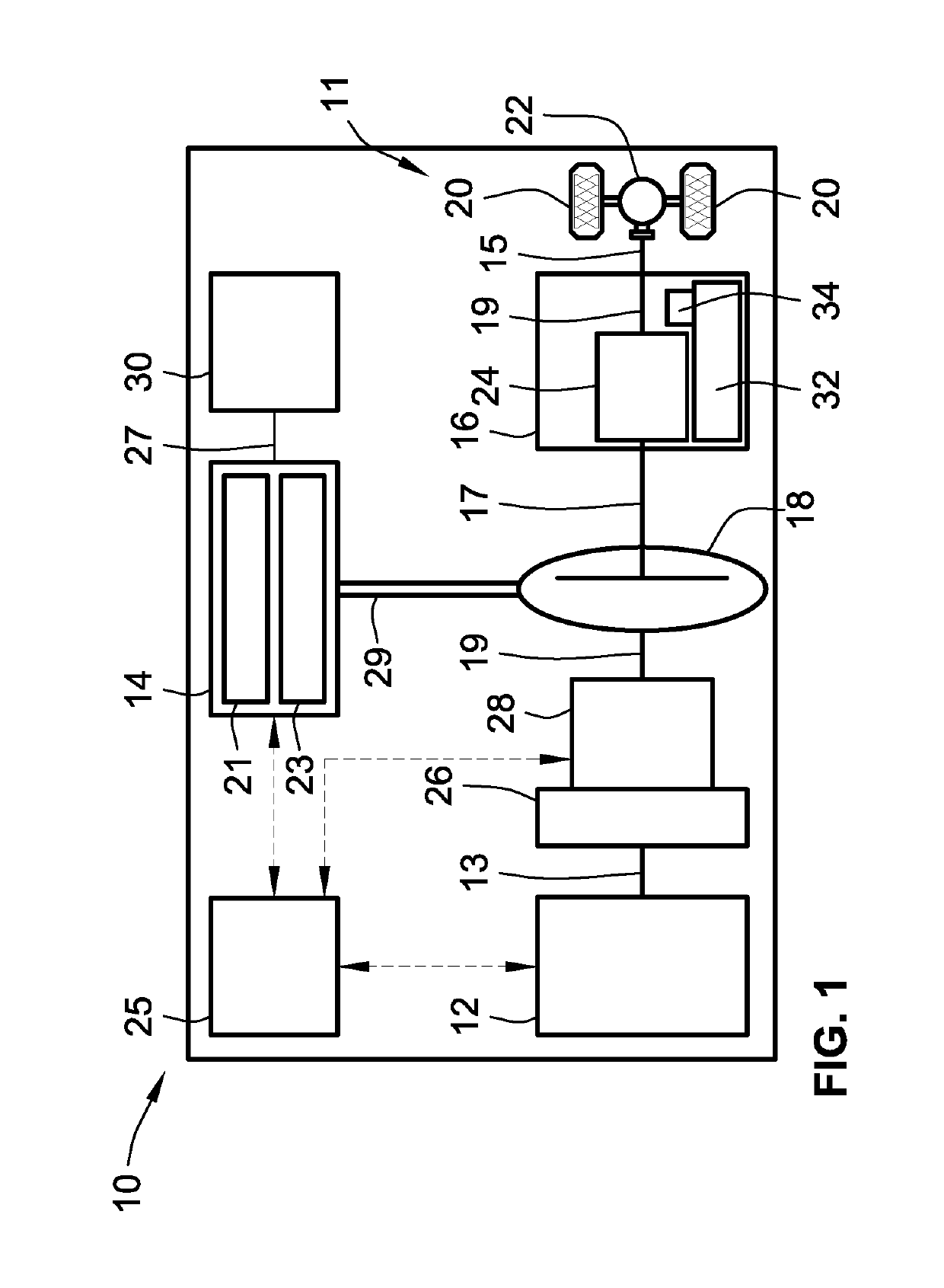
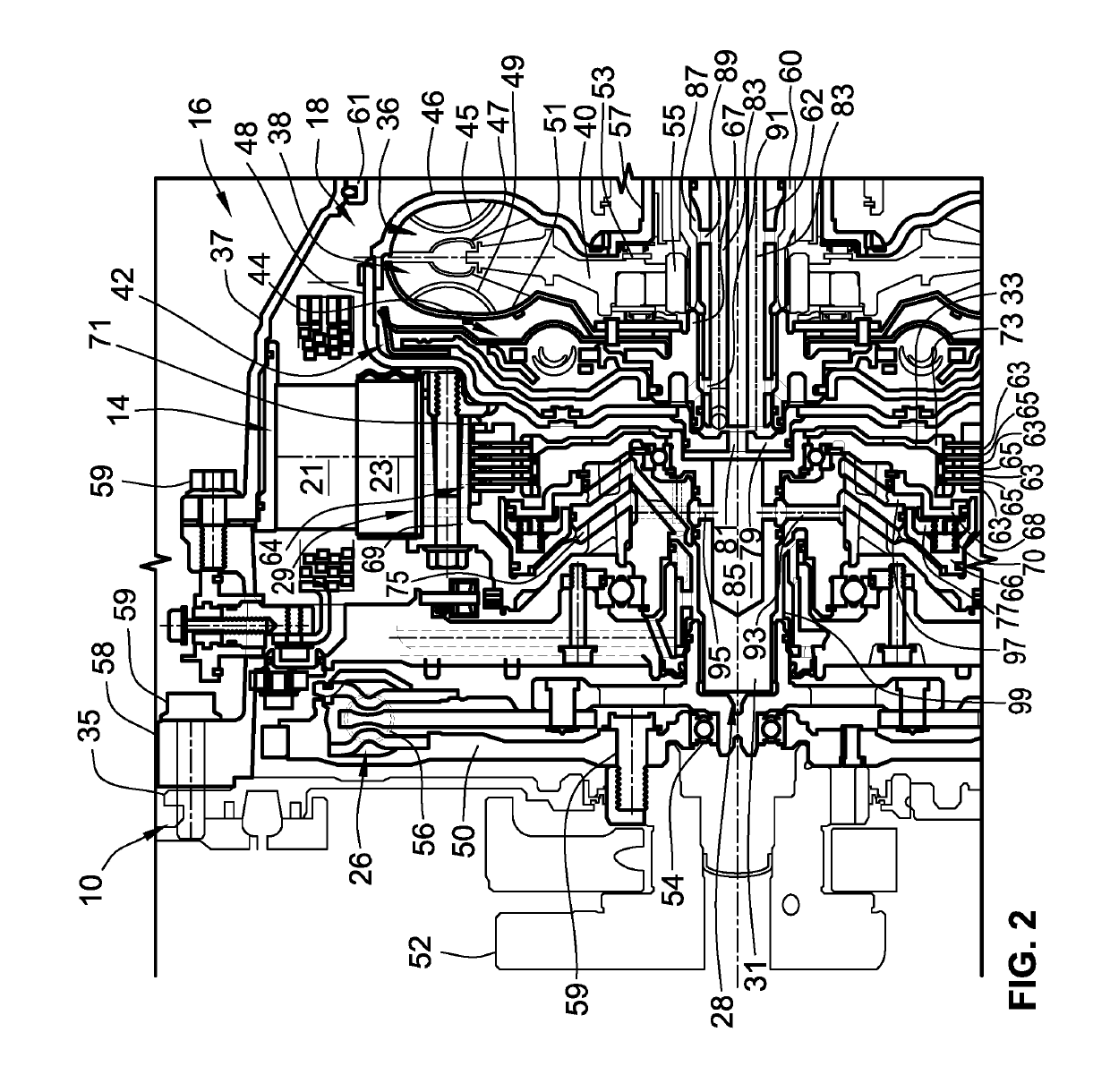
Examples
Embodiment Construction
[0019]This disclosure is susceptible of embodiment in many different forms. Representative embodiments of the disclosure are shown in the drawings and will herein be described in detail with the understanding that these embodiments are provided as an exemplification of the disclosed principles, not limitations of the broad aspects of the disclosure. To that extent, elements and limitations that are described, for example, in the Abstract, Introduction, Summary, and Detailed Description sections, but not explicitly set forth in the claims, should not be incorporated into the claims, singly or collectively, by implication, inference or otherwise.
[0020]For purposes of the present detailed description, unless specifically disclaimed: the singular includes the plural and vice versa; the words “and” and “or” shall be both conjunctive and disjunctive; the words “any” and “all” shall both mean “any and all”; and the words “including,”“containing,”“comprising,”“having,” and the like, shall e...
PUM
 Login to View More
 Abstract
Description
Claims
Application Information
 Login to View More