
System and method for reliability-based load balancing and dispatching using software rejuvenation
- Summary
- Abstract
- Description
- Claims
- Application Information
AI Technical Summary
Benefits of technology
Problems solved by technology
Method used
Image

Examples
Embodiment Construction
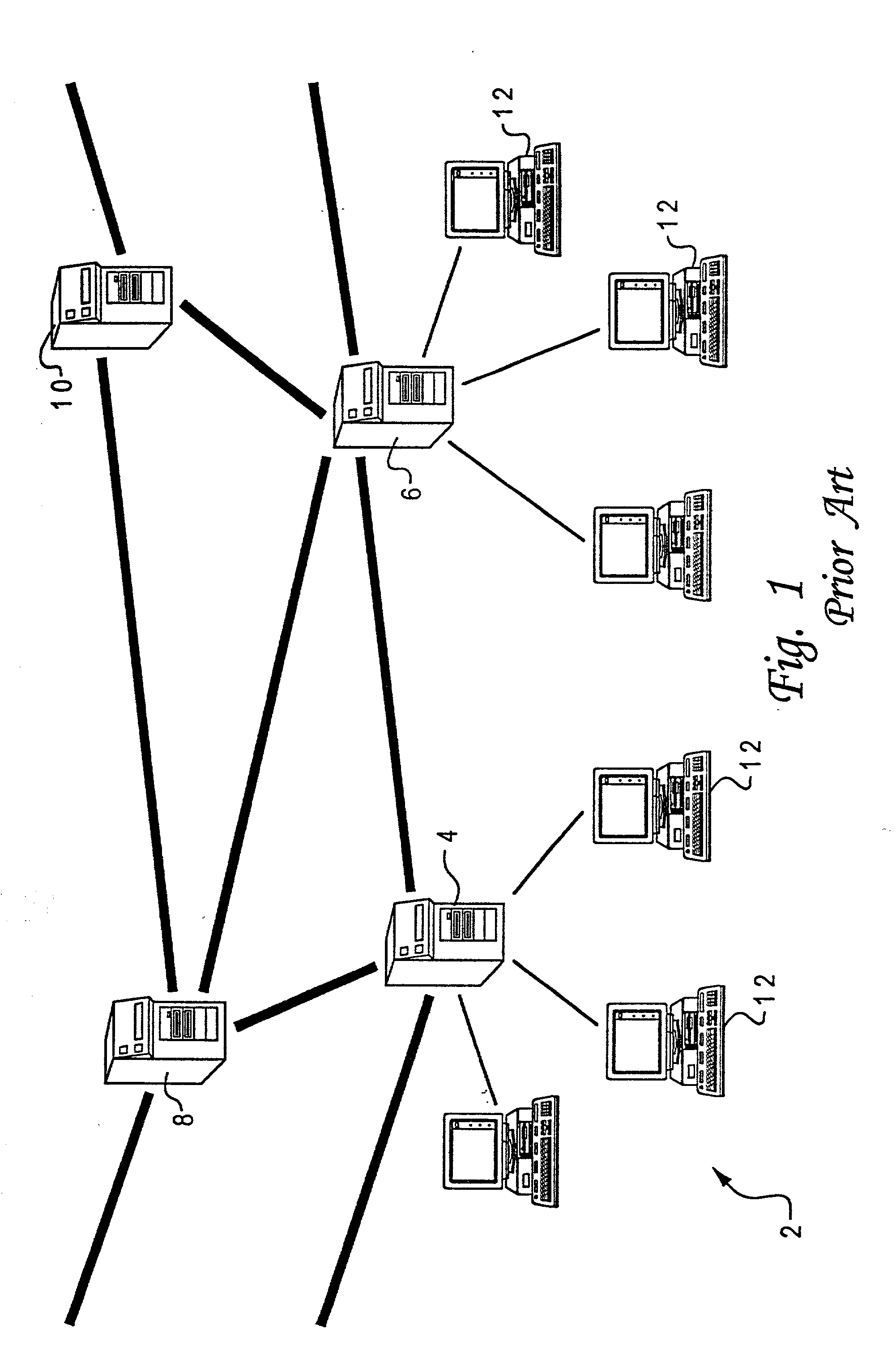
[0023] The present invention is directed to a method of enhancing the performance and reliability of a distributed processing system, particularly a system that is part of a computer network such as a local area network (LAN) or the Internet, similar to that depicted in FIG. 1. The invention may, however, be implemented in other networks so, while the present invention may be understood with reference to FIG. 1, this reference should not be construed in a limiting sense.
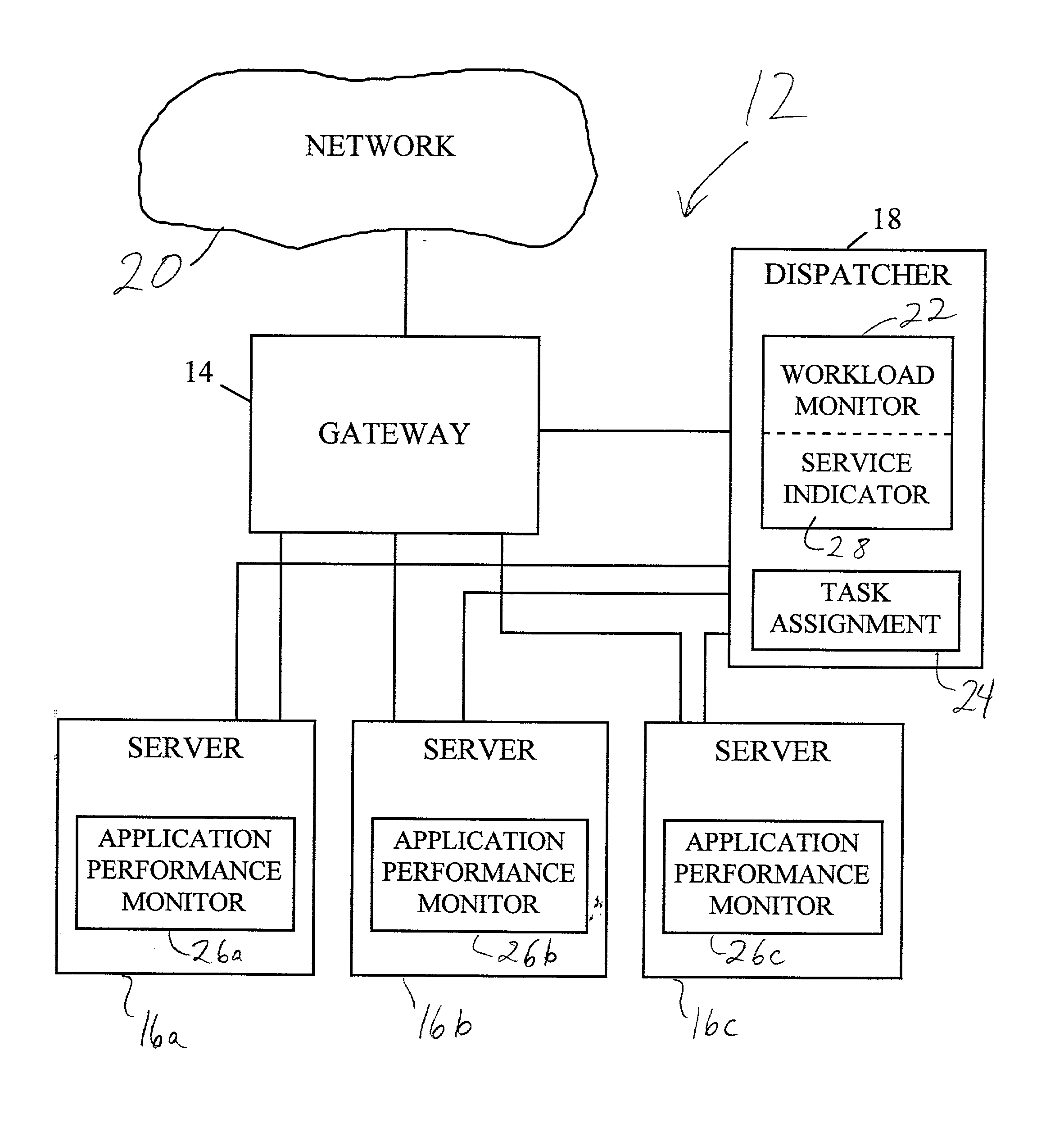
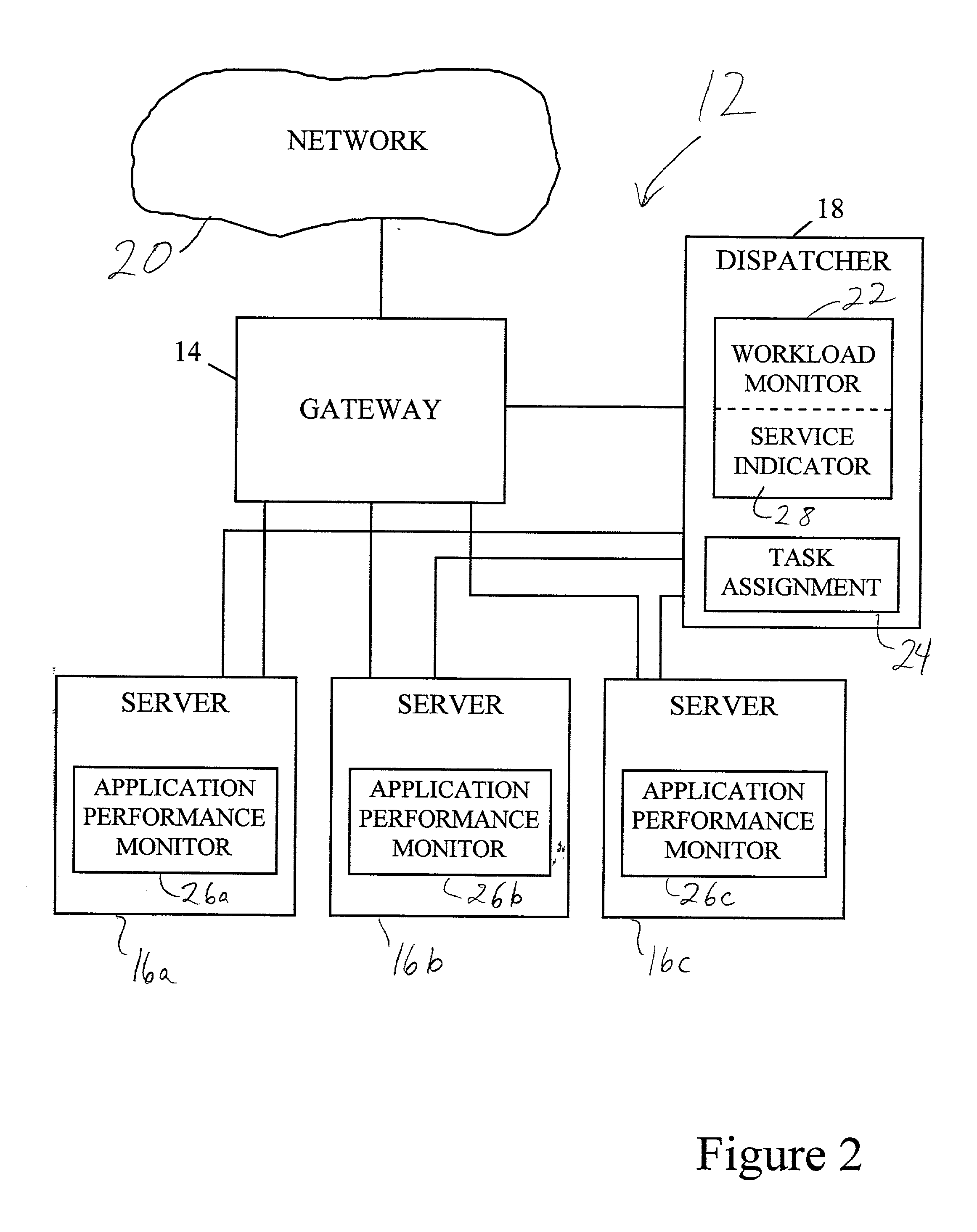
[0024] With further reference to FIG. 2, there is depicted one embodiment 12 of a multi-server network node constructed in accordance with the present invention. Node 12 is adapted to act as a single network location, e.g., a single TCP address. In an exemplary implementation, node 12 is an internet server, and may provide web pages in hypertext transfer protocol, or provide other electronic information using other conventional protocols.
[0025] Node 12 is generally comprised of a gateway interface 14, a plurality of ...
PUM
 Login to View More
 Abstract
Description
Claims
Application Information
 Login to View More