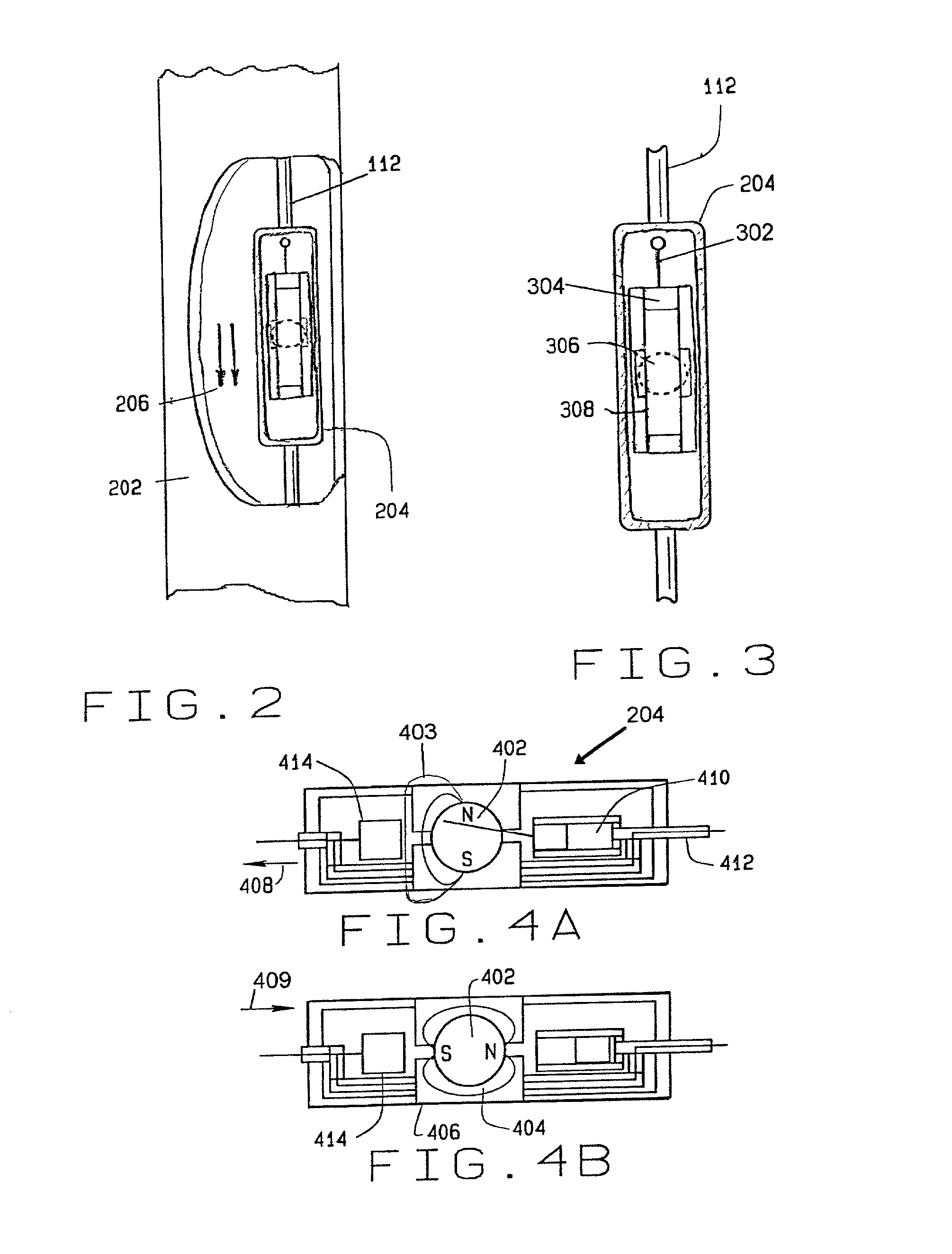
[0012] Also, as noted above, a magnet clamp is utilized to couple the shuttle to the borehole casing. The magnet clamp is more compact compared to typical mechanical
surface force clamping devices utilized in the industry because it does not involve engagement of or movement of mechanical parts exposed outside shuttle. Also, the magnet clamp does not have to be positioned in a side passageway away from the primary flow passageway of the well and its use eliminates the need for mechanical anchoring arms thereby further reducing the shuttle size. One embodiment of the magnet clamp comprises a surface hydraulic
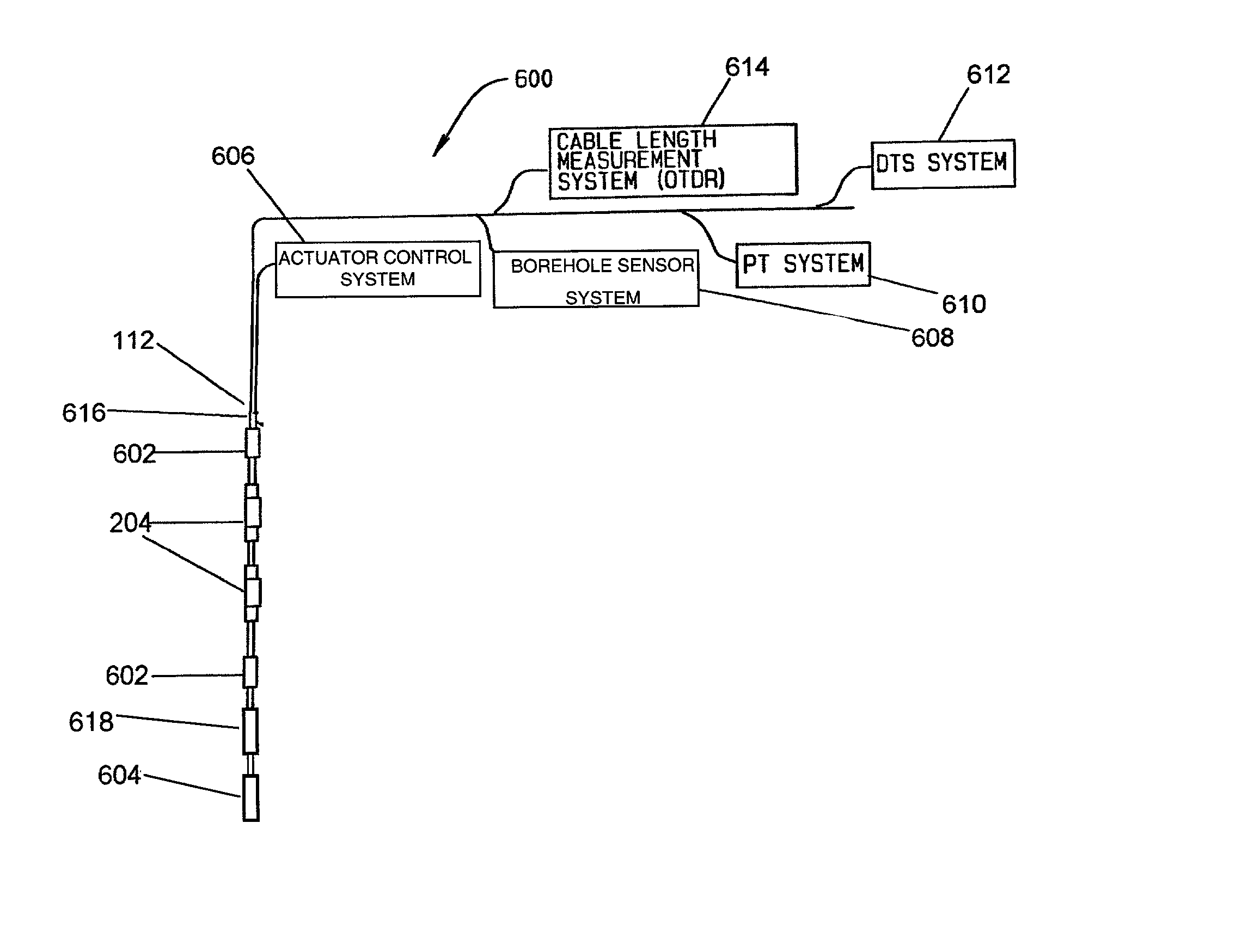
actuator control system adapted to hydraulically control a downhole
actuator for positioning of a magnet to engage or disengage the shuttle. Electrical
actuator control systems can likewise be used. The magnetic clamp is a clear improvement over the typical mechanical
surface force clamping because the seismic
sensor system can be retracted and utilized in different boreholes. However, as indicated above the magnet clamp does not address the issue of a stuck tool.
[0013] Another embodiment can comprise a conveyance having a sensor section where the various sensors are attached and a weak point in the conveyance below the small outer
diameter sensor section and where the larger outer
diameter main
electronics cartridges, weights or other larger components are attached to the conveyance below the weak point. This embodiment facilitates
fishing a stuck tool and if necessary breaking away the upper portion of the conveyance at the weak point.
[0014] Another embodiment of the invention incorporates bow springs with the shuttle for facilitating
coupling and decoupling of the sensor. The bow spring can be adapted to extend the shuttle away from the conveyance toward the borehole casing and retract the shuttle against the conveyance
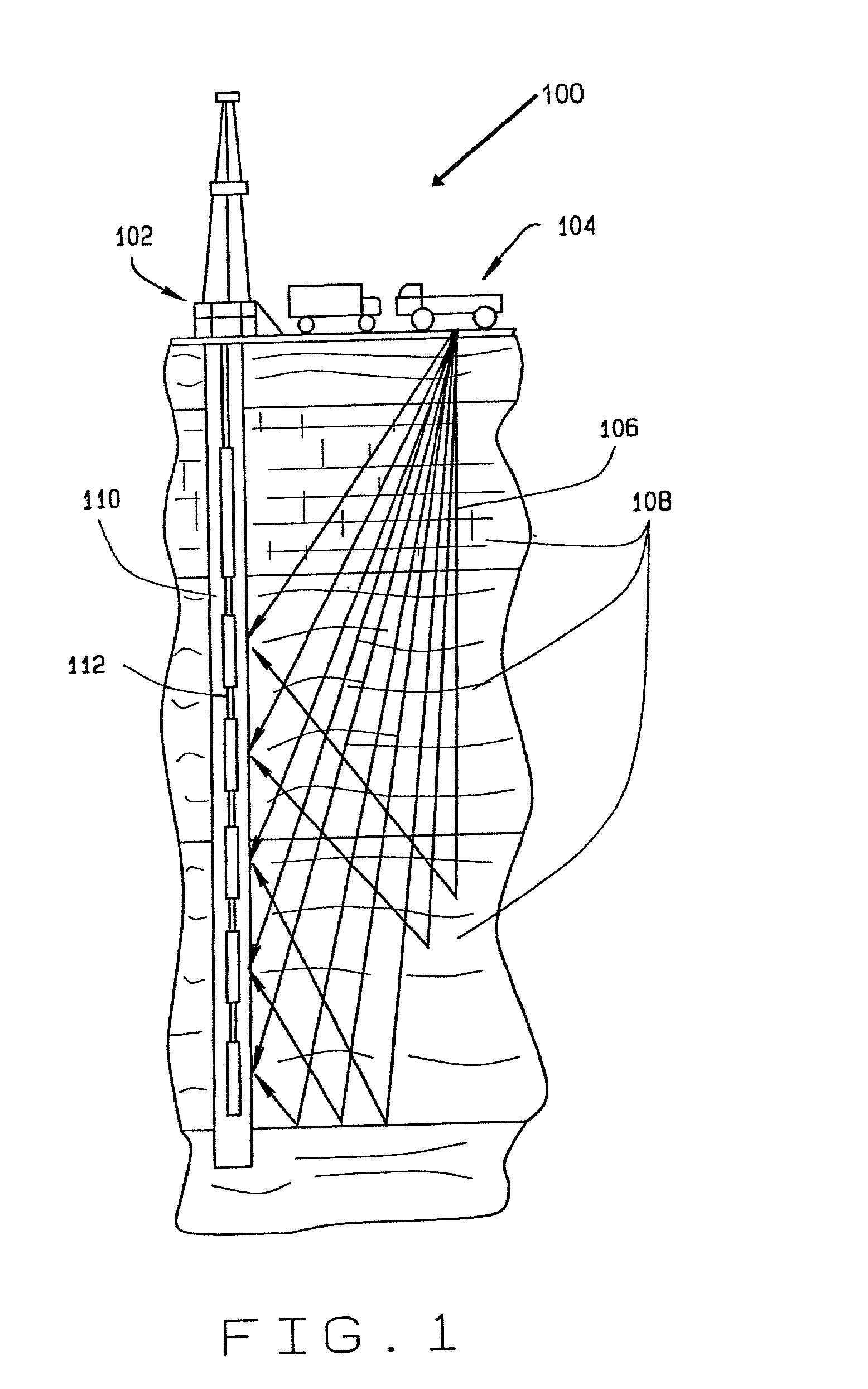
[0016] One embodiment of the present invention is an apparatus and method that utilizes the benefits of
fiber optic communication and sensor systems combined with a plurality of shuttle devices attached along a
coiled tubing, or a
cable line, wire line, slickline, or other suitable downhole deployment means. The shuttle provides a housing for the sensors and each shuttle has a magnetic
coupling clamp which enables the present invention to effectively and removably deploy or spool seismic sensor arrays downhole into a survey borehole for recording multi-level three-dimensional borehole seismic data. The borehole monitoring or deployment tool comprises a
coiled tubing, or a
cable line, wire line, slickline or other suitable conveyance for extending a plurality of shuttle devices containing
fiber optic seismic sensors where the shuttle devices have a magnetic
coupling clamp controllably operable to fixedly engage and acoustically couple the shuttle to the borehole casing. The magnetic clamp is further controllably operable to disengage and uncouple the shuttle from the borehole casing.
[0017] When the present invention utilizes
fiber optic sensor systems, it benefits from many advantages offered by fiber optic systems. For example, fiber optic systems can operate passively and therefore downhole
electronics and associated power from the surface to operate the downhole
electronics are not required. The ability to eliminate downhole electronics improves reliability of the downhole
sensor system particularly in higher temperature environments. The electronics necessary for operating the sensor arrays can be located at the surface and since the surface electronics can be relatively expensive, they can be shared with other wells and utilized for multiple downhole
fiber optic sensor systems. Also, fiber optic technology allows for a smaller profile and lighter weight
system. Still further, all of these capabilities are advantageous for acoustic and seismic imaging applications which require a large
sensor array with high
data transmission capabilities. In this regard, fiber optic sensors can also support multi-
functional measurements through the fiber optic line. This feature has great
advantage in wire line or
cable line applications as well as production and formation monitoring sensor systems.


 Login to View More
  Login to View More