Where animals such as horses are sent to
pasture without a halter, they can be elusive and evade capture for a considerable period of time.
If these are working animals, the time wasted capturing the animal results in lost revenue for the owner.
There is considerable disagreement in the equine industry, whether these same animals should be left unattended while wearing halter devices.
It is common knowledge that equine
livestock, in particular horses, are at risk of injury or death due to strangulation or
entrapment should halters, bridles or other tack equipment become ensnared during periods when the animal is not under supervision.
The problem with leaving the halter on the animal is the same as with other tack.
Often foals will play and jump when in a group, thus increasing the likelihood of
entrapment between animals, further
increasing risk of injury or death.
In addition to being injured or killed as disclosed above, animals can escape from the confines of the paddock or
pasture area.
If roads abut these lands, there is a further possibility of the animal being struck by vehicles at night due to the inability of the driver to see the animal.
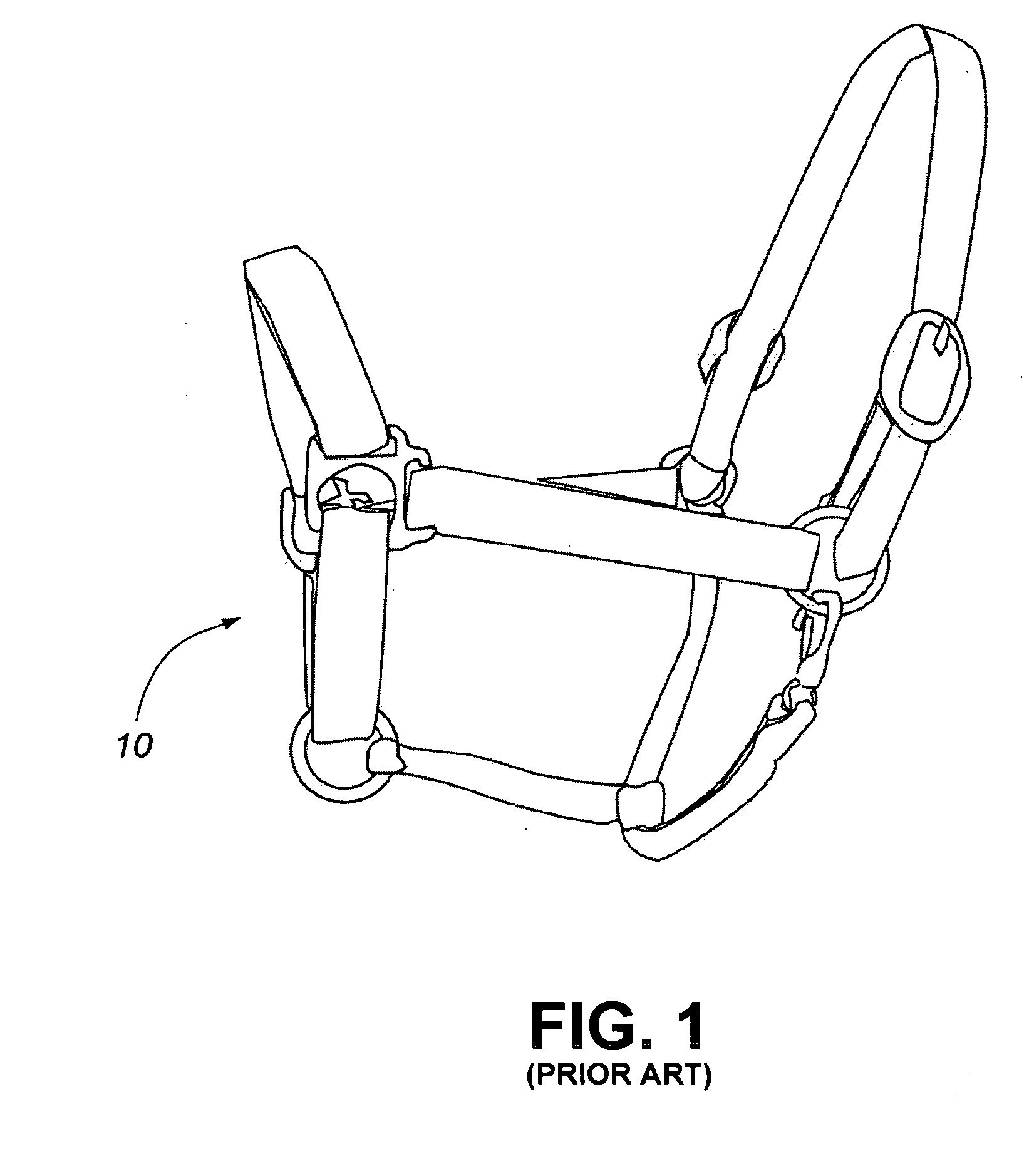
Conventional halter designs can cause problems with the horse in other ways.
Heavy leather or thick weave nylon halters, particularly those with rough or irregular hardware, when left on for many hours can chafe or wear the hair or
skin leaving marks that are not acceptable when showing the animal.
A problem with this arrangement is that it is susceptible to
user error.
For example due to inattention or inexperience, the halter may be unintentionally used while the non-breakable member is engaged resulting in compromised safety for the horse.
Furthermore, releasable halter systems that comprise sections that break away are commonly fabricated of leather, which tends to be relatively heavy and non-pliable.
Such halters are known to cause considerable chaffing and damage to the animal's
skin when worn for long periods of time.
This requires the owner incurring additional cost than would otherwise be necessary.
The main drawbacks with leather halters tend to be weight, hair and
skin chaffing of the animal, initial
purchase cost and care for the leather material.
In addition, environment can affect the break away threshold, for example, wet and dry cycles when the leather is exposed to water rendering the breakaway threshold unpredictable or unacceptable.
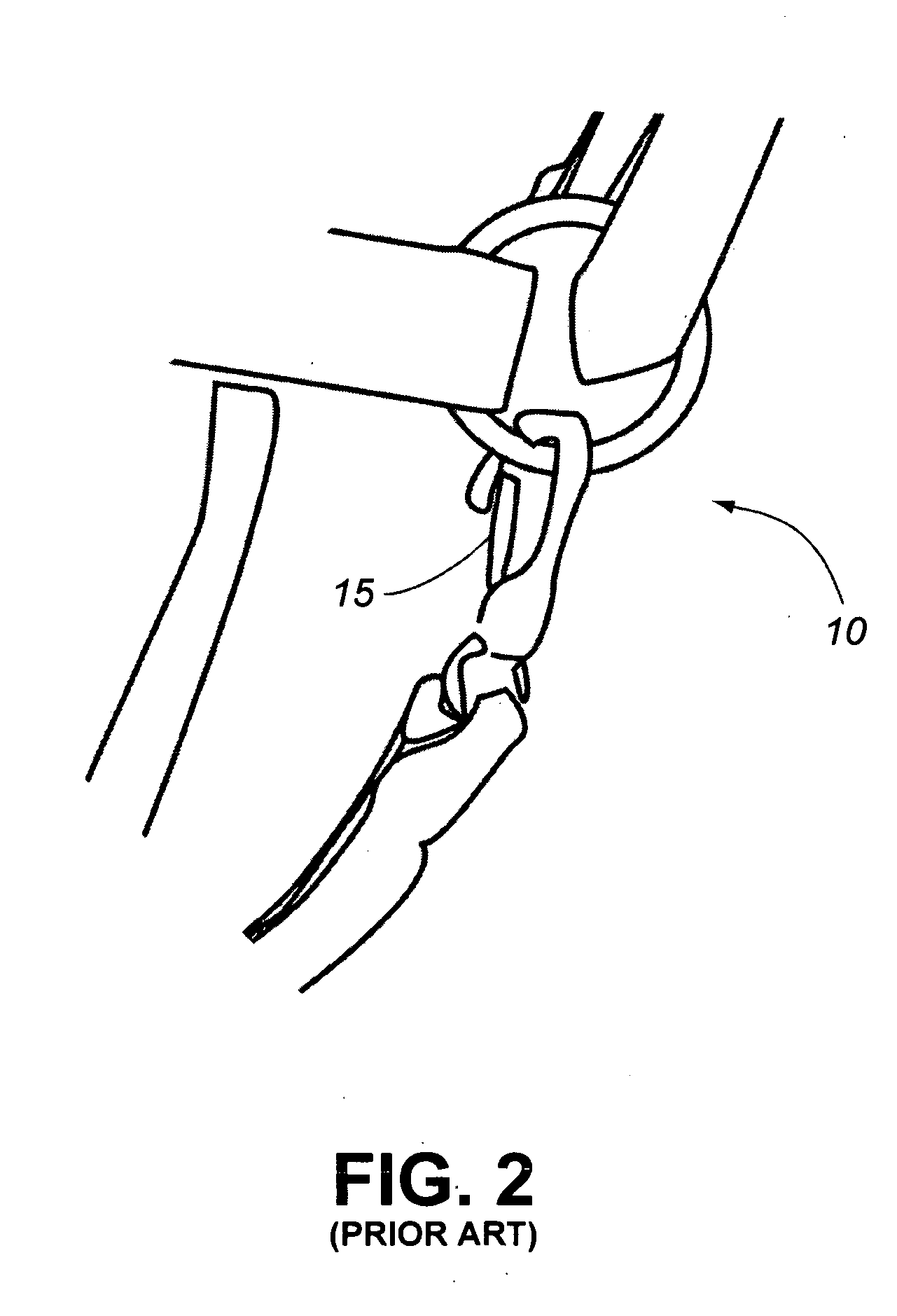
This detail illustrates a typical fault of many conventional halters, wherein hardware, clips, buckles and similar fasteners 15 form an irregular surface or have undesirable protrusions or corners with the result that the
fastener can abrade or dig into the skin of the animal.
However, it is known that nylon halters suffer from the same problems of chaffing as discussed above in the context of leather halters.
In addition, conventional safety release mechanisms are still problematic.
For example, conventional halters that comprise two-section releasable
fastener material that folds under itself, may not release in accordance with the manufacturers
static force release tests.
In such an assemblage, the pressure exerted by the animal's
body contact on the strap may considerably increase the two-section
fastener longitudinal tensile strength, negating the release function.
However, an associated problem is that spring release clips are subject to sudden release due to “jerking” of a control lead affixed to the animal, which may cause premature release and subsequent startling of the animal.
Further,
metal clips and other similar materials are subject to wear and oxidation causing the spring release pressure to become un-calibrated over time or to fail.
If the release force is applied perpendicularly or tangentially to the releasable section, the section will release at a greatly attenuated level, causing nuisance releasing.
If such a condition were to arise, the longitudinal forces applied to the releasable section may be attenuated below the release force of the section, resulting in an unpredictable release strength and compromising the level of safety afforded.



 Login to View More
  Login to View More