
Device and method for direct delivery of a therapeutic using non-newtonian fluids
a non-newtonian fluid and fluid technology, applied in the field of direct delivery of therapeutics to target sites, can solve the problems of fluid viscosity drop, reduce shear stress, increase the viscosity of fluid, and reduce the effect of shear stress
- Summary
- Abstract
- Description
- Claims
- Application Information
AI Technical Summary
Benefits of technology
Problems solved by technology
Method used
Image

Examples
example
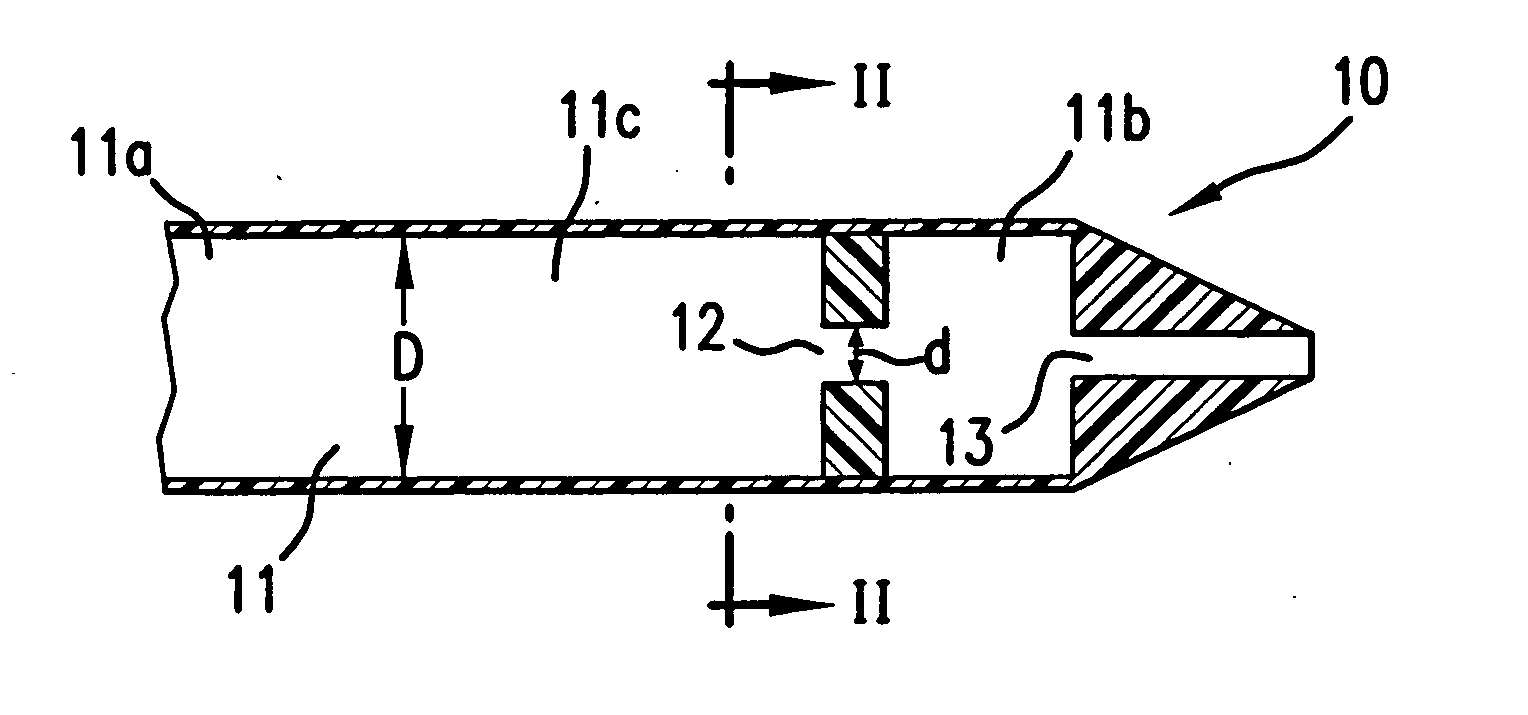
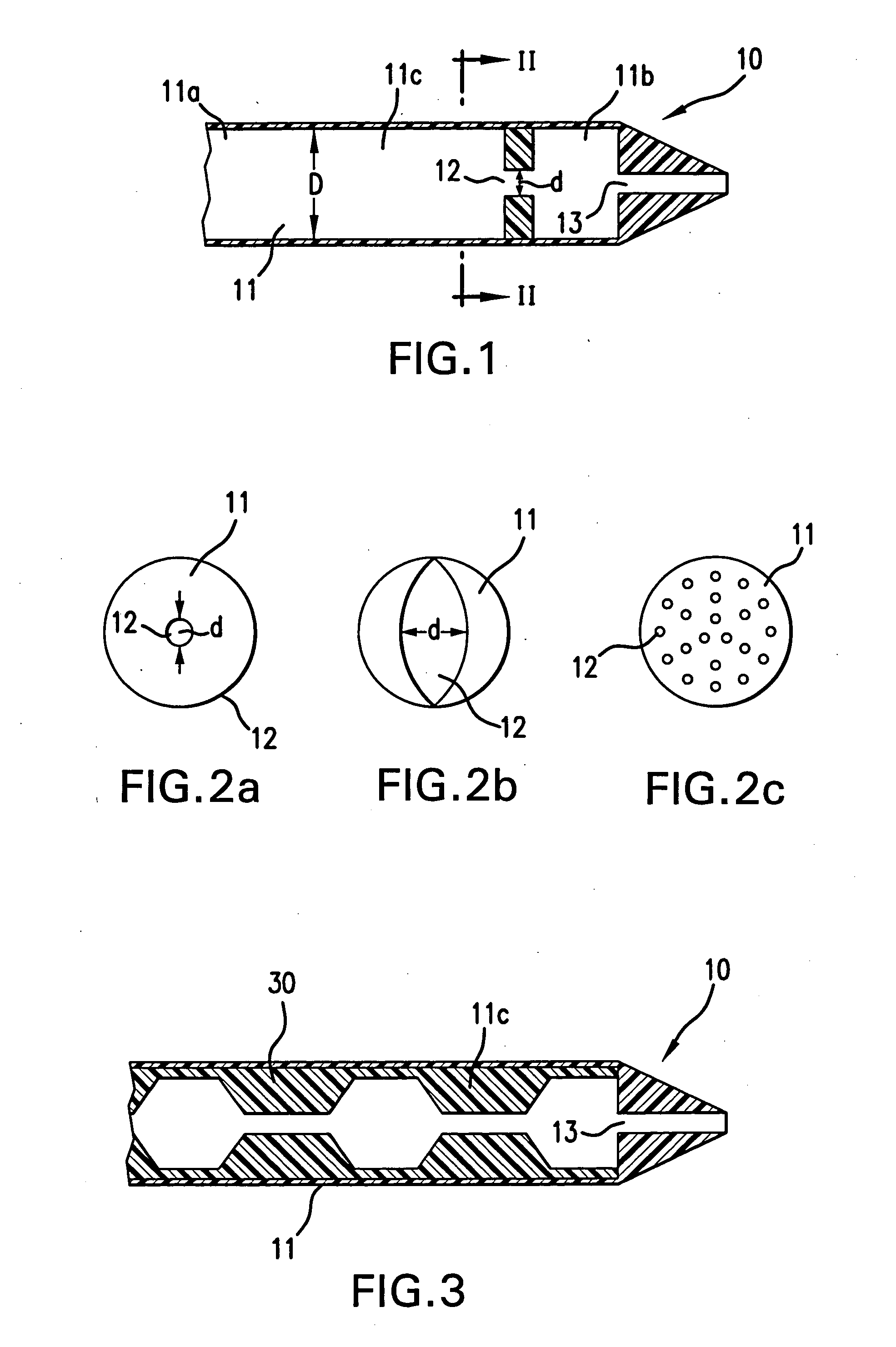
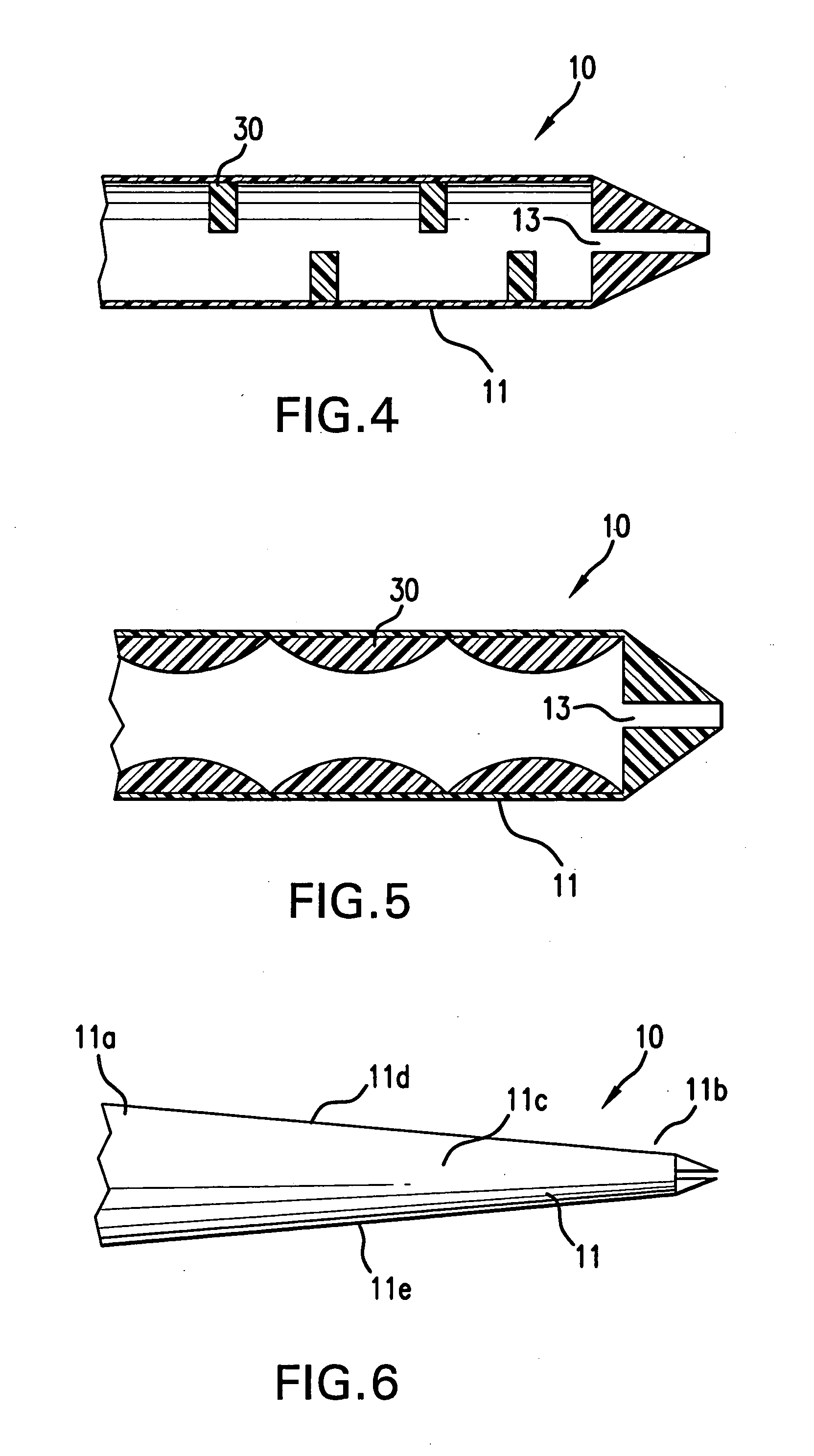
[0044] In order to test the concept of shear-thinning as it relates to a model therapeutic, a highly concentrated DNA solution is formulated. At 20 mg / ml, aqueous DNA is essentially solid. The DNA solution of the present example is formulated to 100 mg / ml. This solution is loaded into a device according to the present invention and a 26-gauge needle is attached. The DNA solution passes through the needle tip despite the tremendous viscosity of the solution. The DNA solution that exits the tip of the needle appears to have the viscosity of water. After a few moments, the DNA solution returns to its original viscosity. Fluorescent analysis of the DNA solution that is loaded into the device according to the present invention and the DNA solution that exits the needle tip reveals that there is essentially no change in the concentration of the DNA.
[0045] The foregoing description and example have been set forth merely to illustrate the invention and are not intended to be limiting. Each...
PUM
 Login to View More
 Abstract
Description
Claims
Application Information
 Login to View More