
Connector assembly for fluid transfer
a technology of fluid transfer and connectors, applied in water supply installations, cell components, electrochemical generators, etc., can solve problems such as present safety and other release issues, and achieve the effect of reducing fluid leakage and facilitating quick connection of connector structures
- Summary
- Abstract
- Description
- Claims
- Application Information
AI Technical Summary
Benefits of technology
Problems solved by technology
Method used
Image

Examples
Embodiment Construction
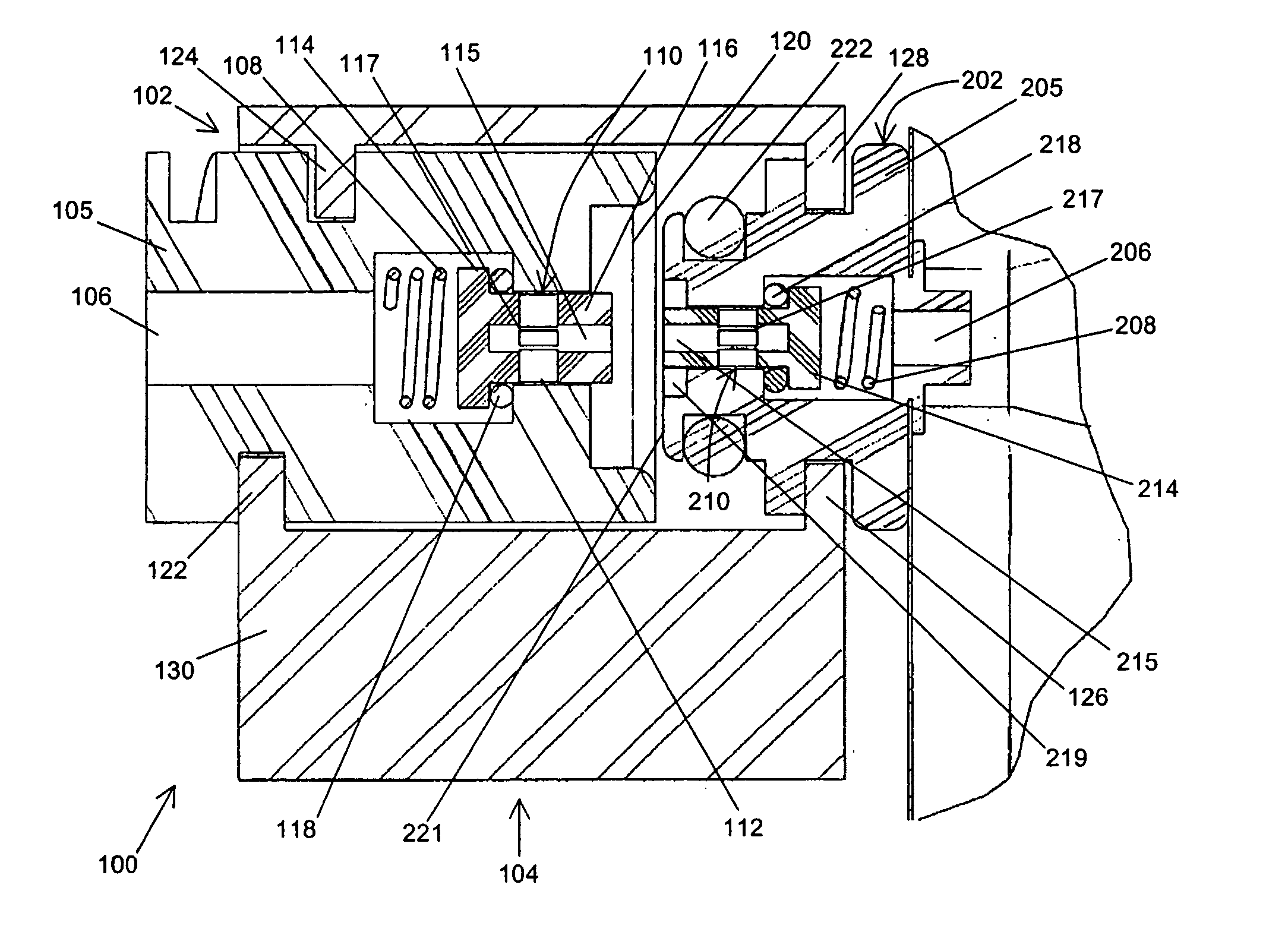
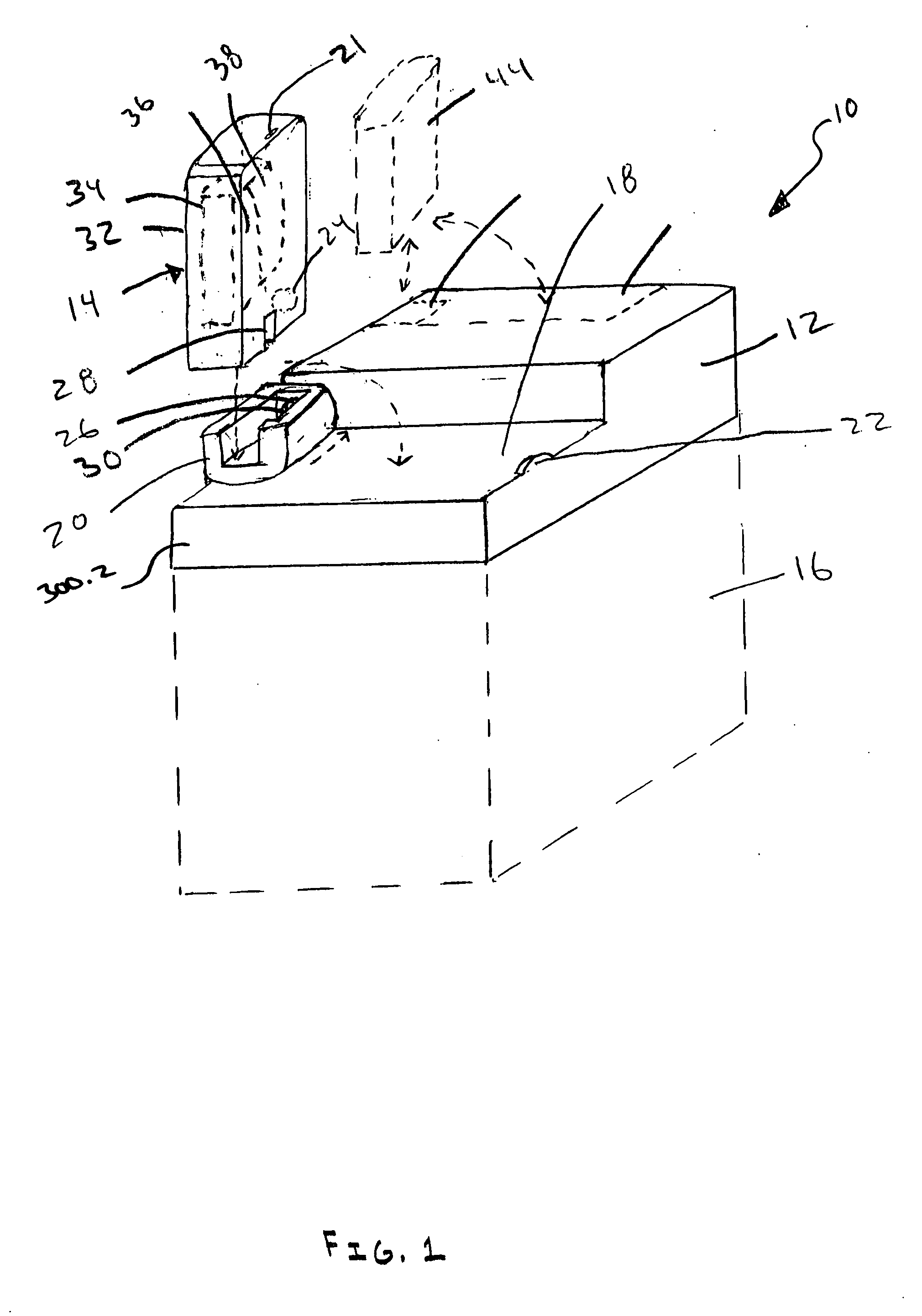
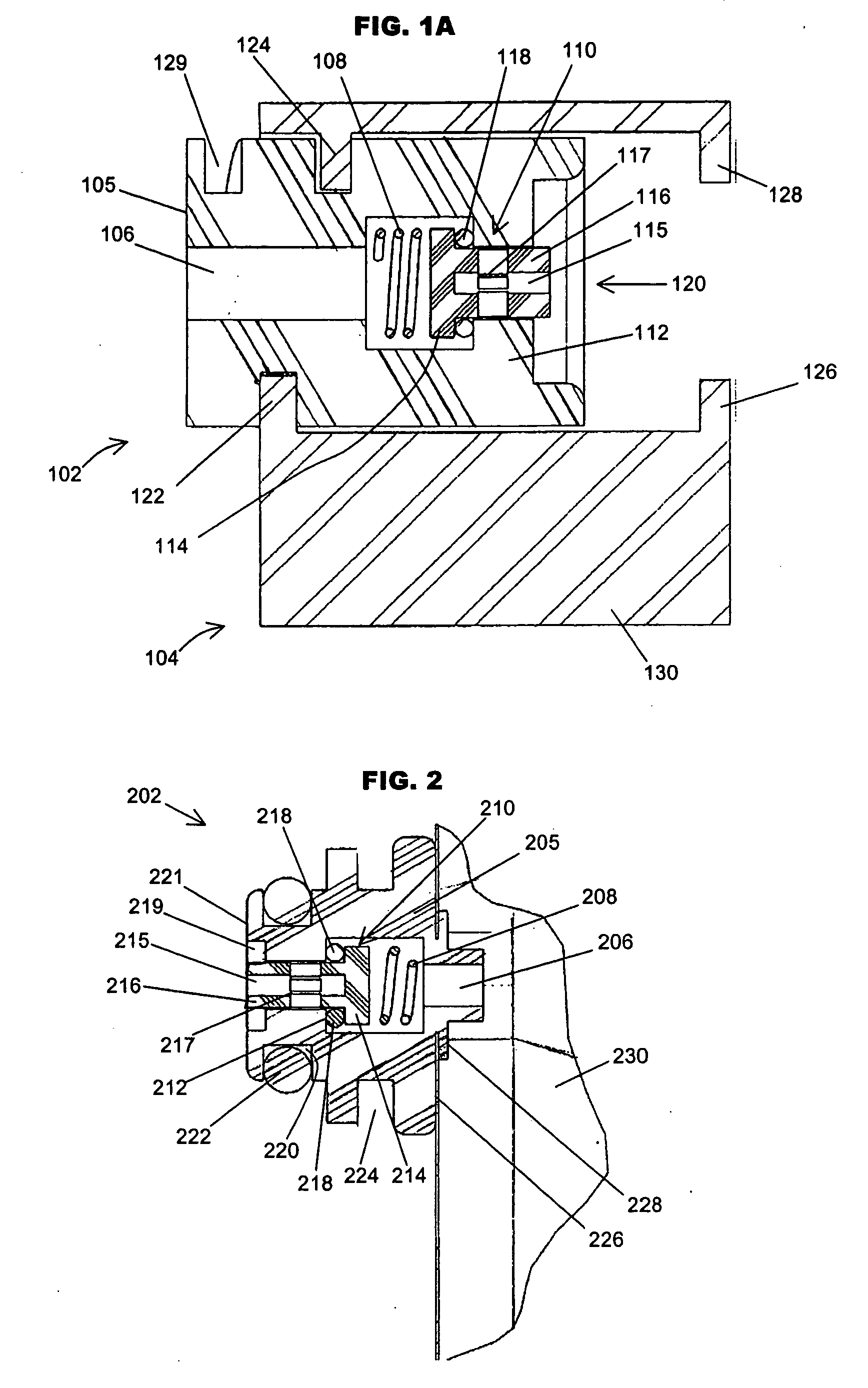
[0029] Referring to FIG. 1, an apparatus 10 is depicted comprising fuel cell 12, fuel cartridge 14 and device 16 that can be powered by fuel cell 12. Fuel cell 12 can comprise cartridge receiving region 18, cartridge receiver or coupling mechanism 20 designed to engage and hold fuel cartridge 14, and cartridge latch 22 adapted to engage with connection portion 21 of fuel cartridge 14 to secure fuel cartridge 14 to the cartridge receiving region 18. As depicted in FIG. 1, cartridge receiver 20 can receive fuel cartridge 14 and can rotate up to about 90 degrees, which facilitates positioning fuel cartridge 14 in cartridge receiving region 18 of fuel cell 12. In some embodiments, fuel cartridge 14 can further comprise connector member 24, and fuel cell 12 can comprise connector member 26 that is adapted to engage with connector member 24. Generally, once fuel cartridge 14 has been engaged with cartridge receiver 20, rotation of cartridge receiver 20 can engage and unseal connector memb...
PUM
| Property | Measurement | Unit |
|---|---|---|
| cylindrical structure | aaaaa | aaaaa |
| resilient | aaaaa | aaaaa |
| rotation | aaaaa | aaaaa |
Abstract
Description
Claims
Application Information
 Login to View More