

Spacerless artificial disc replacements
a technology of artificial discs and spacers, applied in the field of artificial disc replacements, can solve problems such as design complexity, and achieve the effect of facilitating more normal spinal flexion, extension, and lateral bending
- Summary
- Abstract
- Description
- Claims
- Application Information
AI Technical Summary
Benefits of technology
Problems solved by technology
Method used
Image

Examples
Embodiment Construction
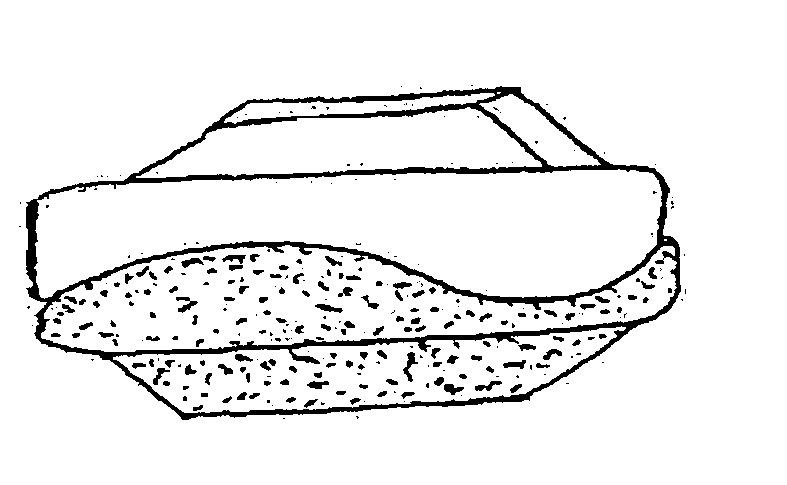
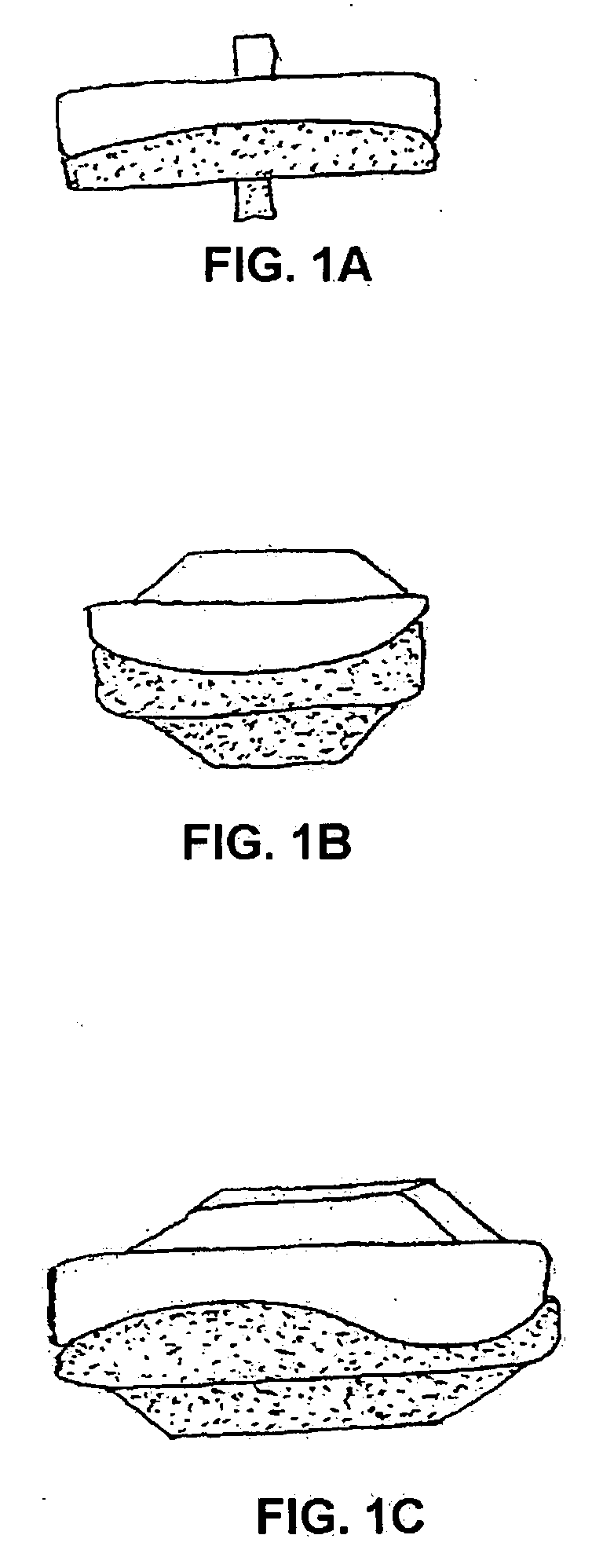
[0022]FIG. 1A is an anterior view of an ADR according to the invention. FIG. 1B is a lateral view of the ADR of FIG. 1. FIG. 1C is an oblique view of the ADR of FIG. 1.
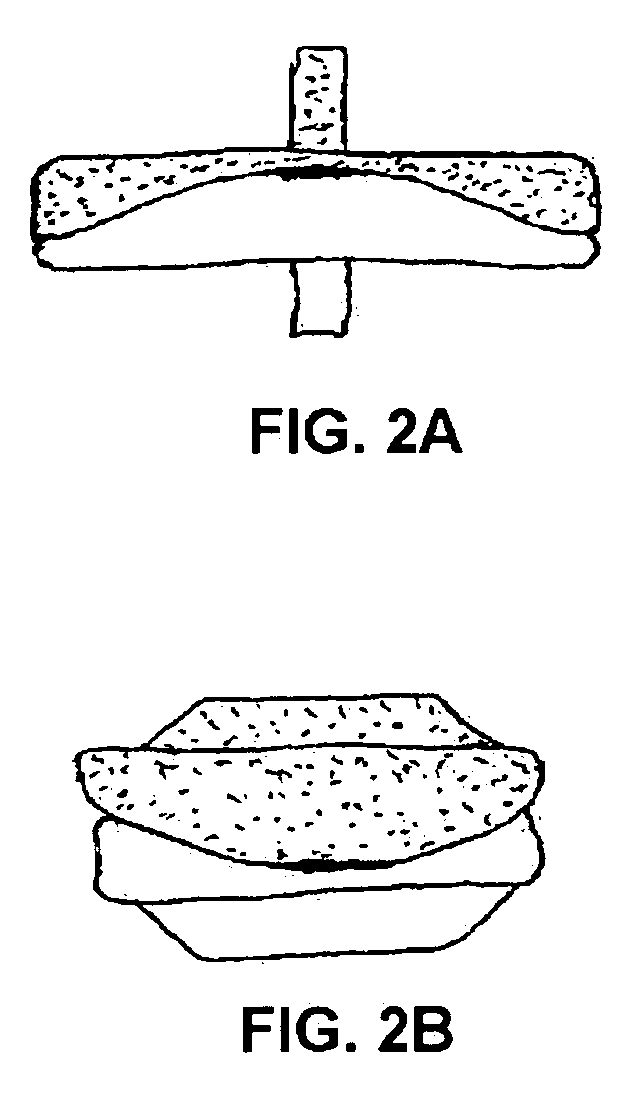
[0023]FIG. 2A is a view of the anterior aspect of an alternative embodiment of the ADR, wherein the articulating surfaces of both components have a flat area centrally from the front to the back of the ADR. FIG. 2B is a view of the lateral aspect of an alternative embodiment of the ADR drawn in FIG. 2B. The flat area of the articulating surfaces courses centrally from side of the DR to the other side. The flat area allows one component to translate slightly on the other component. Alternatively, a curved area with a large radius could replace the flat area.
[0024]FIG. 3A is a view of the anterior aspect of an alternative, less constrained, embodiment of the saddle-shaped ADR drawn in a fully flexed position. The less constrained embodiment facilitates spinal flexion, extension, and lateral bending. FIG. 3B is a view ...
PUM
 Login to View More
 Abstract
Description
Claims
Application Information
 Login to View More