System and method for high-performance scanner calibration

a scanning system and high-performance technology, applied in the field of scanning system calibration, can solve the problems of noticeably speeding up scan and copy time, and achieve the effects of reducing the memory requirement for offset and gain calibration, reducing the size/performance bottleneck of the scanner system, and increasing performan
US20060001921A1Inactive Publication Date: 2006-01-05JOHN V PEZDEK

Patent Information

Authority / Receiving Office
US · United States
Current Assignee / Owner
JOHN V PEZDEK
Publication Date
2006-01-05
Estimated Expiration
Not applicable · inactive patent

Smart Images

  • Figure 1
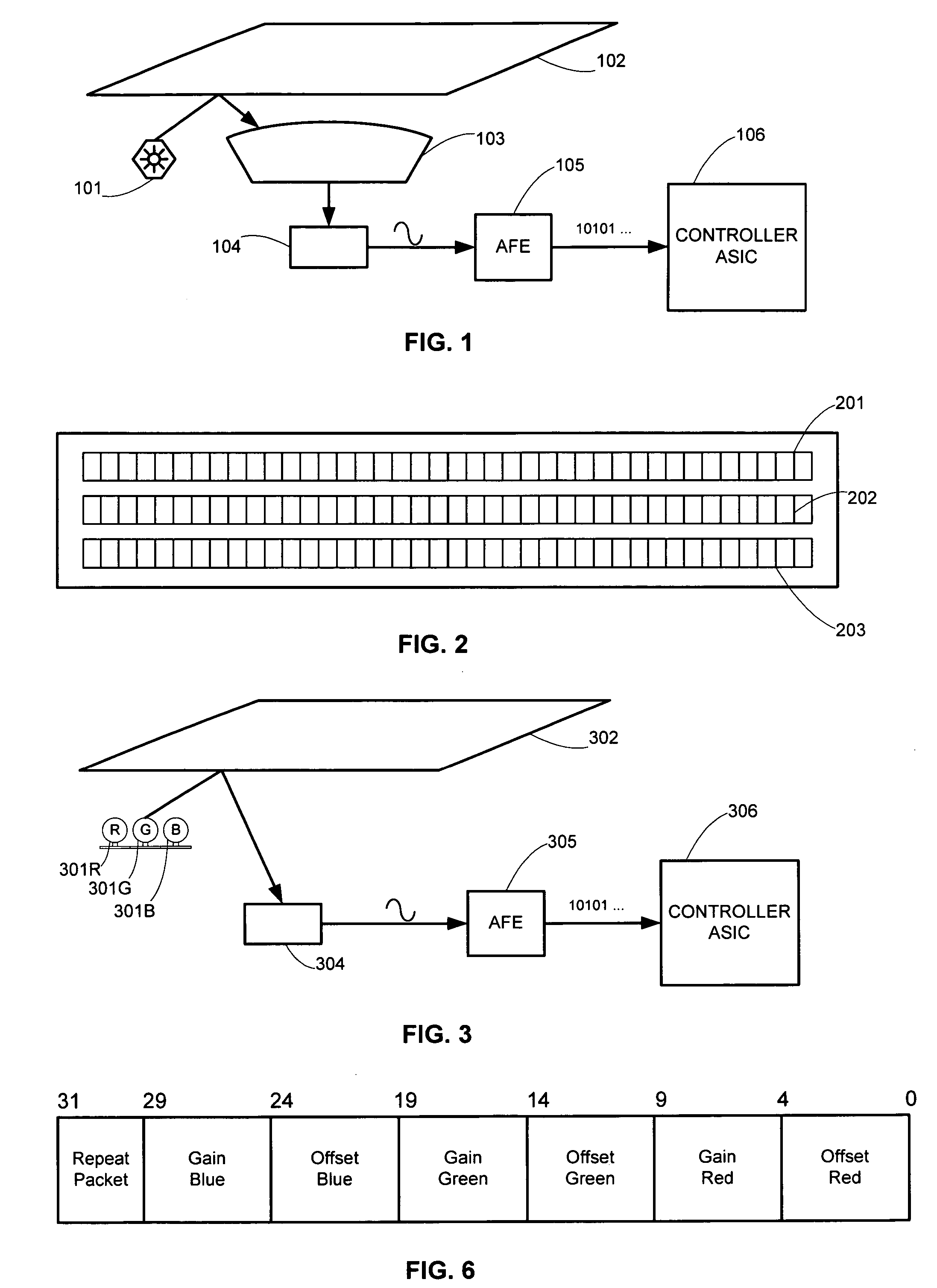
    Figure 1
  • Figure 2
    Figure 2
  • Figure 3
    Figure 3
Patent Text Reader

Abstract

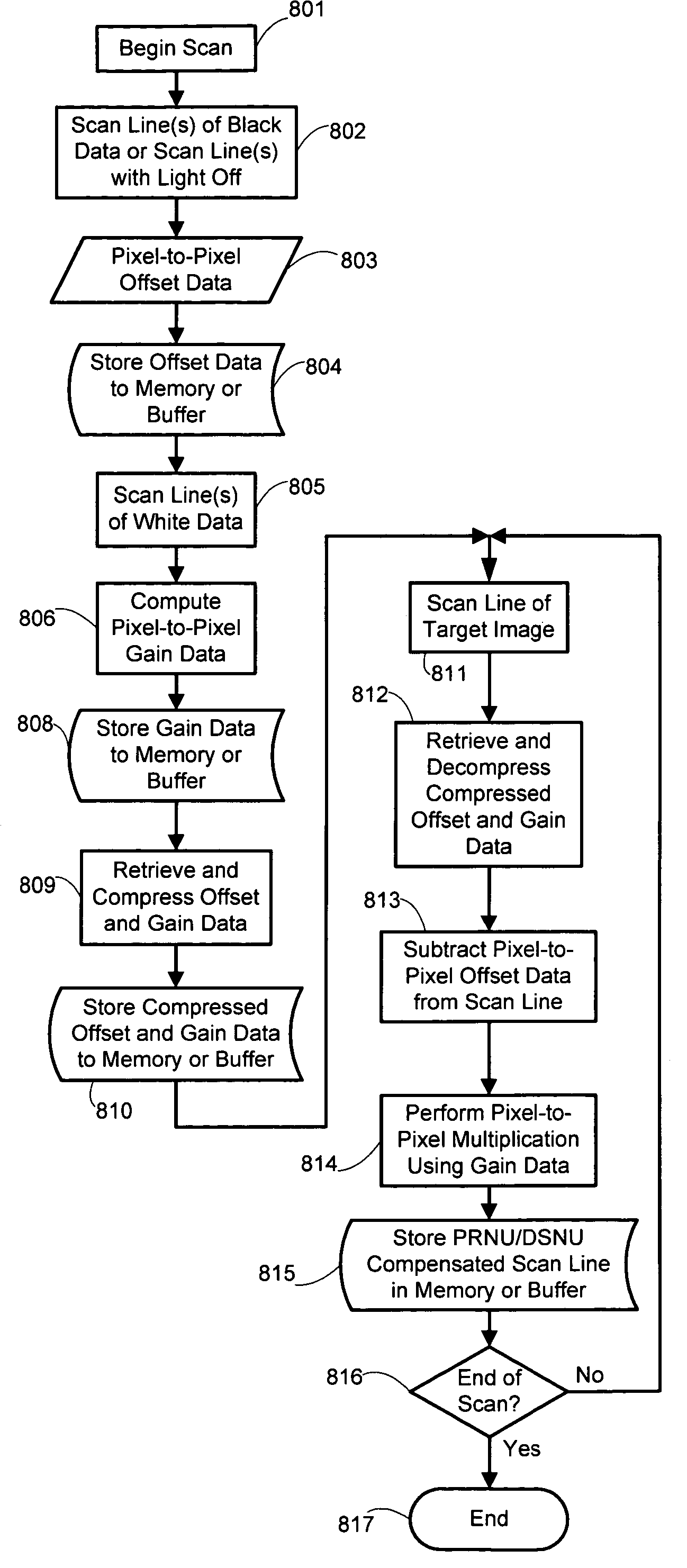
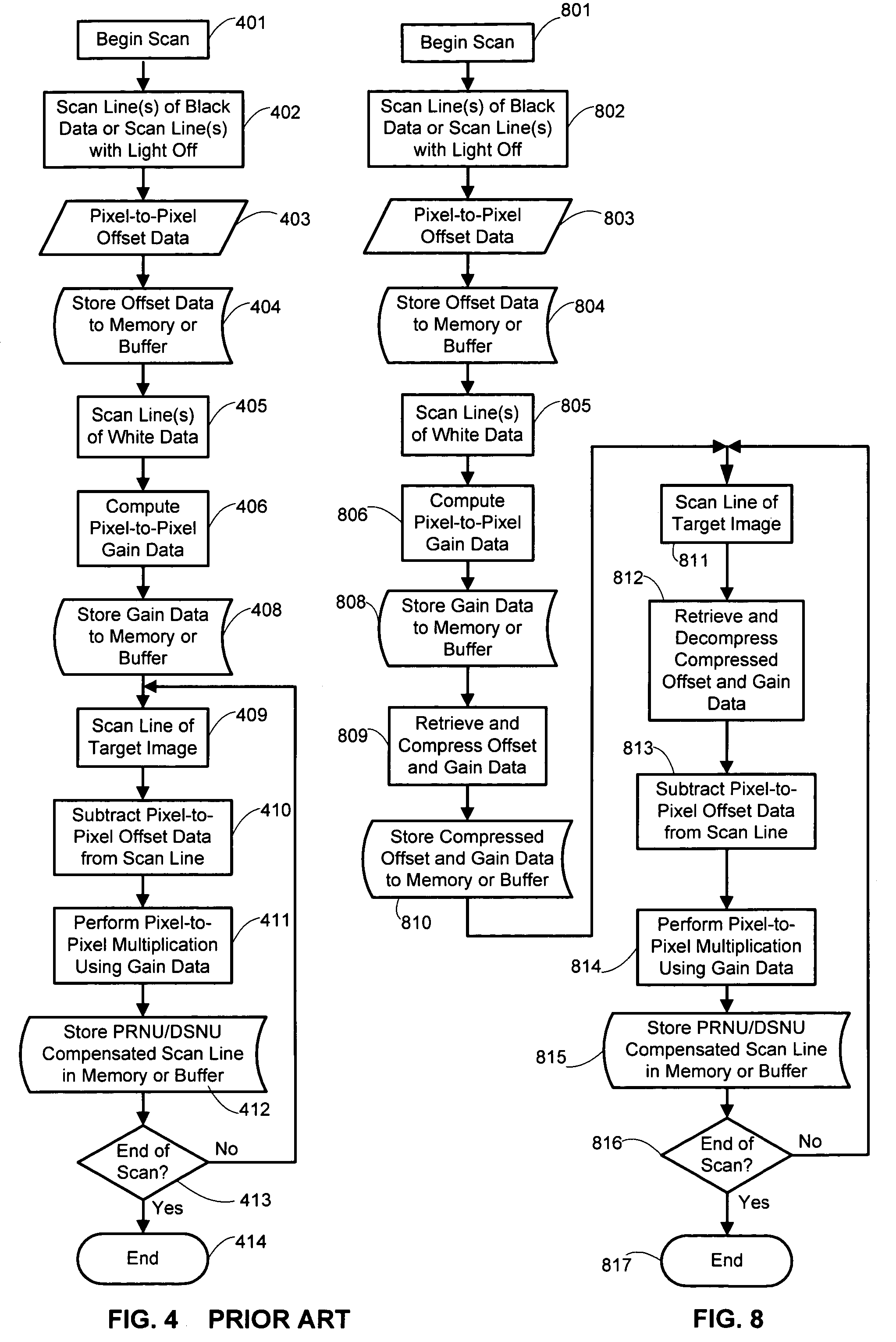
The present invention is directed to a system and method for reducing the memory requirement for offset and gain calibration to relieve the size / performance bottleneck in scanner systems. The resulting methodology produces visually equivalent scanned results with a substantial increase in performance, which results in a shorter amount of time required to output a first copy in, for example, an all-in-one device. Since the calibration step is often the bottleneck in scanner performance, this method noticeably speeds up scan and copy time. Implementing the decompression in hardware requires a minimal amount of hardware overhead and complexity. Thus, this method has a minimal impact on the size and cost of the scanner controller (e.g., an ASIC—application specific integrated circuit). Since compression only takes place at most once per scan, this added step has no significant impact on the overall scan time. By allowing dynamic grouping of pixels using a single calibration packet, the quality of the compensation can be optimized with the size of the compensation data being minimized. Adding the ability to shift the compressed deviation stored in the calibration packet, the range of the pixel-to-pixel deviation can be increased without impacting the size of the calibration data. This flexibility makes this invention applicable to future image sensors that may have widely varying deviations in pixel-to-pixel offset and gain values.
Need to check novelty before this filing date? Find Prior Art

Description

CROSS REFERENCES TO RELATED APPLICATIONS

[0001] None. STATEMENT REGARDING FEDERALLY SPONSORED RESEARCH OR DEVELOPMENT

[0002] None. REFERENCE TO SEQUENTIAL LISTING, ETC.

[0003] None. BACKGROUND OF THE INVENTION

[0004] 1. Field of the Invention

[0005] The present invention generally relates to the calibration of scanning systems, such as those found in host-based scanners, all-in-one (AIO) devices, and the like.

[0006] 2. Description of the Related Art

[0007] When scanning an image using a host-based scanner or multi-functional device such as an all-in-one (AIO), it is necessary to compensate for imperfections in the scanning system in order to accurately reproduce the target image. Two characteristics of CCD based image sensors contained in scanners that require such compensation are dark signal non-uniformity (DSNU) and photo response non-uniformity (PRNU). DSNU refers to the pixel-to-pixel variation in a CCD array to the detected black level or zero light present level. PRNU refers...

Claims

the structure of the environmentally friendly knitted fabric provided by the present invention; figure 2 Flow chart of the yarn wrapping machine for environmentally friendly knitted fabrics and storage devices; image 3 Is the parameter map of the yarn covering machine
Login to View More