
Hydrogen-occluding alloy
a technology of hydrogen storage alloy and alloy, applied in the field of hydrogen storage alloy, can solve the problems of high power not being obtained, cracks in hydrogen storage alloy, and inability to become a product that endures practical use, and achieve excellent drain power performance and charge acceptance
- Summary
- Abstract
- Description
- Claims
- Application Information
AI Technical Summary
Benefits of technology
Problems solved by technology
Method used
Image

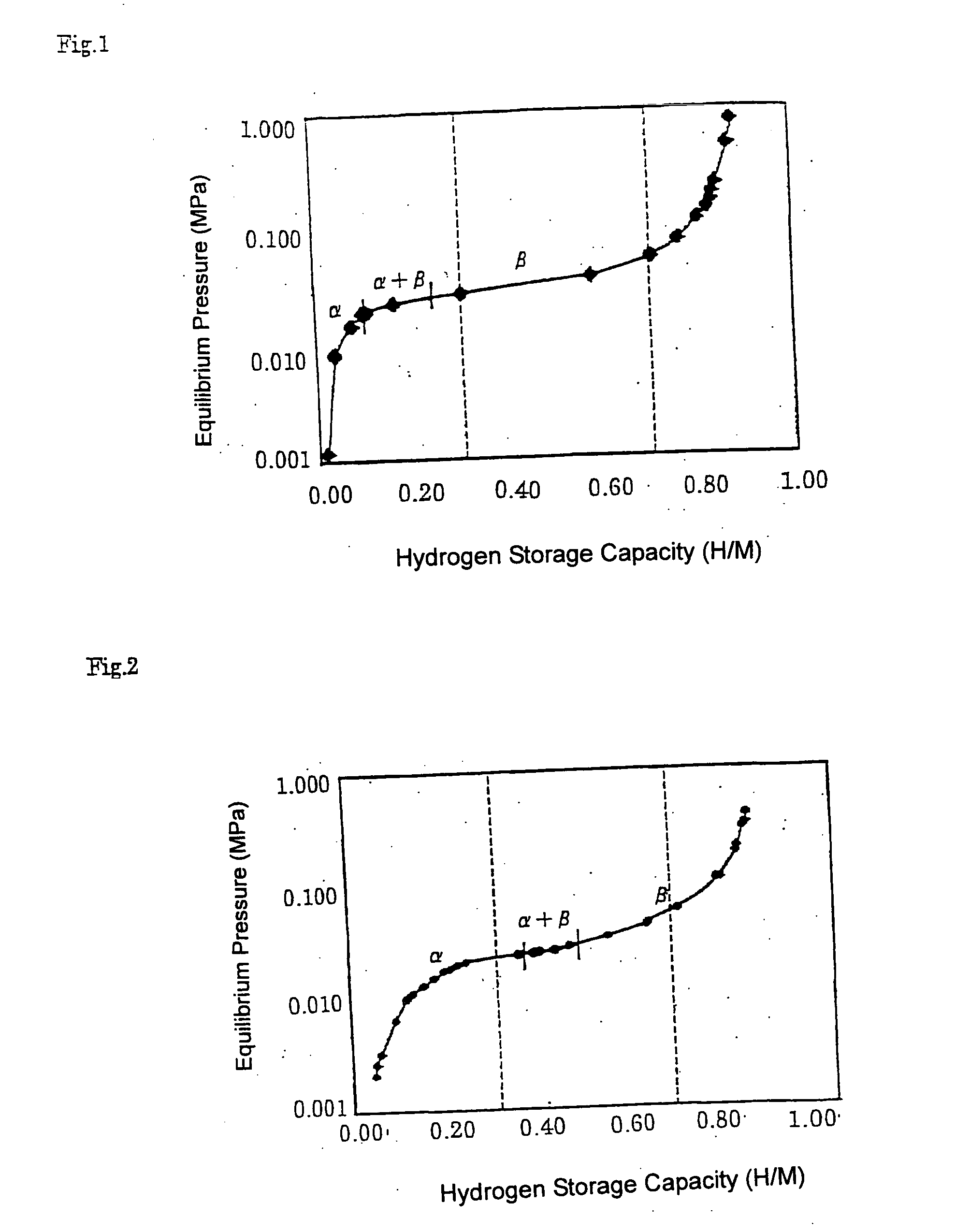
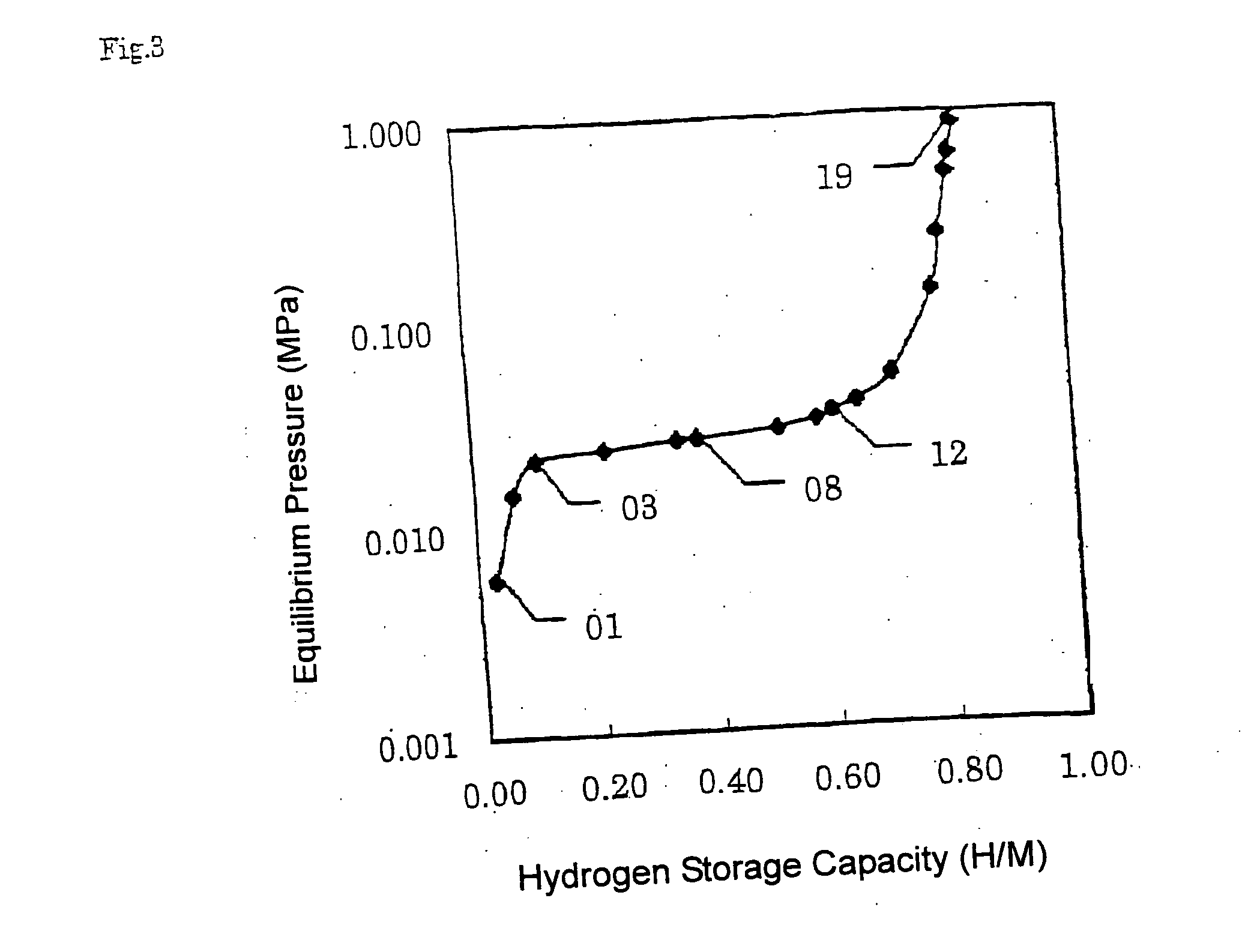
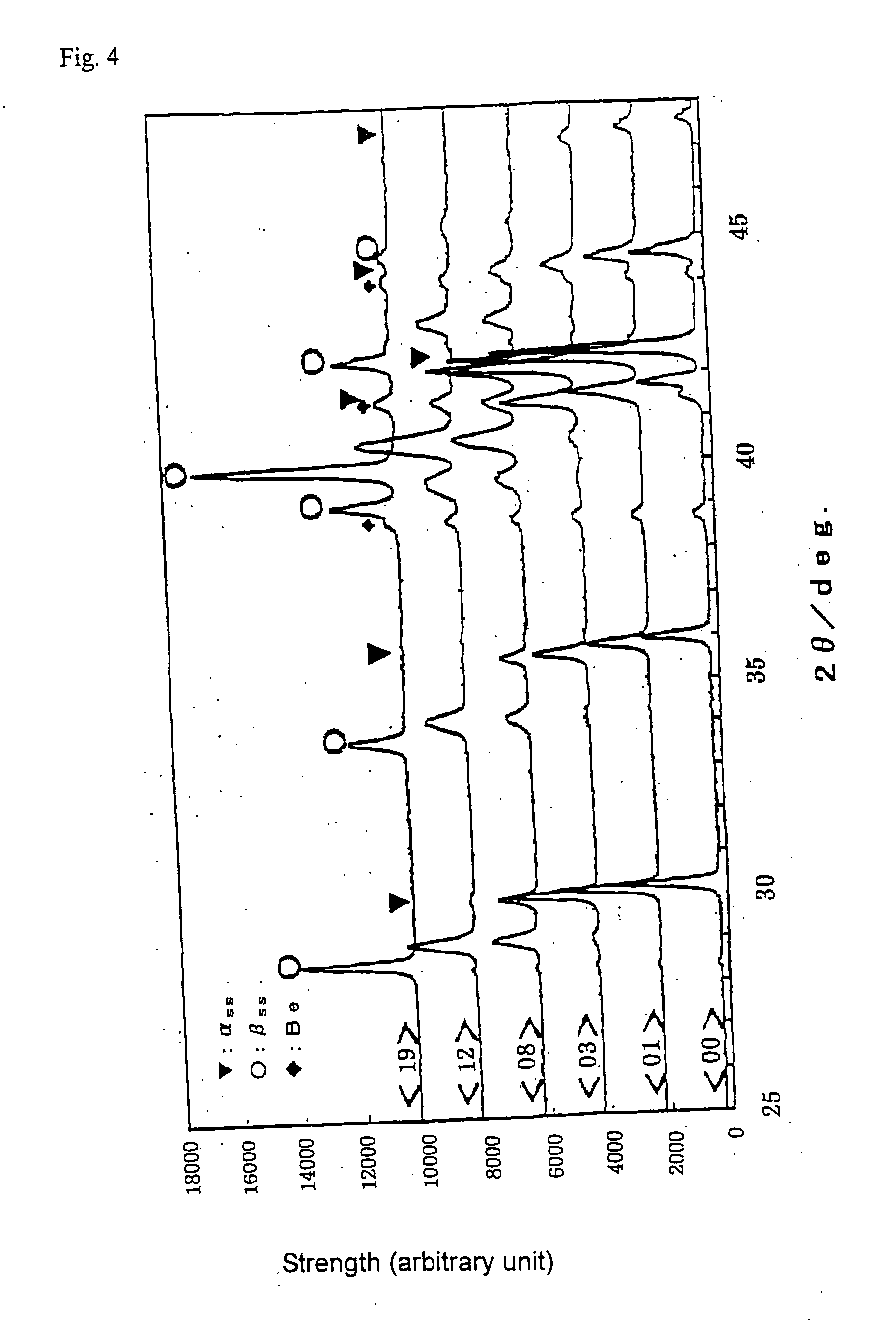
Examples
example 1
[0041] Each raw material for the hydrogen storage alloy was weighed and mixed so that Mm, Ni, Mn, Al, and Co give Mm(20 wt % La)Ni4.07Mn0.36Al0.32Co0.40 (AB5.15) in alloy composition; this mixture was placed in a crucible, immobilized in an induction melting furnace, and the vacuum was brought to 10−4 torr or less, whereafter the mixture was melted by heating in an argon gas atmosphere, then poured into a mold and cast at 1430° C. to obtain an alloy. In addition, this alloy was heat-treated in an argon gas atmosphere at 1080° C. for 3 hours to obtain a hydrogen storage alloy.
example 2
[0042] Each raw material for the hydrogen storage alloy was weighed and mixed so that Mm, Ni, Mn, Al, and Co give Mm(20 wt % La)1.01Ni4.2Mn0.50Al0.30Co0.30 in alloy composition; this mixture was placed in a crucible, immobilized in an induction melting furnace, and the vacuum was brought to 10−4 torr or less, whereafter the mixture was melted by heating in an argon gas atmosphere, then poured into a mold and cast at 1420° C. to obtain an alloy. In addition, this alloy was heat-treated in argon gas atmosphere at 1060° C. for 5 hours to obtain a hydrogen storage alloy.
example 3
[0043] Each raw material for the hydrogen storage alloy was weighed and mixed so that Mm, Ni, Mn, Al, and Co give Mm (20 wt % La)Ni4.35Mn0.50Al0.35Co0.10 in alloy composition; this mixture was placed in a crucible, immobilized in an induction melting furnace, and the vacuum was brought to 10−4 torr or less, whereafter the mixture was melted by heating in an argon gas atmosphere, then poured into a mold and cast at 1460° C. to obtain an alloy. In addition, this alloy was heat-treated in an argon gas atmosphere at 1080° C. for 9 hours to obtain a hydrogen storage alloy.
PUM
 Login to View More
 Abstract
Description
Claims
Application Information
 Login to View More