

Flame-retardant polyamide molding composition
a polyamide and flame-retardant technology, applied in the field of flame-retardant polyamide molding compositions, can solve the problems of loss of flexibility, change in fundamental properties, and disadvantageous restrictions on the use of this class of materials, and achieve good compatibility of additives, good resistance to chemicals and hydrolysis, and adequate impact resistance
Inactive Publication Date: 2007-01-25
EVONIK DEGUSSA GMBH
View PDF8 Cites 10 Cited by
- Summary
- Abstract
- Description
- Claims
- Application Information
AI Technical Summary
Benefits of technology
[0011] It is an object of the present invention to provide a polyamide molding composition provided with flame retardancy, adequate impact resistance at low temperatures, good resistance to chemicals and hydrolysis, a V-0 classification to UL 94, preferably for a layer thickness in the range of from 0.4 to 3.2 mm. It is another object of the present invention to provide a polyamide molding composition which is flexible and uses a halogen-free flame-retardant. The modulus of elasticity of the molding composition, being a measure of flexibility, should be approximately in the range of the modulus of elasticity of the underlying polyamide (that for PA 12 being about 1400 MPa), but preferably lower. Other properties required are good compatibility of the additives with the polyamide matrix, and very low volatility.
Problems solved by technology
However, this usually leads, among other changes in fundamental properties, to a loss of flexibility, brought about via the high proportion of particulate flame retardants acting as filler.
The possible uses of this class of materials are consequently disadvantageously restricted.
In practice, formulation of flame-retardant molding compositions is difficult because firstly there is generally a number of further requirements placed upon the molding compositions, to some extent running contrary to the side effects caused by modification with flame retardant, and secondly there is no general transferability of defined flame retardant formulations between different classes of polymer, for example polyesters and polyamides.
By way of example, compatibility of the additives with the polymer matrix is difficult to predict and also depends on other materials added within a molding composition.
Nor do other patent applications dealing with related compositions make any practicable proposals for solving these problems.
This method cannot give flexible molding compositions.
These systems, too, are unsuitable for providing flexible flame-retardant molding compositions.
Method used
the structure of the environmentally friendly knitted fabric provided by the present invention; figure 2 Flow chart of the yarn wrapping machine for environmentally friendly knitted fabrics and storage devices; image 3 Is the parameter map of the yarn covering machine
View moreImage
Smart Image Click on the blue labels to locate them in the text.
Smart ImageViewing Examples

Examples
Experimental program
Comparison scheme
Effect test
examples
[0074] The materials stated in table 1 were used in the examples.
[0075] The PA 12 grades used differ in viscosity number (VN; measured to DIN EN ISO 307) and therefore in molecular weight.
[0076] The D50 value of the melamine cyanurate was 2.69 μm.
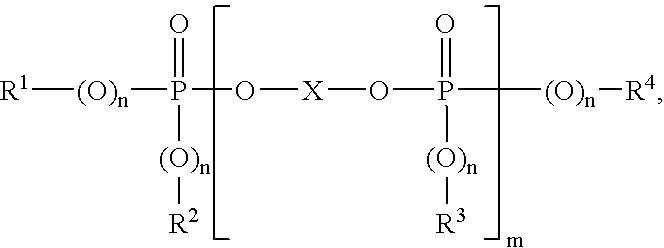
[0077] ADK STAB FP-700 and ADK STAB FP-600 are phosphorus compounds of the formula
[0078] where the values of m differ. ADK STAB FP-700 has a m value of less than 1.1 on average. The m value of FP-600 is slightly higher, as the viscosity is 13000 mPas (25° C.).
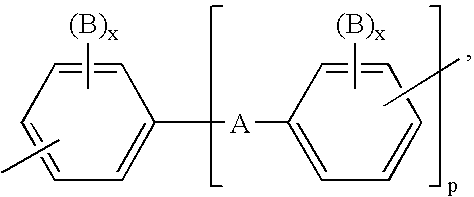
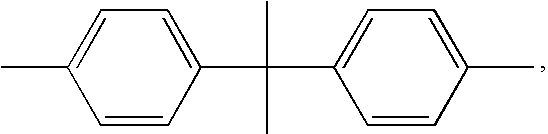
[0079] ADK STAB FP-500 is a phosphorus compound of the formula
the structure of the environmentally friendly knitted fabric provided by the present invention; figure 2 Flow chart of the yarn wrapping machine for environmentally friendly knitted fabrics and storage devices; image 3 Is the parameter map of the yarn covering machine
Login to View More PUM
| Property | Measurement | Unit |
|---|---|---|
| D50 grain size | aaaaa | aaaaa |
| thickness | aaaaa | aaaaa |
| diameter | aaaaa | aaaaa |
Login to View More
Abstract
A flame retardant molding composition contains a) from 43 to 93.5 parts by weight of polyamide, b) from 2 to 12 parts by weight of melamine cyanurate, c) from 1.5 to 15 parts by weight of polyol having at least 3 OH groups per molecule, and d) from 3 to 30 parts by weight of an organophosphorus compound, with the proviso that the parts by weight of components a) to d) give a total of 100. The molding composition has excellent fire properties and, despite the use of the particulate material melamine cyanurate, is flexible.
Description
BACKGROUND OF THE INVENTION [0001] 1. Field of the Invention [0002] The invention relates to a polyamide molding composition provided with flame retardancy and comprising a combination of melamine cyanurate, polyol, and organophosphorus compounds. [0003] 2. Description of the Related Art [0004] Advantageous fundamental properties make polyamides, e.g. PA 12 or copolyamides derived therefrom, useful in molding compositions for applications in cable conduit, in cable sheathing, or in parts of cable sheathing. Other application sectors are electrical components in which moderate stiffness is desired. Examples of properties that are decisive here are adequate impact resistance at low temperatures, associated with good resistance to chemicals and hydrolysis. The conditions of use frequently require provision of flame retardancy integrated into these molding compositions. In the light of the discussion concerning the environmental and toxicological aspects of halogenated flame retardant a...
Claims
the structure of the environmentally friendly knitted fabric provided by the present invention; figure 2 Flow chart of the yarn wrapping machine for environmentally friendly knitted fabrics and storage devices; image 3 Is the parameter map of the yarn covering machine
Login to View More Application Information
Patent Timeline
 Login to View More
 Patent Type & AuthorityApplications(United States)
IPC IPC(8): C08K5/49
CPCC08K5/053C08K5/34928C08K5/523C08L77/00C08L77/06C08J5/18
InventorWURSCHE, ROLANDDOWE, ANDREASBEUTH, REINHARD
OwnerEVONIK DEGUSSA GMBH