This helps you quickly interpret patents by identifying the three key elements:
Problems solved by technology
Method used
Benefits of technology
Benefits of technology
[0019] The present invention provides a lightweight ready-mix concrete composition that contains 8-20 volume percent cement, 11-50 volume percent sand, 10-31 volume percent prepuff particles, 9-40 volume percent coarse aggregate, and 10-22 volume percent water, where the sum of components used does not exceed 100 volume percent. The prepuff particles have an average
Problems solved by technology
Generally, the prior art assumes that expanded polymer particles will lower the strength and / or structural integrity of lightweight concrete compositions.
Further, concrete articles made from prior art lightweight concrete compositions have at best inconsistent physical properties, such as Young's modulus, thermal conductivity, and compressive strength, and typically demonstrate less than desirable physical properties.
Method used
the structure of the environmentally friendly knitted fabric provided by the present invention; figure 2 Flow chart of the yarn wrapping machine for environmentally friendly knitted fabrics and storage devices; image 3 Is the parameter map of the yarn covering machine
View more
Image
Smart Image Click on the blue labels to locate them in the text.
Viewing Examples
Smart Image
Click on the blue label to locate the original text in one second.
Reading with bidirectional positioning of images and text.
Smart Image
Examples
Experimental program
Comparison scheme
Effect test
example 1
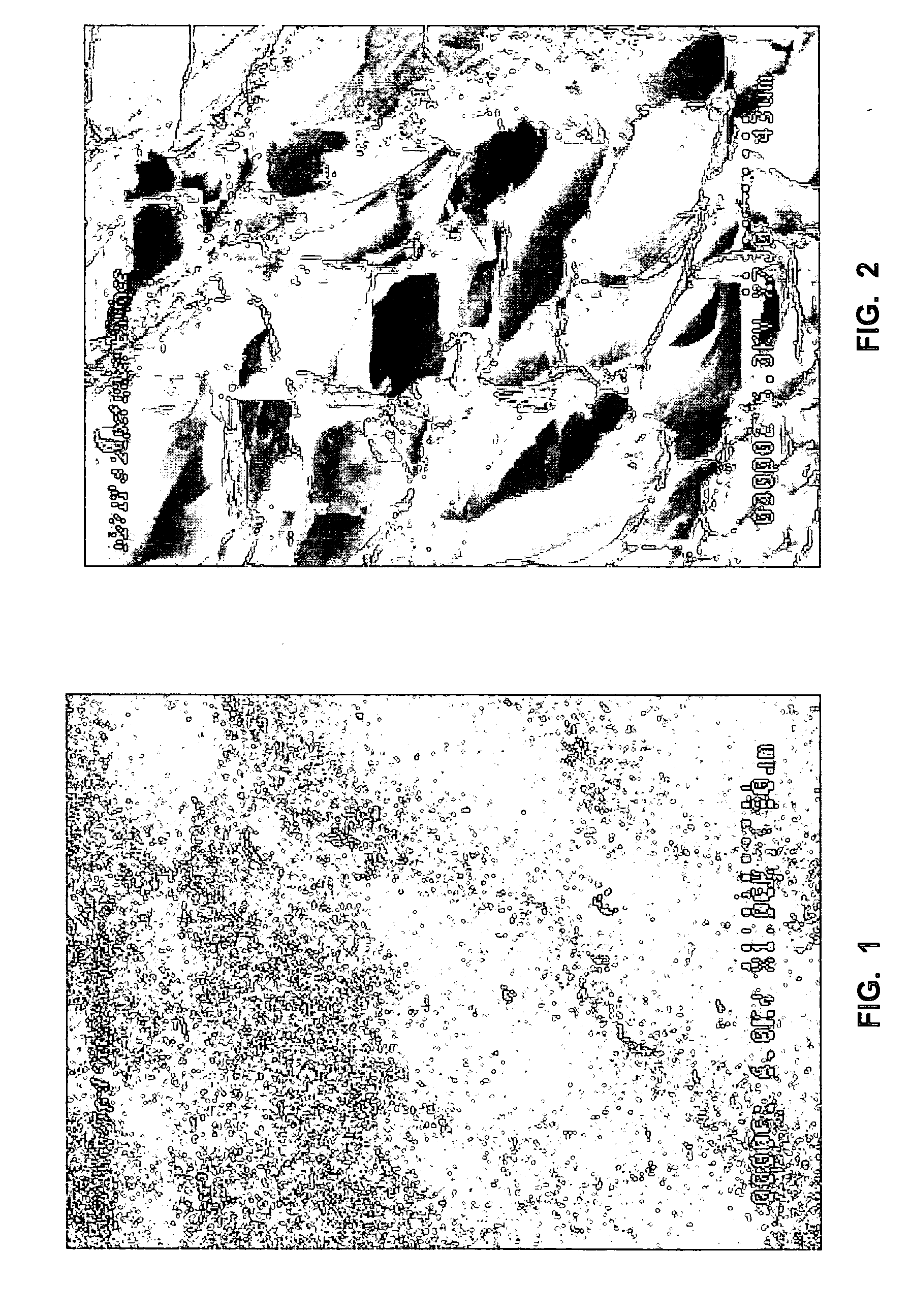
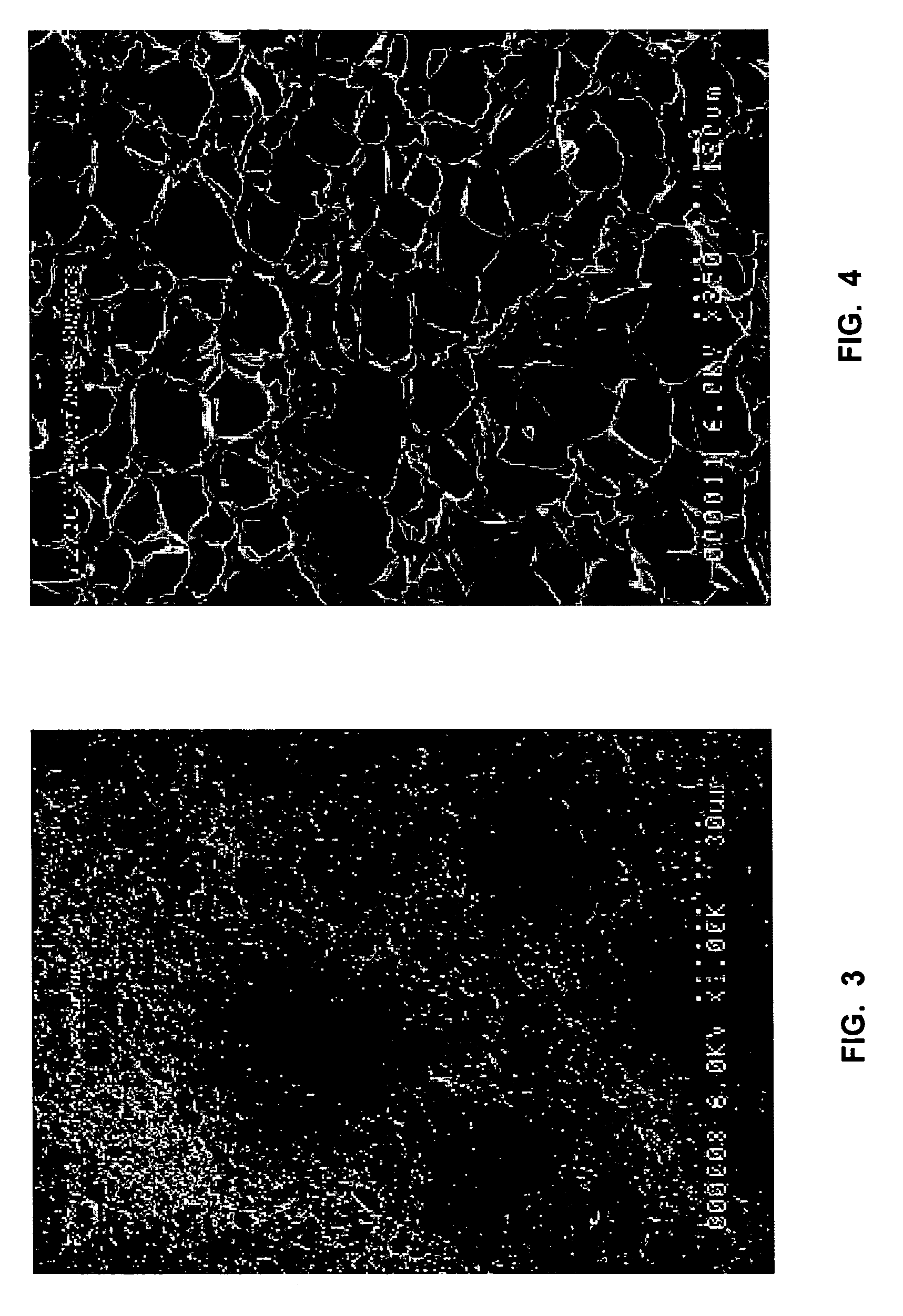
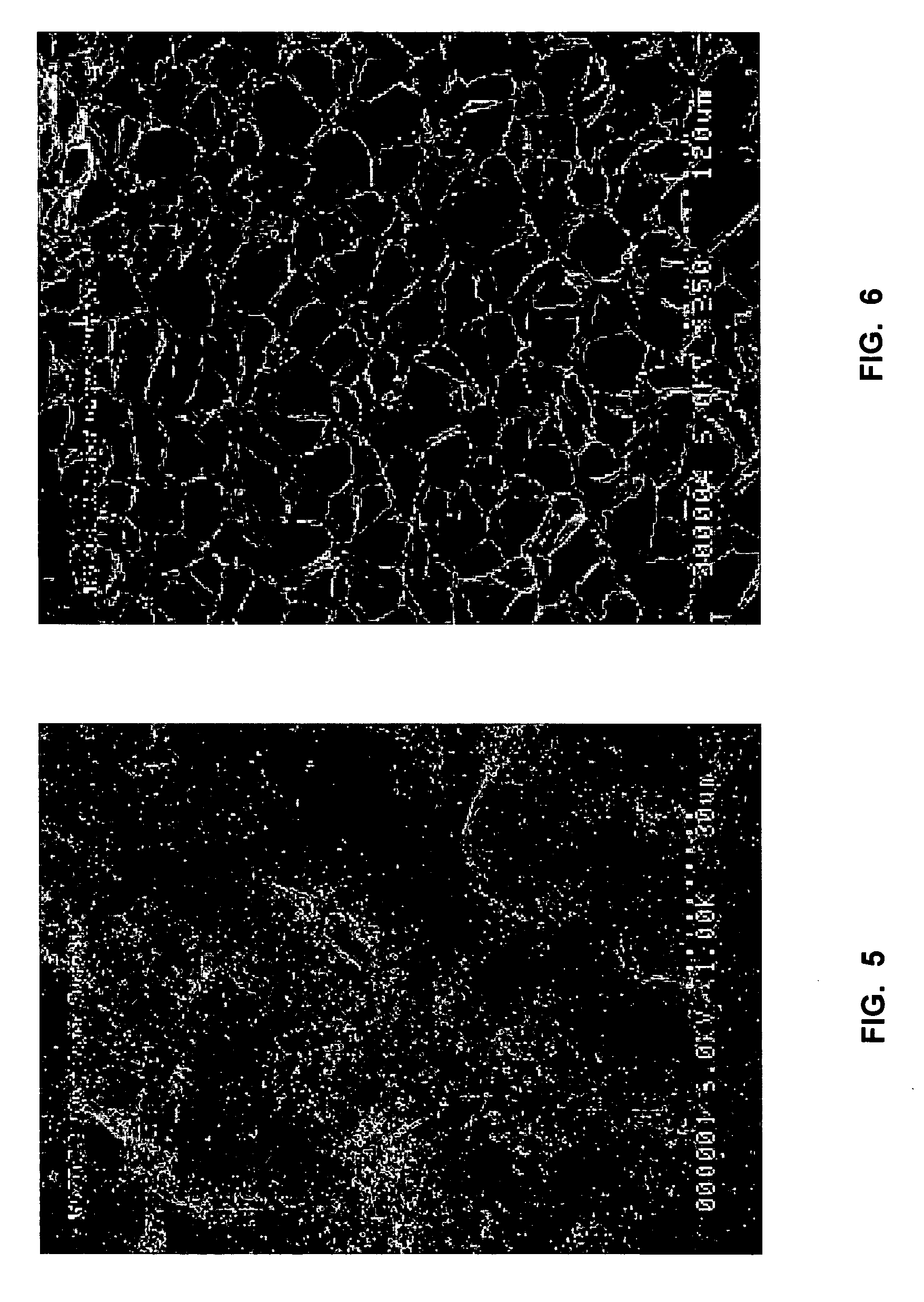
[0179] Polystyrene in unexpanded bead form (M97BC-0.65 mm, F271T-0.4 mm, and F271M-0.33 mm) was pre-expanded into EPS foam (prepuff) particles of varying densities as shown in the table below.
[0180] The data show that the prepuff particle size varies inversely with the expanded density of the material.
example 2
[0181] Polystyrene in unexpanded bead form (0.65 mm, 0.4 mm, and 0.33 mm) was pre-expanded into prepuff particles with a bulk density of 2 lb / ft3 as shown in the table below. The prepuff particles were formulated into a LWC composition, in a 3.5 cubic foot drum mixer, that included 46.5 wt. % (25.3 vol. %) Portland cement, 16.3 wt. % (26.3 vol. %) water, and 1.2 wt. % (26.4 vol. %) prepuff particles. The resulting LWC compositions had a concrete density of 90 lb / ft2. The average compressive strength (determined according to ASTM C39, seven day break test) is shown in the table below.
[0182] The data show that as the mean unexpanded bead size decreases, at a constant prepuff particle density, that surprisingly higher compressive strength does not necessarily result from ever decreasing unexpanded bead size as suggested in the prior art. More particu...
example 3
[0183] Since the prepuff particle density also impacts the overall concrete density, changing the EPS density requires a change in the EPS loading level to maintain a constant concrete density. This relationship holds only as long as the total amount of prepuff particles is not so large as to compromise the strength of the surrounding concrete matrix. The relationship between the prepuff particle density and loading level provides additional opportunities to optimize concrete strength while controlling the overall concrete density.
[0184] Polystyrene in unexpanded bead form (0.65 mm) was pre-expanded into prepuff particles having varying densities as shown in the table below. The prepuff particles were formulated into LWC compositions containing the components shown in the table below, in a 3.5 cubic foot drum mixer, and each having a concrete density of 90 lb / ft3.
the structure of the environmentally friendly knitted fabric provided by the present invention; figure 2 Flow chart of the yarn wrapping machine for environmentally friendly knitted fabrics and storage devices; image 3 Is the parameter map of the yarn covering machine
Login to View More
PUM
Property
Measurement
Unit
Time
aaaaa
aaaaa
Thickness
aaaaa
aaaaa
Pressure
aaaaa
aaaaa
Login to View More
Abstract
A lightweight ready-mix concrete composition that contains 8-20 volume percentcement, 11-50 volume percent sand, 10-31 volume percent prepuff particles, 9-40 volume percent coarse aggregate, and 10-22 volume percent water, where the sum of components used does not exceed 100 volume percent. The prepuff particles have an average particle diameter of from 0.2 mm to 8 mm, a bulk density of from 0.02 g / cc to 0.64 g / cc, an aspect ratio of from 1 to 3. The slump value of the composition measured according to ASTM C 143 is from 2 to 8 inches. After the lightweight ready-mix concrete composition is set for 28 days, it has a compressive strength of at least 1400 psi as tested according to ASTM C39.
Description
REFERENCE TO RELATED APPLICATION [0001] This application is a Continuation-In-Part of application Ser. No. 11 / 387,198 filed Mar. 22, 2006 entitled “Lightweight Concrete Compositions”, which claims the benefit of priority of U.S. Provisional Application Ser. Nos. 60 / 664,230 filed Mar. 22, 2005 entitled “Light Weight Concrete Composite Using EPS Beads” and 60 / 686,858 filed Jun. 2, 2005 entitled “Lightweight Compositions and Materials,” which are both herein incorporated by reference in their entirety.BACKGROUND OF THE INVENTION [0002] 1. Field of the Invention [0003] The present invention is directed to novel compositions, materials, methods of their use and methods of their manufacture that are generally useful as agents in the construction and building trades. More specifically, the compounds of the present invention can be used in construction and building applications that benefit from a relatively lightweight, extendable, moldable, pourable, material that has high strength and of...
Claims
the structure of the environmentally friendly knitted fabric provided by the present invention; figure 2 Flow chart of the yarn wrapping machine for environmentally friendly knitted fabrics and storage devices; image 3 Is the parameter map of the yarn covering machine
Login to View More
Application Information
Patent Timeline
Application Date:The date an application was filed.
Publication Date:The date a patent or application was officially published.
First Publication Date:The earliest publication date of a patent with the same application number.
Issue Date:Publication date of the patent grant document.
PCT Entry Date:The Entry date of PCT National Phase.
Estimated Expiry Date:The statutory expiry date of a patent right according to the Patent Law, and it is the longest term of protection that the patent right can achieve without the termination of the patent right due to other reasons(Term extension factor has been taken into account ).
Invalid Date:Actual expiry date is based on effective date or publication date of legal transaction data of invalid patent.


 Login to View More