
Fuel reformer having closed loop control of air/fuel ratio
a technology of air/fuel ratio and reformer, which is applied in the field of reformers, can solve the problems of carbon formation, poor combustion and excess fuel deposition on the interior walls of the reformer, and errant fuel control
- Summary
- Abstract
- Description
- Claims
- Application Information
AI Technical Summary
Benefits of technology
Problems solved by technology
Method used
Image

Examples
Embodiment Construction
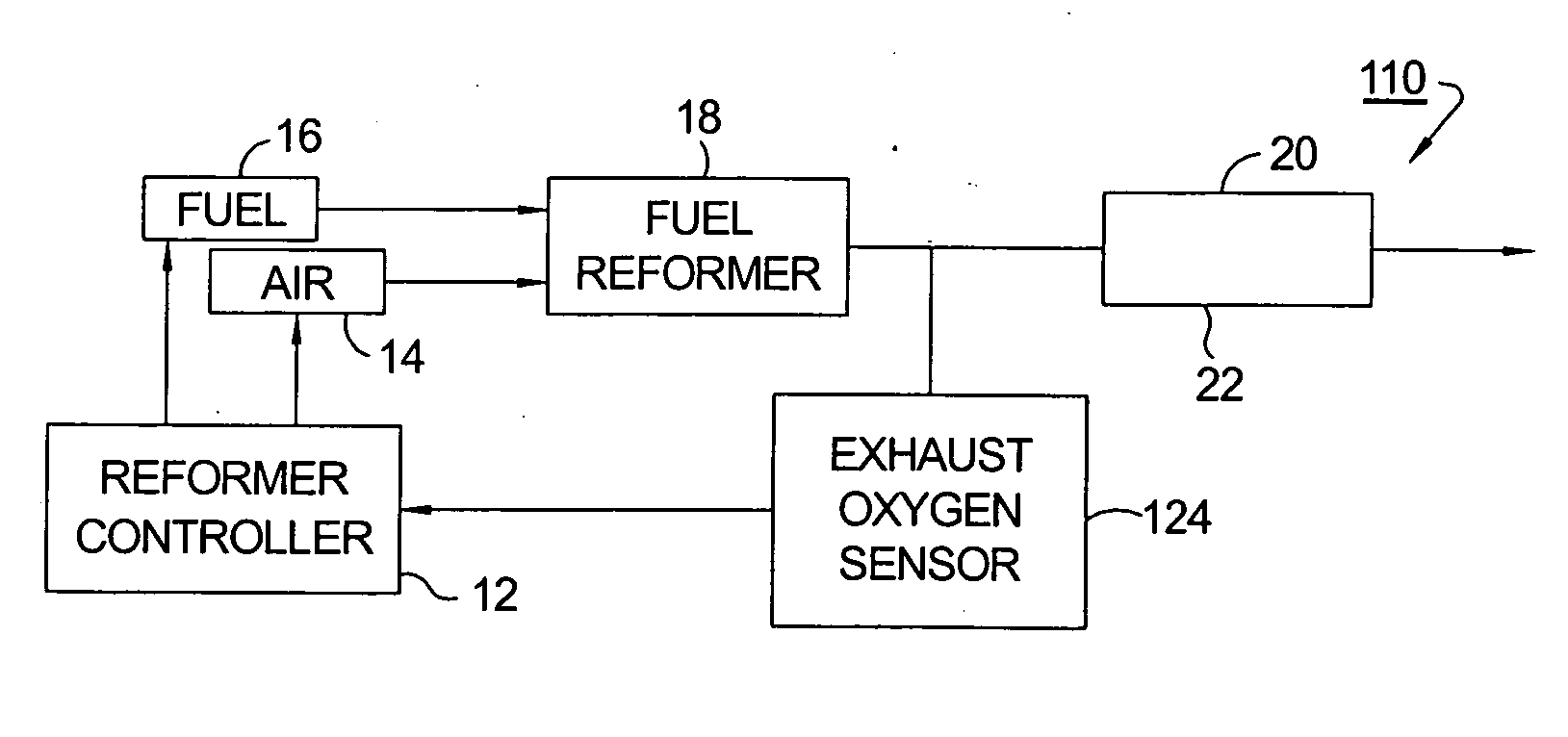
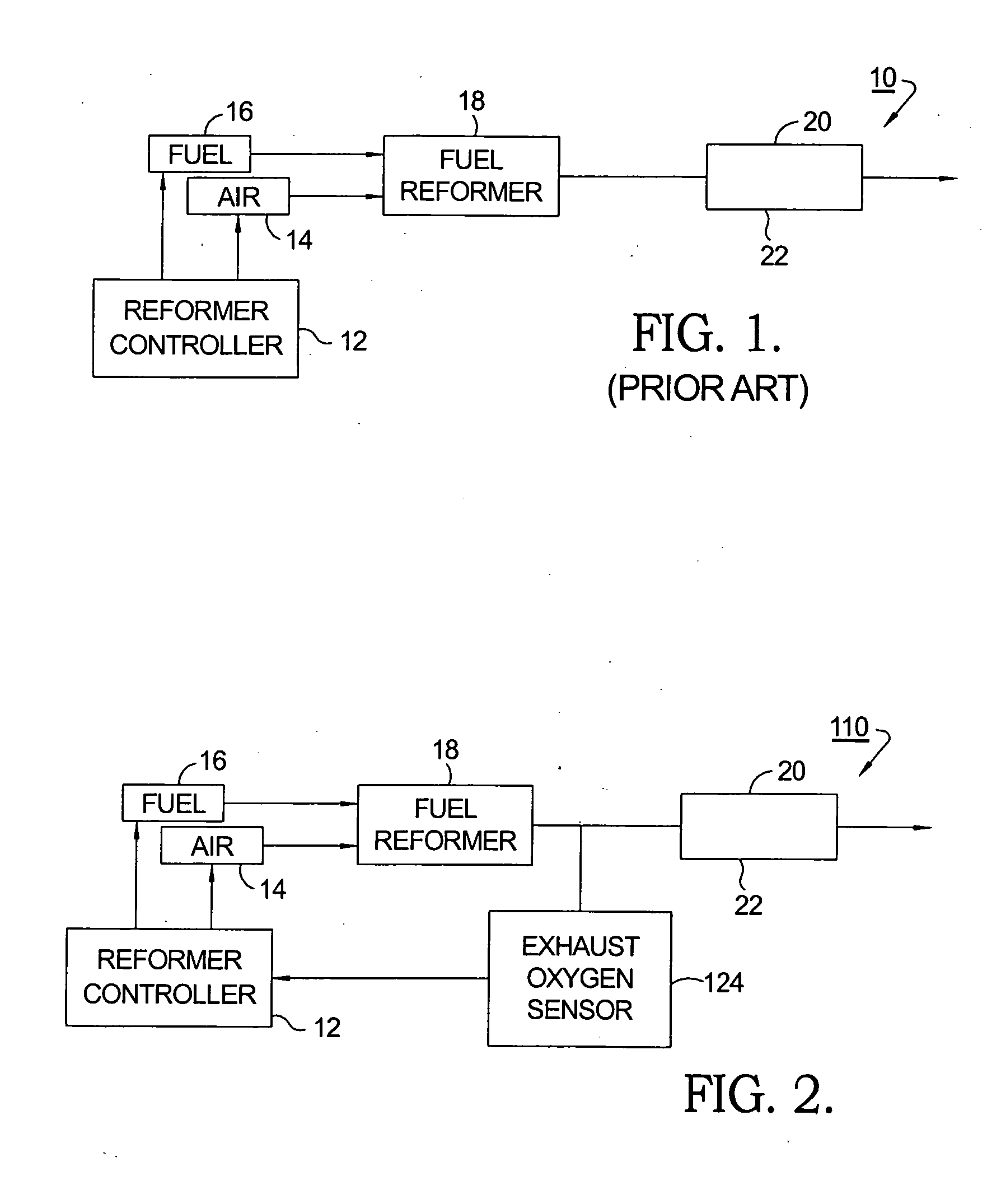
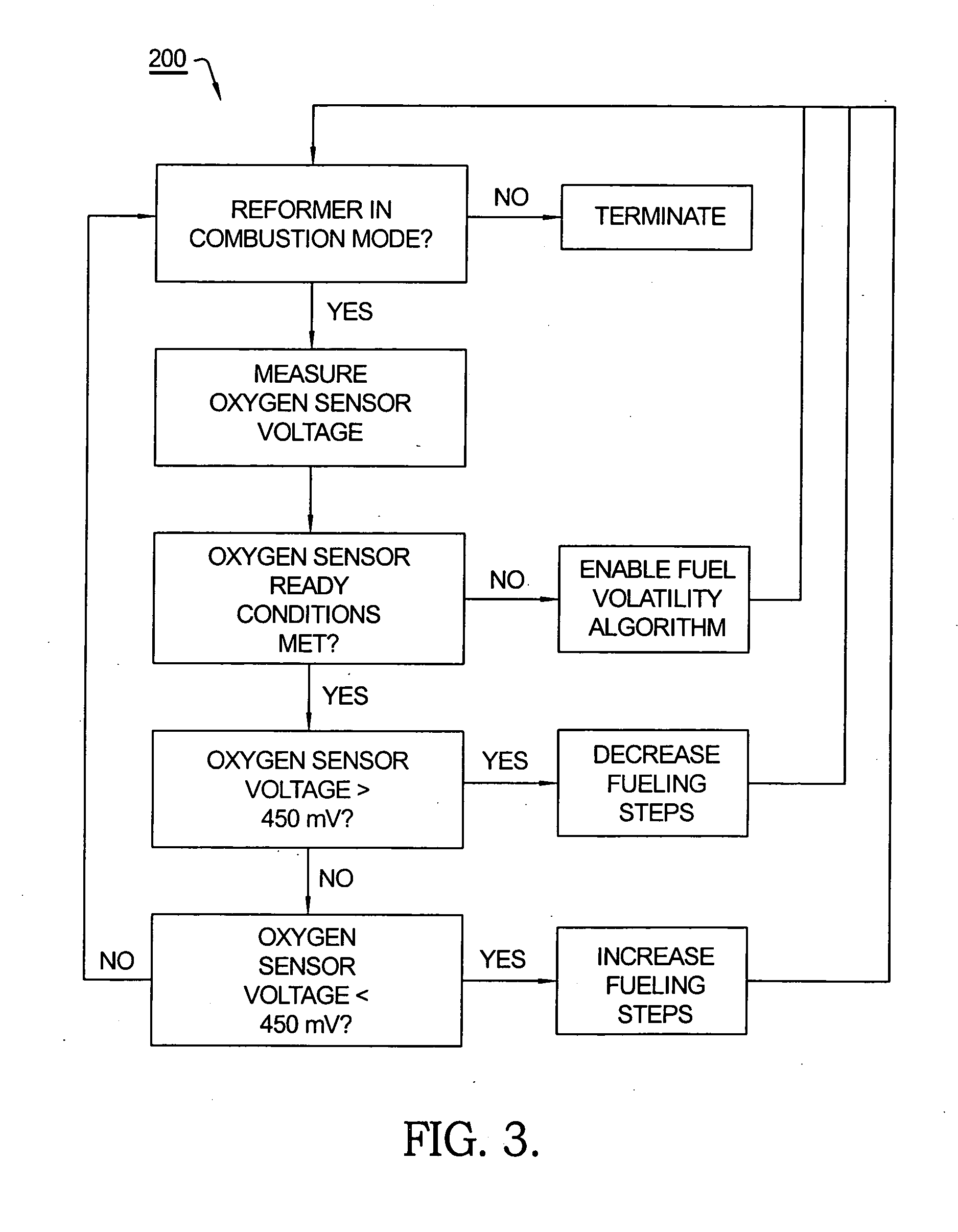
[0017] Referring to FIG. 1, a prior art open-loop control system 10 includes a reformer controller 12 that regulates flows of air 14 and fuel 16 into a hydrocarbon reformer 18 to produce a reformer exhaust 20. During a combustion phase at start-up, the ANF mixture is burned ahead of reformer 18 and passed through the reformer. In this phase, reformer exhaust 20 is not reformate and comprises principally carbon dioxide (CO2), oxygen (O2), and water (H2O). After reformer 18 is heated to a sufficient temperature, combustion is terminated, the A / F ratio is adjusted to a much richer fuel mixture, and reforming begins, producing a reformate 22 containing hydrogen (H2), carbon monoxide (CO), residual hydrocarbons (HC), and nitrogen (N2). The control settings for pumps or other means supplying air and fuel are predetermined and are programmed into the reformer controller, and are based upon expected delivery curves for such means. As noted above, prior art system 12 cannot compensate for er...
PUM
| Property | Measurement | Unit |
|---|---|---|
| temperature | aaaaa | aaaaa |
| temperature | aaaaa | aaaaa |
| temperature | aaaaa | aaaaa |
Abstract
Description
Claims
Application Information
 Login to View More