
Method for Protecting IC Cards Against Power Analysis Attacks
a technology of power analysis and ic cards, applied in the protection of internal/peripheral components, computer security arrangements, transmission, etc., can solve the problem that data output cannot be used to retrieve data inputs, and achieve the effect of preventing power analysis attacks
Patent Information
- Authority / Receiving Office
- US · United States
- Current Assignee / Owner
- Publication Date
- 2008-01-24
Smart Images
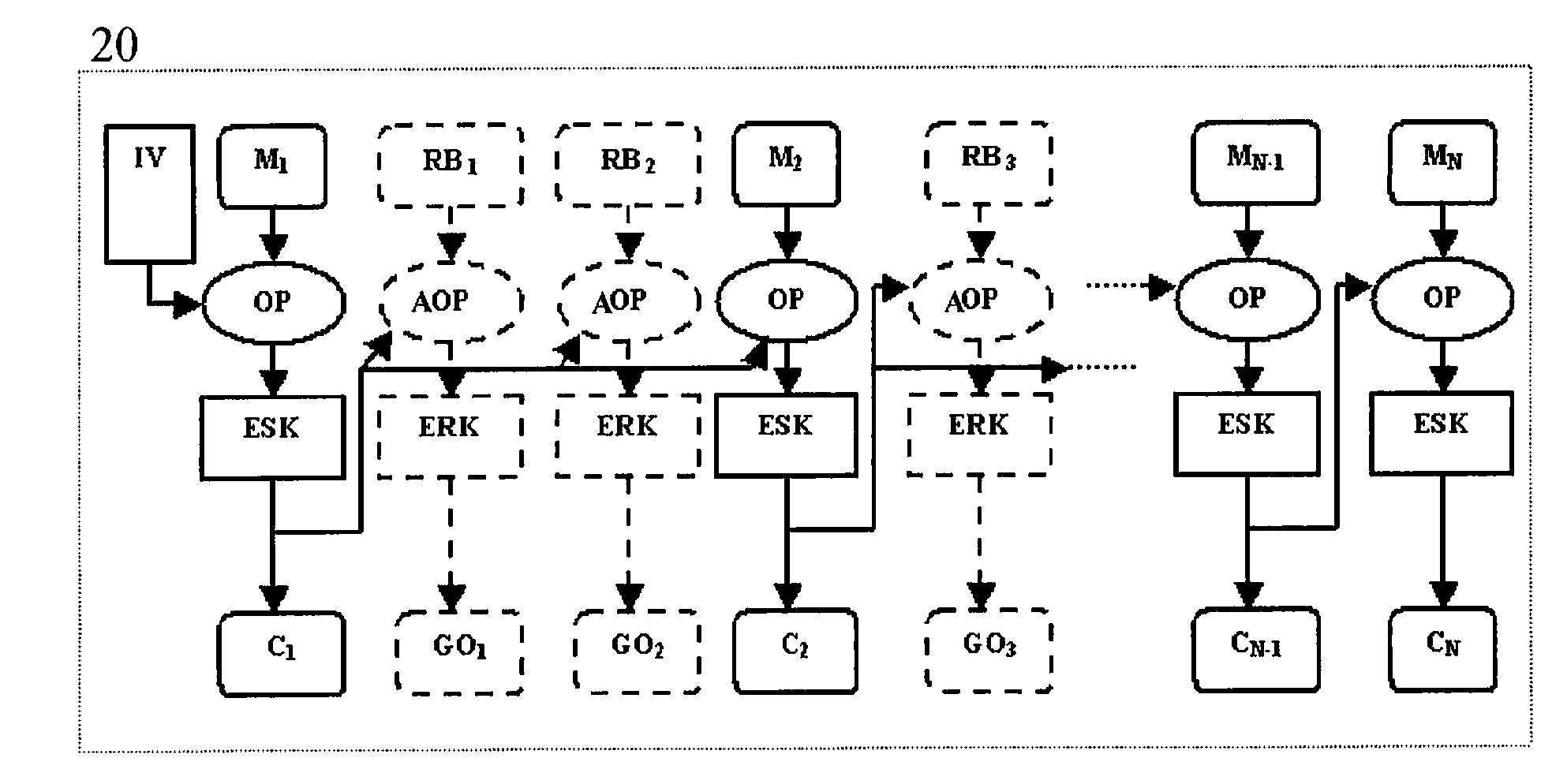
Figure 1 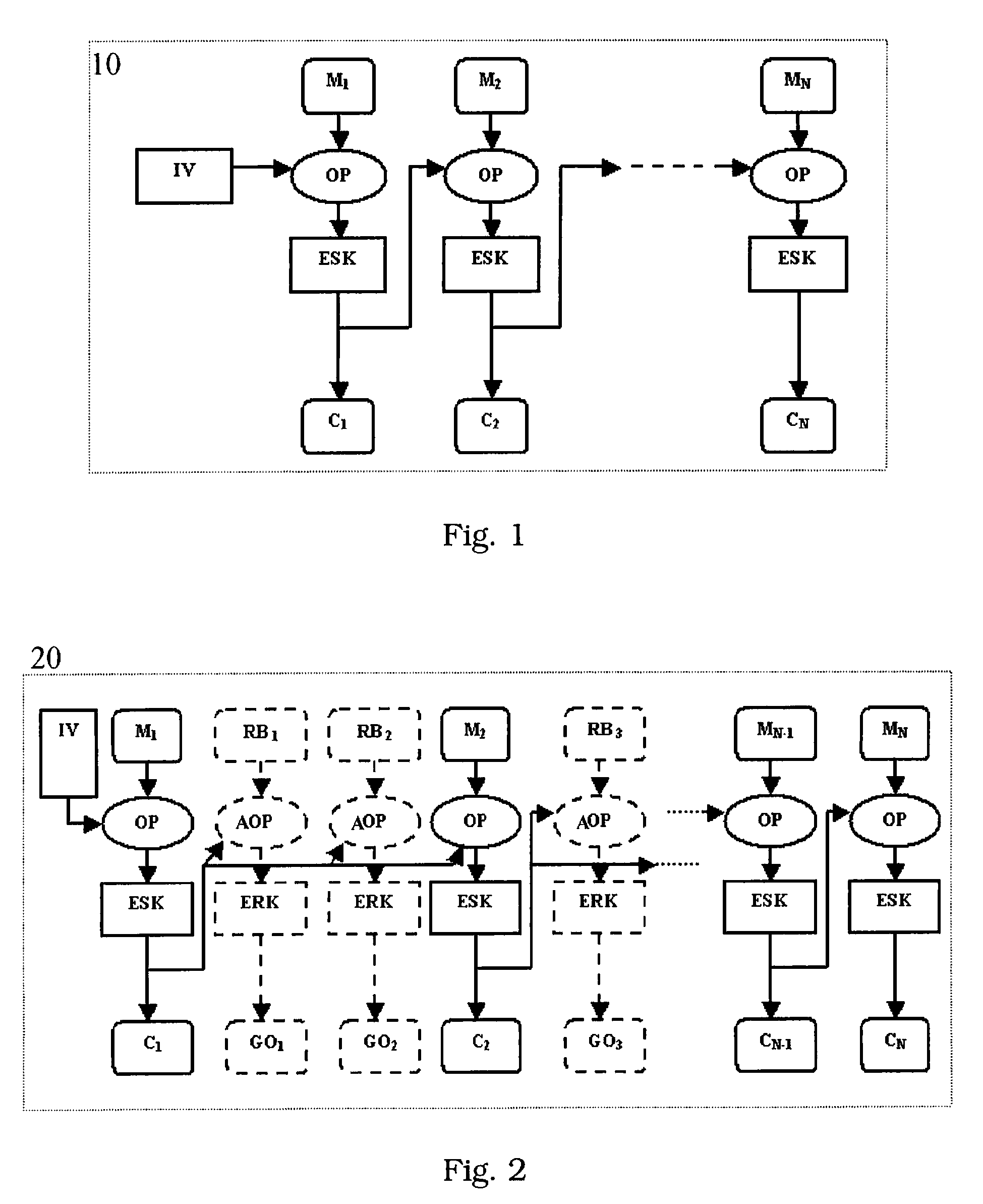
Figure 2 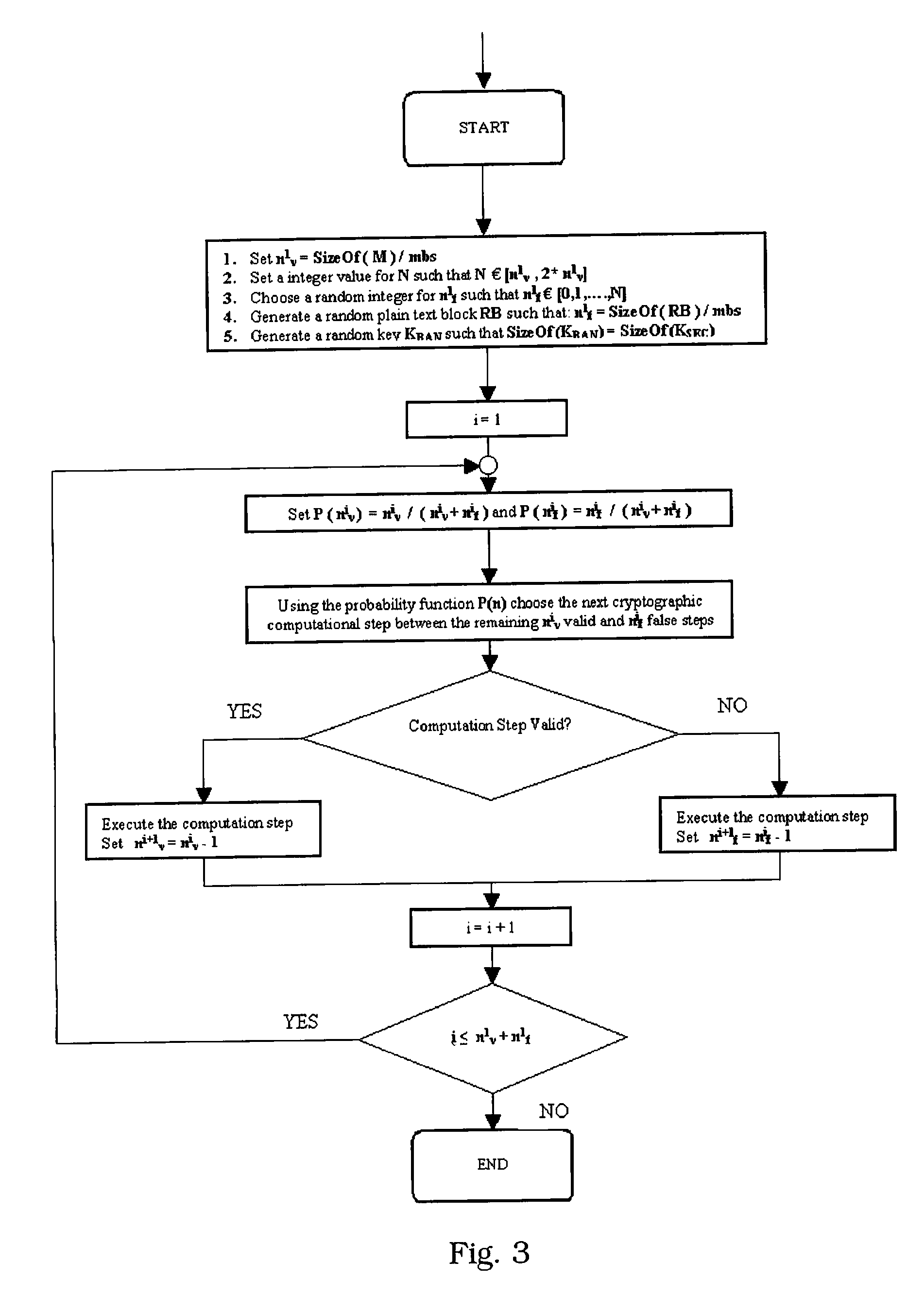
Figure 3
Abstract
Description
FIELD OF THE INVENTION
[0001] The present invention relates to integrated circuit (IC) cards. More particularly, the present invention relates to protecting IC cards against power analysis attacks.BACKGROUND OF THE INVENTION
[0002] Cryptographic algorithms like DES, triple DES, AES, SHA, and RSA are used to cipher data to render it secure against possible attacks. For example, cryptographic algorithms are implemented in an IC card to cipher data stored in a memory unit of the IC card.
[0003] More particularly, the cryptographic algorithm is a mathematical transformation applying a secret key to one or more data inputs to obtain one or more corresponding data outputs. Without the knowledge of such a secret key, the data output cannot be used to retrieve the data inputs.
[0004] More particularly, a cryptographic algorithm generally comprises a plurality of operations at least one of which, hereinafter also indicated as cryptographic operation, involves a secret key. The cryptographic algori...
Examples
Embodiment Construction
[0023]With reference to FIG. 2, a method for protecting data against power analysis attacks is schematically shown in a block diagram, globally indicated with numeral reference 20. More particularly, the method comprises a sequence of cryptographic operations OP intended to cipher one or more plain texts M1, . . . , MN in corresponding enciphered texts C1, . . . , CN. As schematically shown, the sequence of cryptographic operations OP cipher the plain texts M1, . . . , MN through a secret key ESK.
[0024]The plain texts M1, MN are stored in a memory unit of an IC card with at least a secret key ESK for their encryption, for example. The secret key ESK is unknown externally the IC card, and is object of external attacks. In fact, the plain texts M1, . . . , MN enciphered in enciphered texts C1, . . . , CN may be retrieved through the secret key ESK.
[0025]The cryptographic operations OP intended to cipher one or more plain texts M1, . . . , MN in corresponding enciphered texts C1, . . ....