
Nerve cuff for implantable electrode
a technology of implantable electrodes and nerve cuffs, which is applied in the field of nerve cuffs for implantable electrodes, can solve the problems of time-consuming and difficult, difficult to consistently identify and control the desired nerve fascicle, and the helix cuff can be removed from the nerve, so as to reduce the transmission of forces
- Summary
- Abstract
- Description
- Claims
- Application Information
AI Technical Summary
Benefits of technology
Problems solved by technology
Method used
Image

Examples
Embodiment Construction
[0030] The present invention provides one or more improvements to a cuff that can be used as part of an electrode, and particularly improves on the flat interface nerve electrode (FINE) disclosed in U.S. Pat. No. 6,456,866, which is hereby incorporated by reference. Although the cuff is described primarily as providing electrical contacts for electrically stimulating or monitoring a nerve, the cuff may be adapted for use with other soft tissue, such as muscle. In addition or as an alternative to the electrical capabilities of the cuff, the cuff can be adapted to act as a chemical dispenser or sensor. To simplify the description, the term “electrode” includes cuff designs for chemical dispensing or sensing that lack electrical signal capabilities.
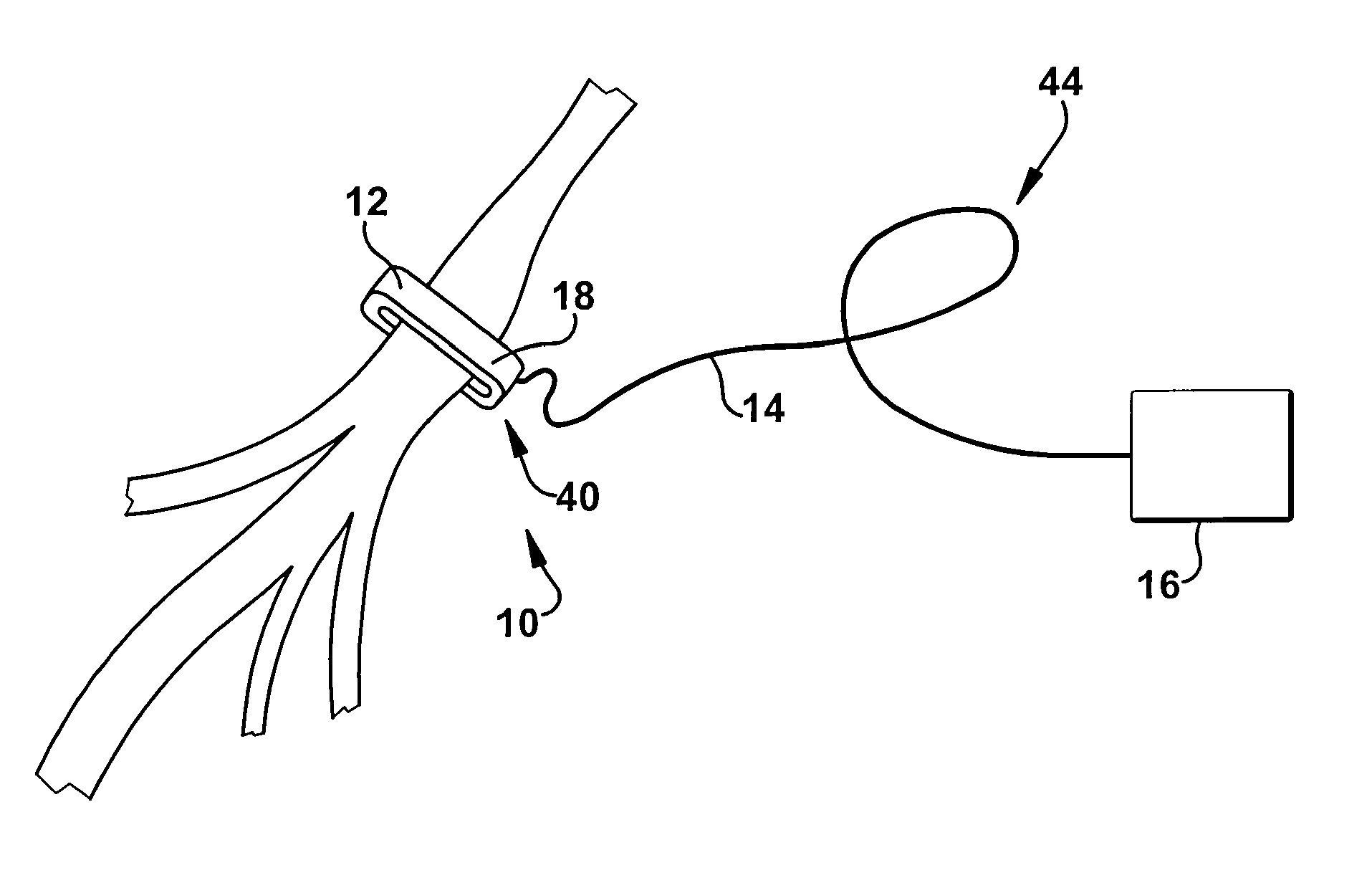
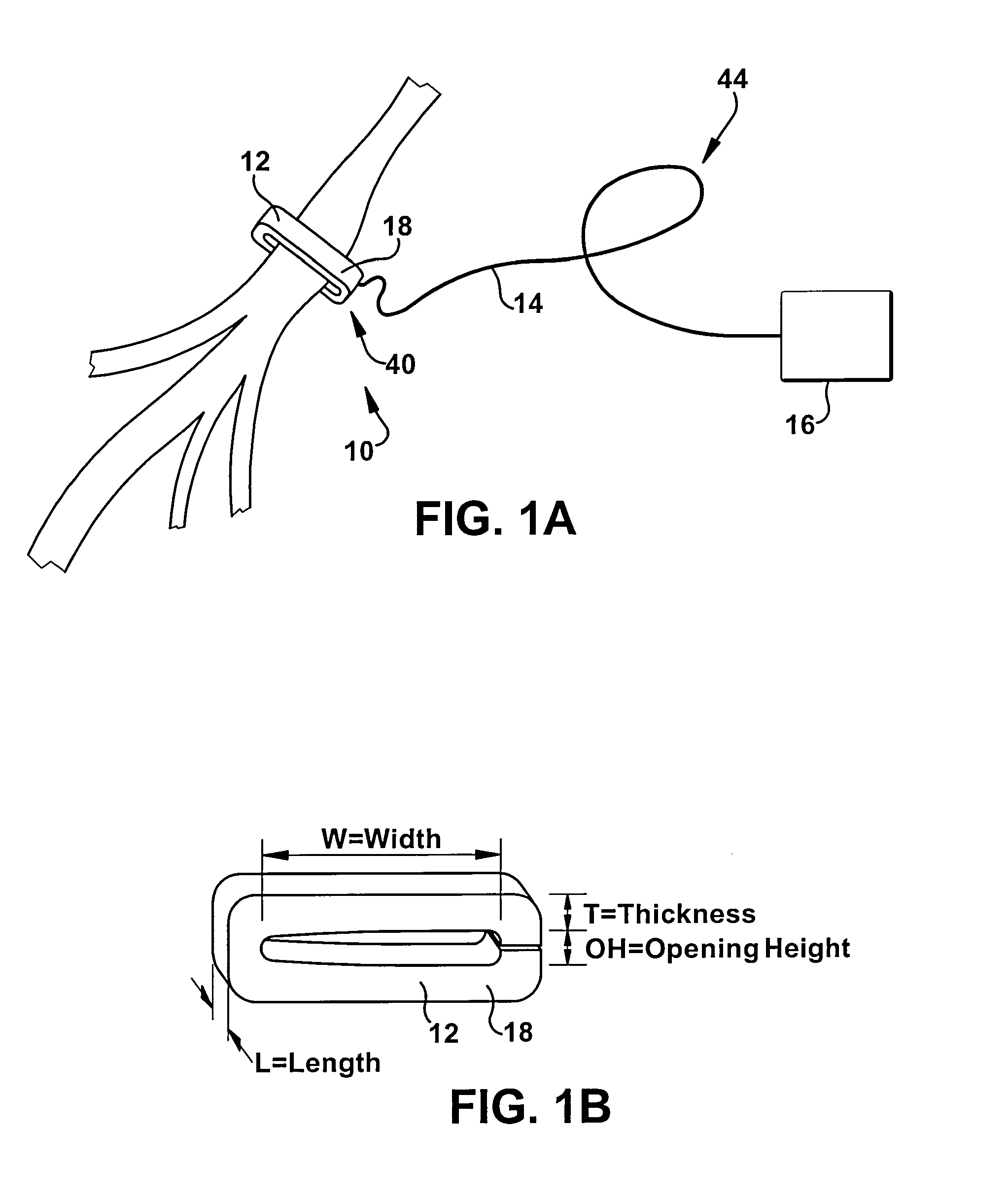
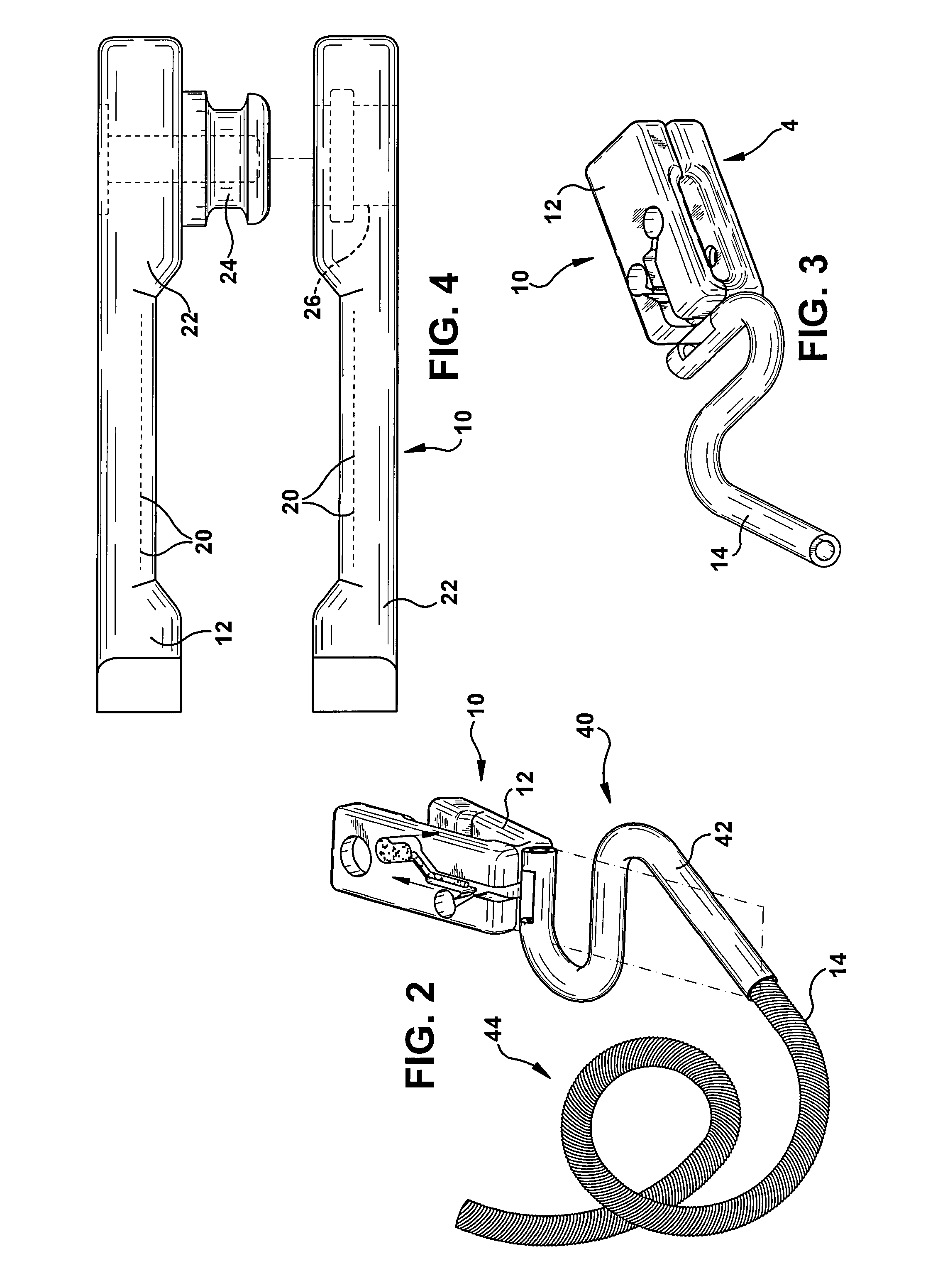
[0031] Referring now to the drawings, and particularly to FIGS. 1-4, the electrode 10 includes a cuff 12 and a lead 14 extending from the cuff 12 to a control unit 16. The cuff 12 includes a non-conductive band 18 with electrical contacts 2...
PUM
 Login to View More
 Abstract
Description
Claims
Application Information
 Login to View More