One of the particular problems that necessitates maintenance is the deterioration of the road shoulder along the road proper.
This deterioration consists chiefly of
erosion caused by nature, snowplows, and motor vehicles.
This problem becomes especially pronounced when the road shoulder consists of a loose aggregate, such as gravel, commonly found along the side of a paved road.
This ledge creates a
hazard for vehicles and their operators in that they may inadvertently venture too close to the road shoulder and drop a wheel off the ledge thereby creating the potential for loss of control resulting in a possible accident.
Additional facets of the problem include ruts, ridges, and pot holes along the road shoulder, which, if not removed, cause additional safety concerns, as well as contributing to the further deterioration of the road shoulder.
This machine also cuts and fills ruts and ridges, but is not proficient at leveling and grooming.
1. The machines that are employed to replace the eroded aggregate require the purchase of large amounts of replacement aggregate and the transport of the aggregate to the maintenance site. This fact necessitates the use of one or more transport vehicles, and the operators that drive them. Accordingly, this process becomes quite expensive and labor intensive. These machines are also typically slow in nature, and typically only the first 2′ of road shoulder is maintained.
2. The machines that reclaim aggregate using only screed type
cutting edges are limited to use when the aggregate is in a damp and soft condition. These machines do not penetrate the aggregate when it is dry and hard and therefore cannot convey or distribute enough loose material to sufficiently fill in the ledge, ruts and potholes. They also do not sufficiently
handle the
vegetation that is often found growing in the aggregate. This
vegetation often plugs the machine, or causes it to ride over top the aggregate, thus limiting penetration.
3. The machines that reclaim aggregate using a disk type
harrow, sufficiently
handle the hard and dry conditions, as well as the
vegetation, but yet, because they use no leveling screed, they lack the ability to leave a groomed surface on the road shoulder, and therefore require a secondary operation is needed for grooming. They also throw the aggregate and vegetation toward the
road edge, and typically much of it lands on the paved surface of the road. This results in a safety concern for motor vehicles and therefore a secondary operation is required to clean off the
road surface.
4. The machines that reclaim aggregate using a combination of a disk type
harrow and a leveling screed, could conceivably
handle the hard dry conditions, as well as the vegetation, and could also sufficiently groom the
shoulder surface. These machines, however, were typically designed for maintaining levees and unpaved roads and therefore do not adapt well to being pulled or driven on the shoulder of a paved road. This is because the shoulder of the road is sometimes narrow with somewhat steep ditches along side, and these types of machines would either become unstable or drift down the steep ditches limiting their effectiveness. Also, because they are designed for maintaining levees and unpaved roads they are limited in the ability to reclaim the aggregate and accurately deposit it along the edge of the pavement. They are also often too wide to be confined to the road shoulder alone thus subjecting the road pavement to possible damage from their components. They are also limited in the ability of keeping debris and aggregate off of the paved surface.
5. The machines that are designed for creating or cleaning ditches have many of the same components of the above mentioned machines. Although these machines may be perceived to be able to accomplish the desired maintenance on a road shoulder, yet they lack the proper orientation and function to do so. They are typically designed to dig a trench, and as a result have no ability to redistribute material in the manner required to properly groom a road shoulder. They typically leave a
berm consisting of the excavated material along the side of the
ditch.



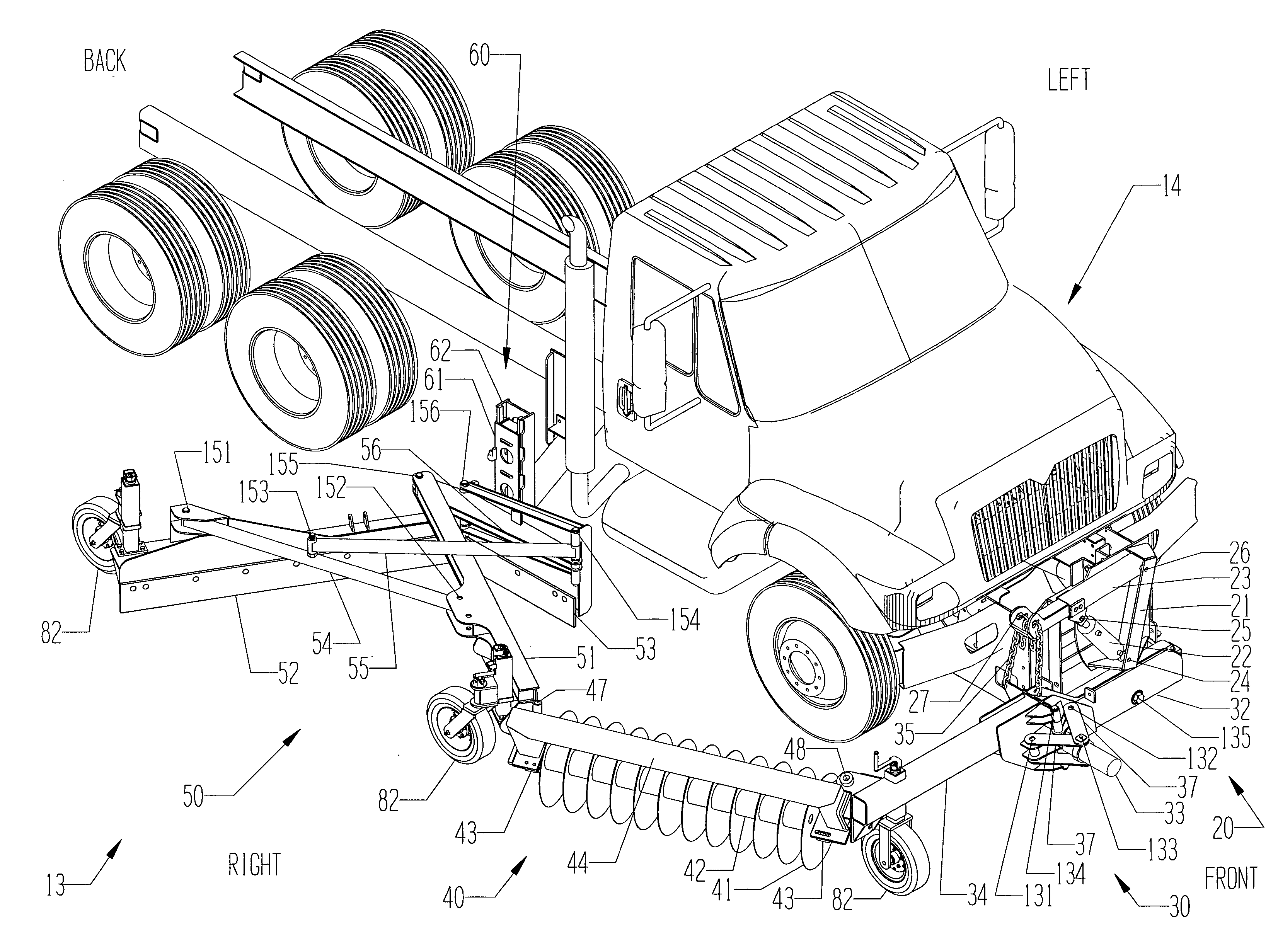
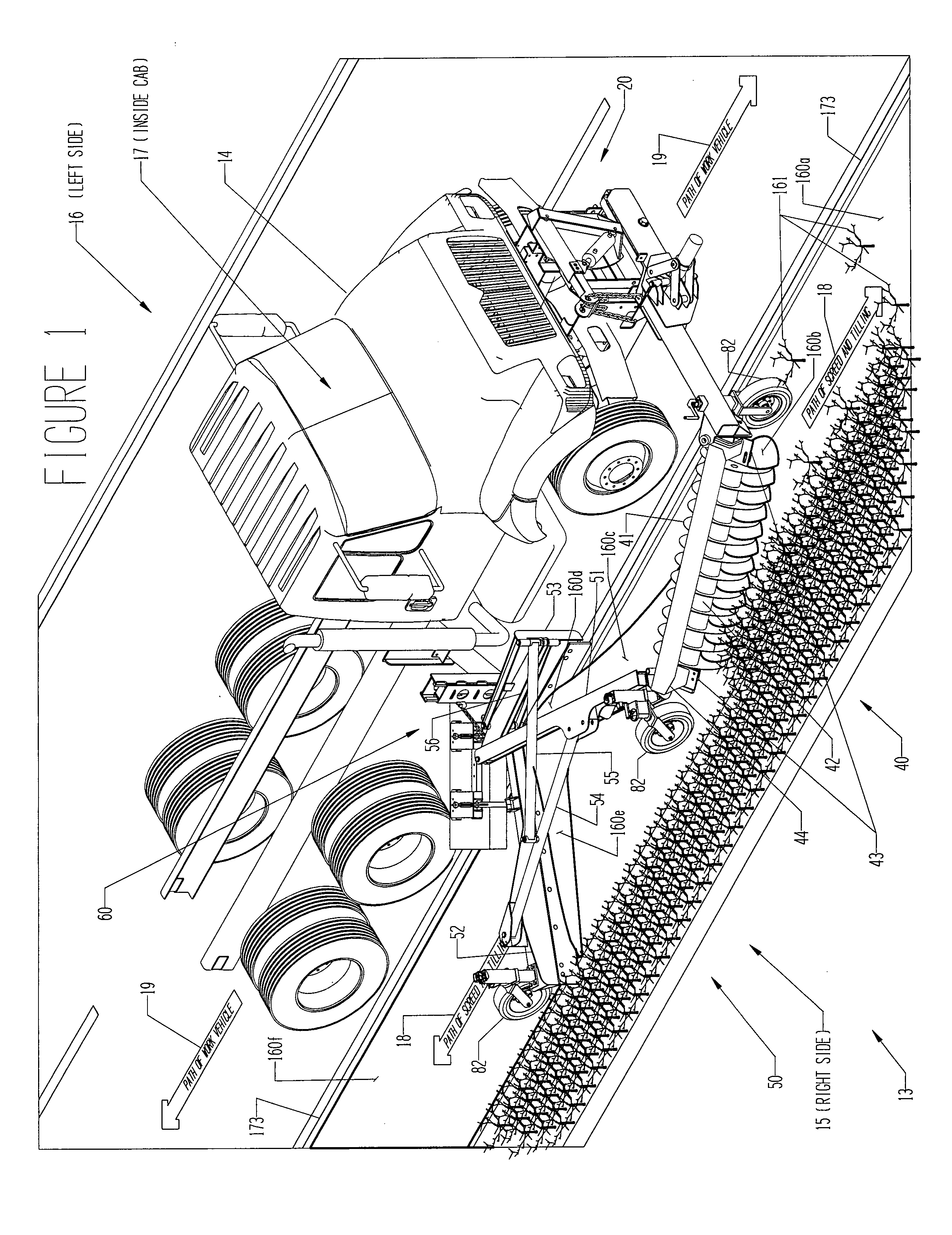
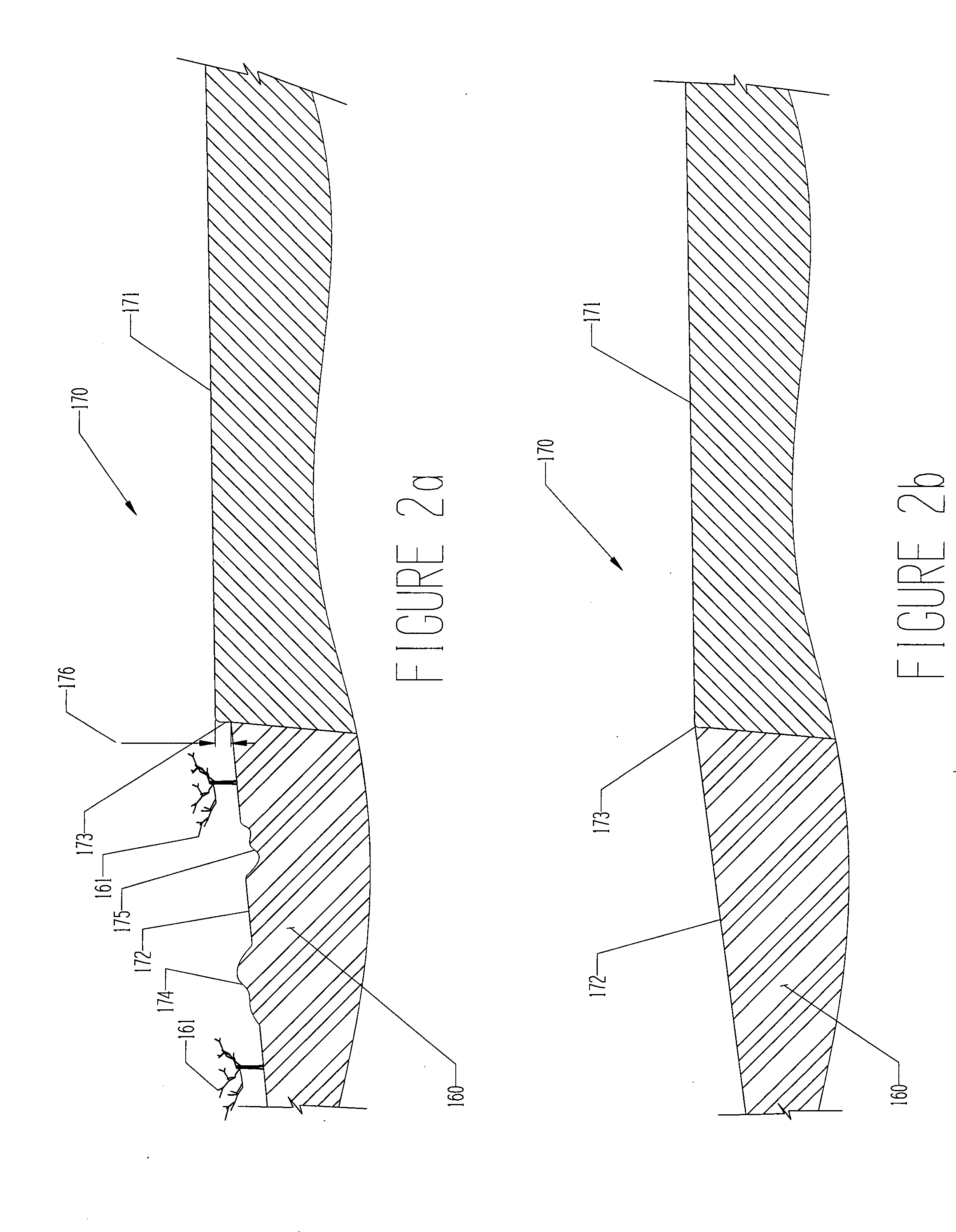
 Login to View More
  Login to View More