
Sbi motion artifact removal apparatus and method
a motion artifact and motion technology, applied in the field of sbi motion artifact removal apparatus and method, can solve the problems that the human visual system cannot resolve high resolution in a moving scene, and the user only requires resolution sufficient, so as to reduce the resolution of the image, reduce the occurrence of motion artifacts and tearing, and reduce the occurrence of tearing effects and other visual artifacts.
- Summary
- Abstract
- Description
- Claims
- Application Information
AI Technical Summary
Benefits of technology
Problems solved by technology
Method used
Image

Examples
Embodiment Construction
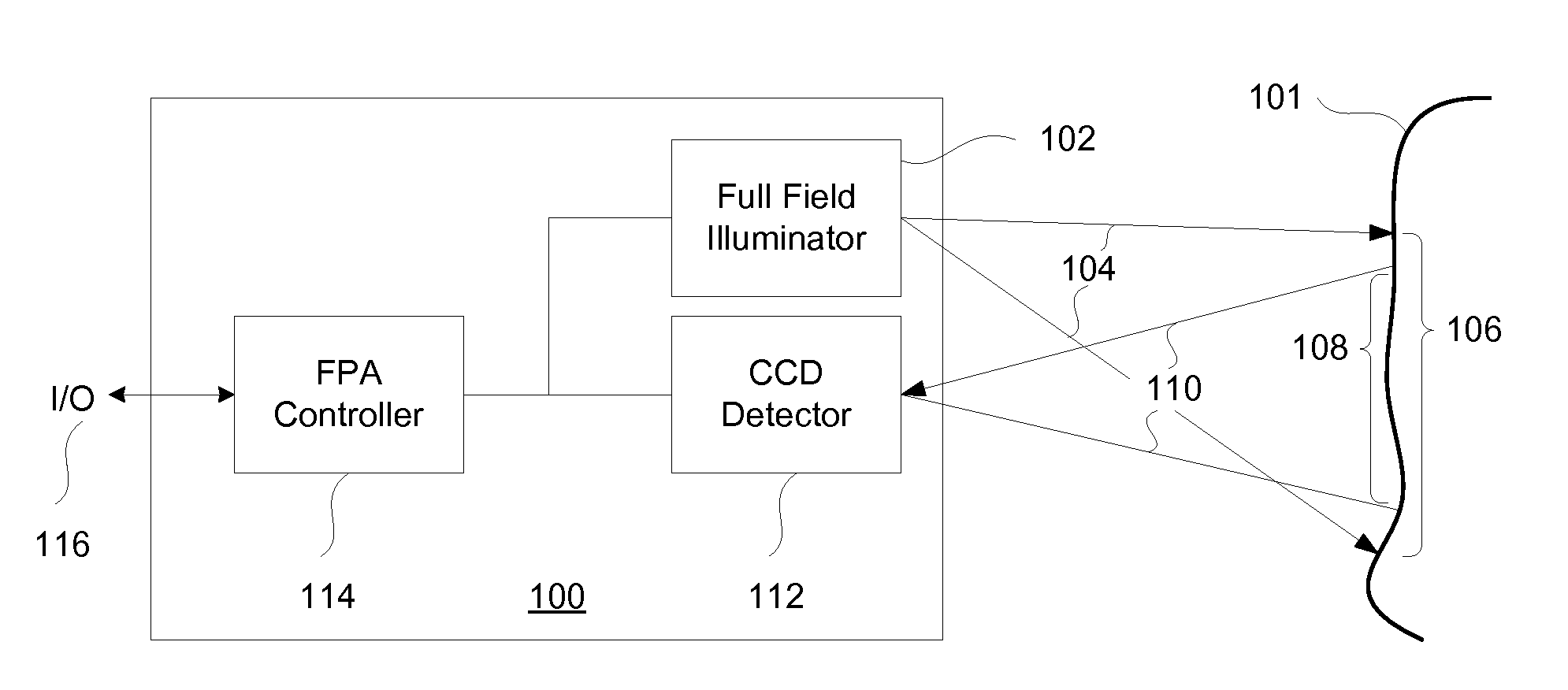
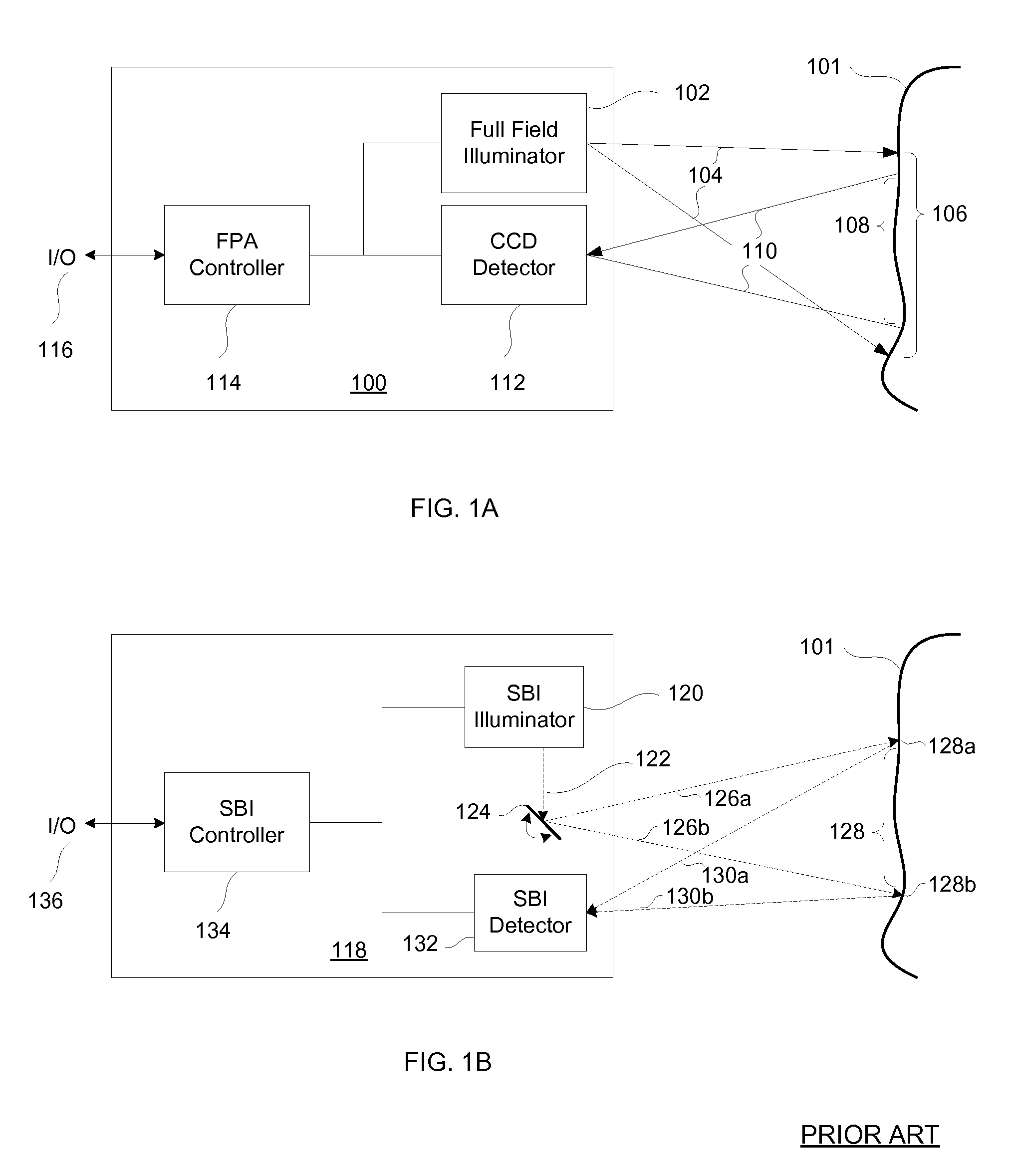
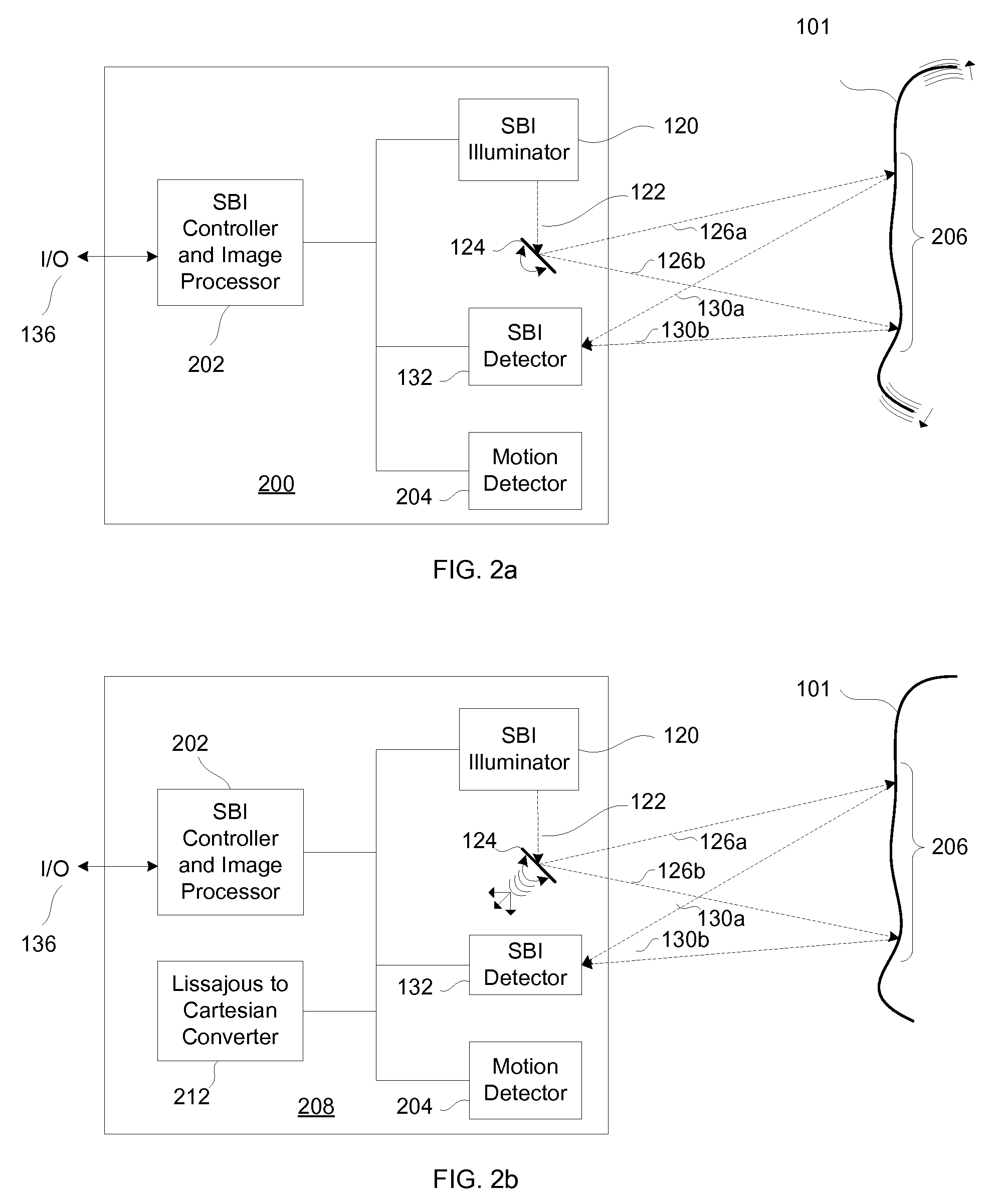
[0021]FIGS. 1a and 1b detail the prior art imaging systems. FIGS. 2a and 2b describe exemplary embodiments of the present invention. FIGS. 3a and 3b illustrate the scanning and data sample translation processes of an SBI device and system. FIGS. 4a-c, and 5 show examples of the artifact removal processes.
[0022]Prior Art FPA Imaging System
[0023]Referring now to the schematic diagram of a prior art FPA imaging system 100 depicted in FIG. 1a, the FPA controller 114 controls an I / O port 116, a full field illuminator 102, and a CCD detector 112. The full field illuminator 102 illuminates a target illumination area 106 of a target subject matter 101 with a broad beam of illumination 104. The CCD detector 112 spatially resolves returned illumination 110 from the target imaging area 108 and converts it to an electrical signal for eventual display.
[0024]In a typical prior art FPA imaging system 100, a full field illuminator 102 illuminates a target illumination area 106 of a target subject m...
PUM
 Login to View More
 Abstract
Description
Claims
Application Information
 Login to View More