However, the problem of patients suffering from this kind of
disease is worsened when the need arises for the introduction and attachment of osseous synthesis of the
bone plate kind, intervertebral spacers and implants, among others, which are fixed to the
bone structures by means of
bone screws.
In such situations, it is noted that the bone screws, when introduced into the
bone structure of the patient with
osteoporosis, are not fixed safely.
Normally, the bone screws end up loose, lax, damaging the
bone structure, since these bones are relatively hollow, that is, there is no bone matter to anchor the bone screws.
As a result, it is not possible to establish a firm, safe and stable attachment of the bone screw.
However, as persons skilled in the art will appreciate, this kind of procedure may lead to certain drawbacks for doctors and chiefly for patients, since: i) the cement may harden before the due positioning of the bone screw; ii) it requires a relatively large incision in the patient; iii) it increases the
risk of infection due to the size of the incisions; iv) it requires extra attention in rebuilding the bone structure with cement; v) there is a risk that the
bone cement may accidentally be applied in an inappropriate place, which may compromise the patient's health.
As can be noted, this technique of applying and manual filling of the
bone structures with cement generates a series of problems for patients, because it increases the
surgery time, the
risk of infection due to the size and
prolonged exposure time of the incision, the post-operation
recovery time and, principally, it may lead to inadequate positioning of the bone screws.
Although it solves the problem of hardening of the cement before introducing and positioning the bone screw, since the cement is only introduced after the due positioning of the bone screw in the bone structure, it can be verified that in practice such disposition is neither efficient nor easy to apply.
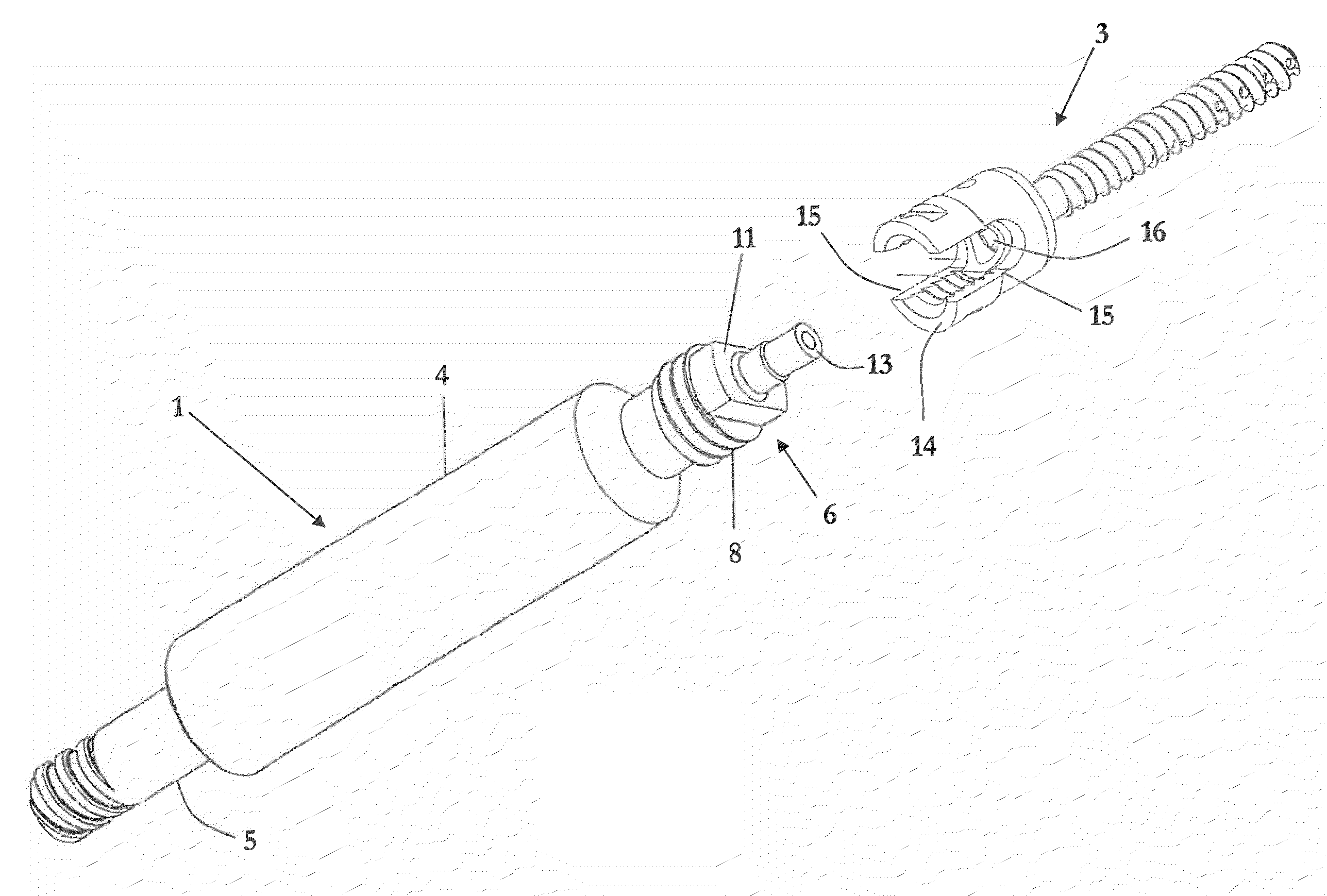
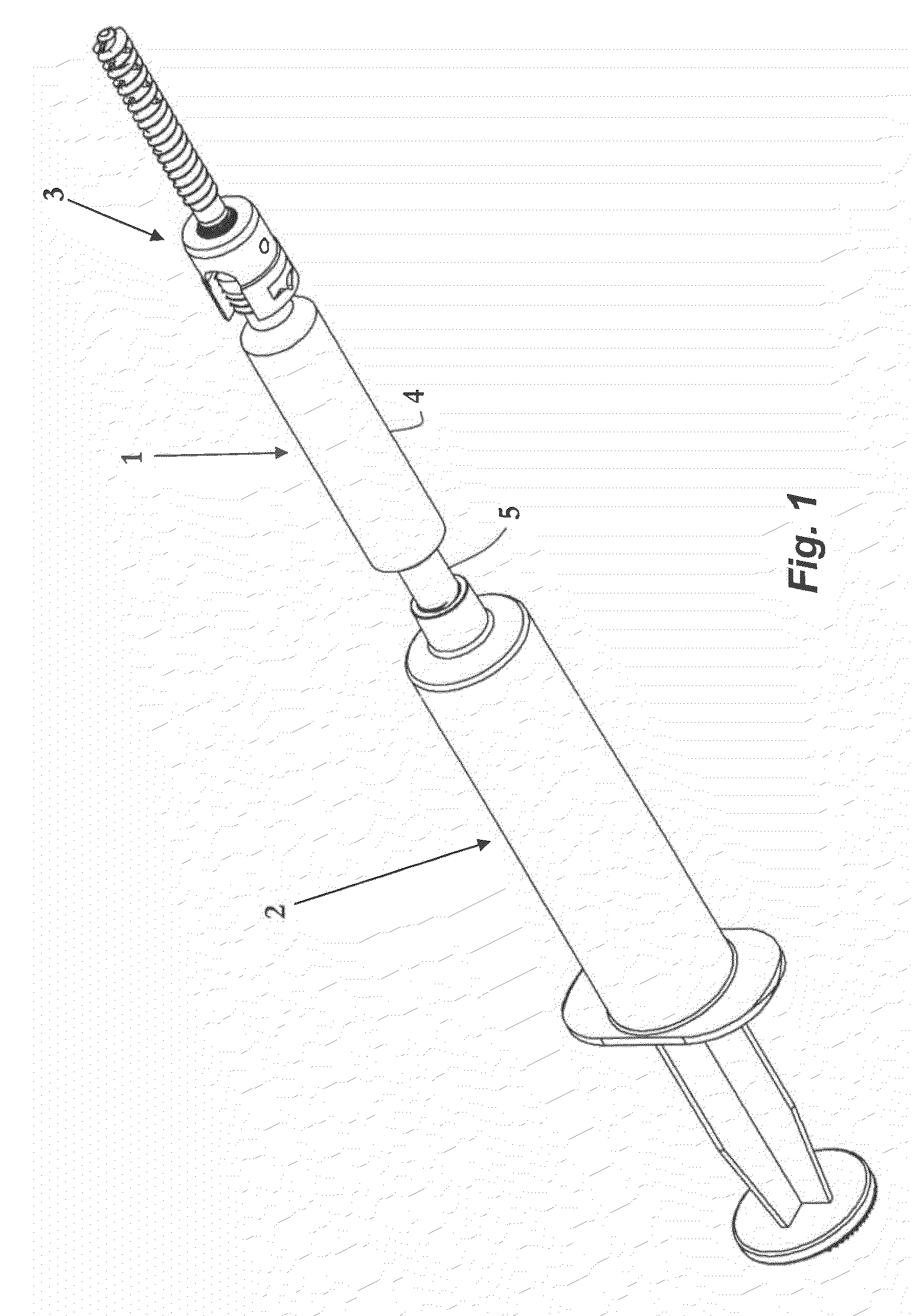
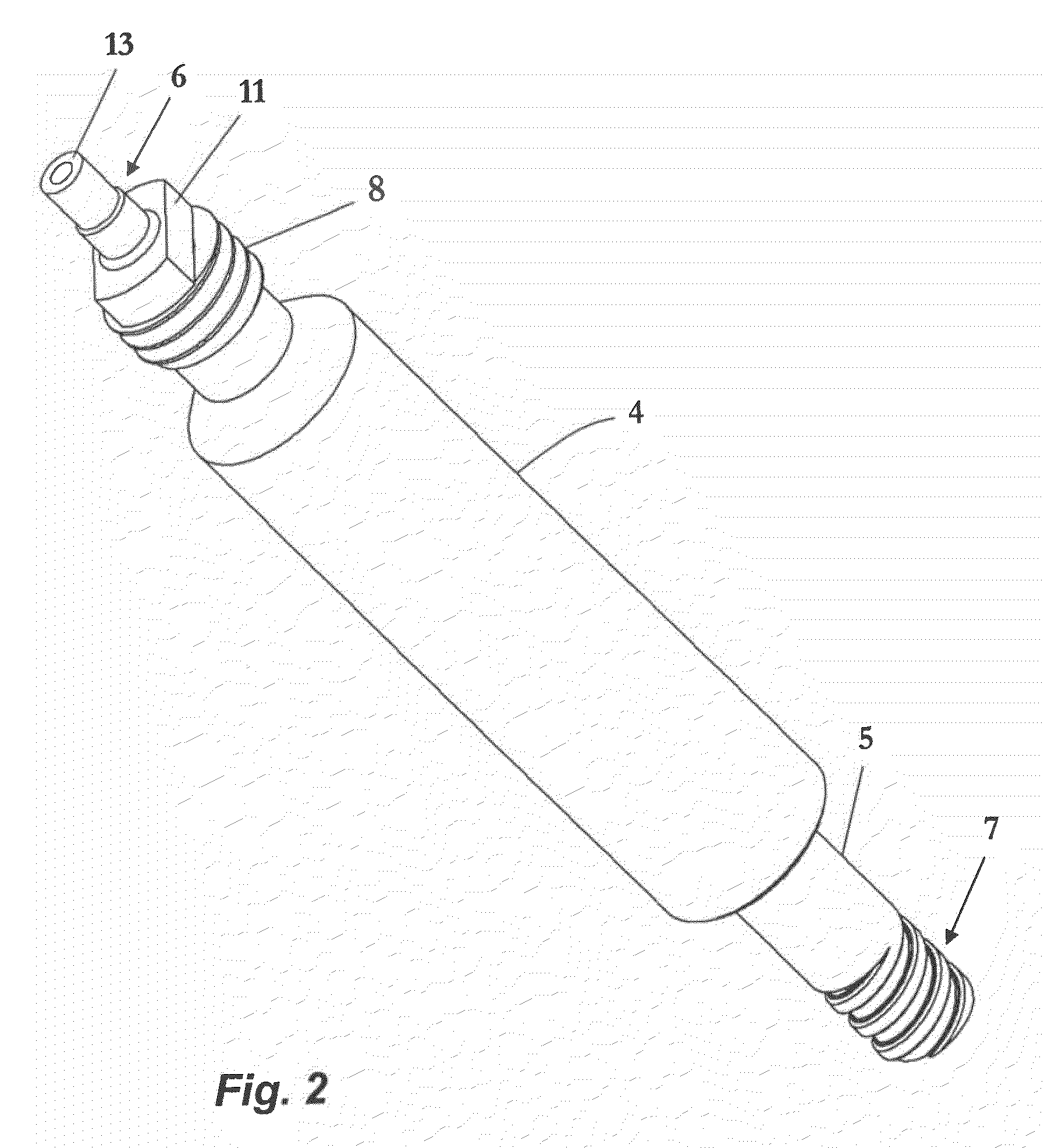
More specifically, the difficulties observed in practice are related to incompatibility of connections between the cement
injection device and the bone screw, but principally in relation to the efficiency and safety during the process of applying the cement in the bone structure.
Additionally, since there are no appropriate devices for conducting and adequately applying cement, it can be seen that doctors face a major hurdle in obtaining a precise alignment between the opening of the material extraction of the injection device and the bone screw channel.
Accordingly, it can be verified that all devices and procedures of applying bone cement or surgical cement known in the state of the art reveal problems relating to risks of causing leakage during
surgical procedures, allowing the material to be applied at inappropriate sites inside the incisions.


 Login to View More
  Login to View More