
Method, System, and Computer Program Product for the Detection of Physical Activity by Changes in Heart Rate, Assessment of Fast Changing Metabolic States, and Applications of Closed and Open Control Loop in Diabetes
a technology of heart rate and physical activity, applied in the field of open and closed loop control systems for the control of diabetes, can solve the problems of automatic injection of insulin in patients with type 1 diabetes (t1dm), natural impairment, and inability to timely and adapt to changing blood glucose levels, and achieve simple model-independent control algorithms such as pid controllers
- Summary
- Abstract
- Description
- Claims
- Application Information
AI Technical Summary
Benefits of technology
Problems solved by technology
Method used
Image

Examples
Embodiment Construction
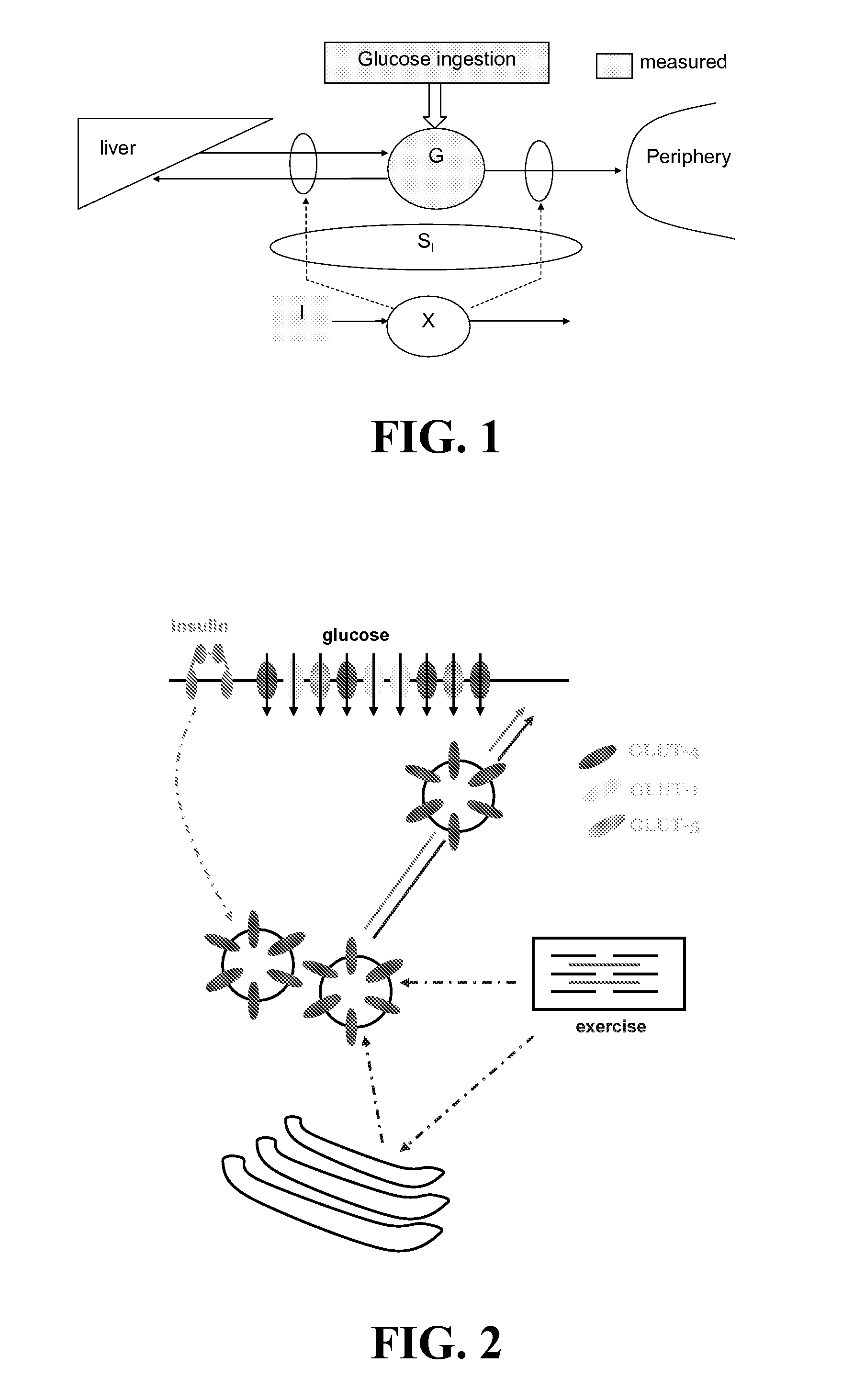
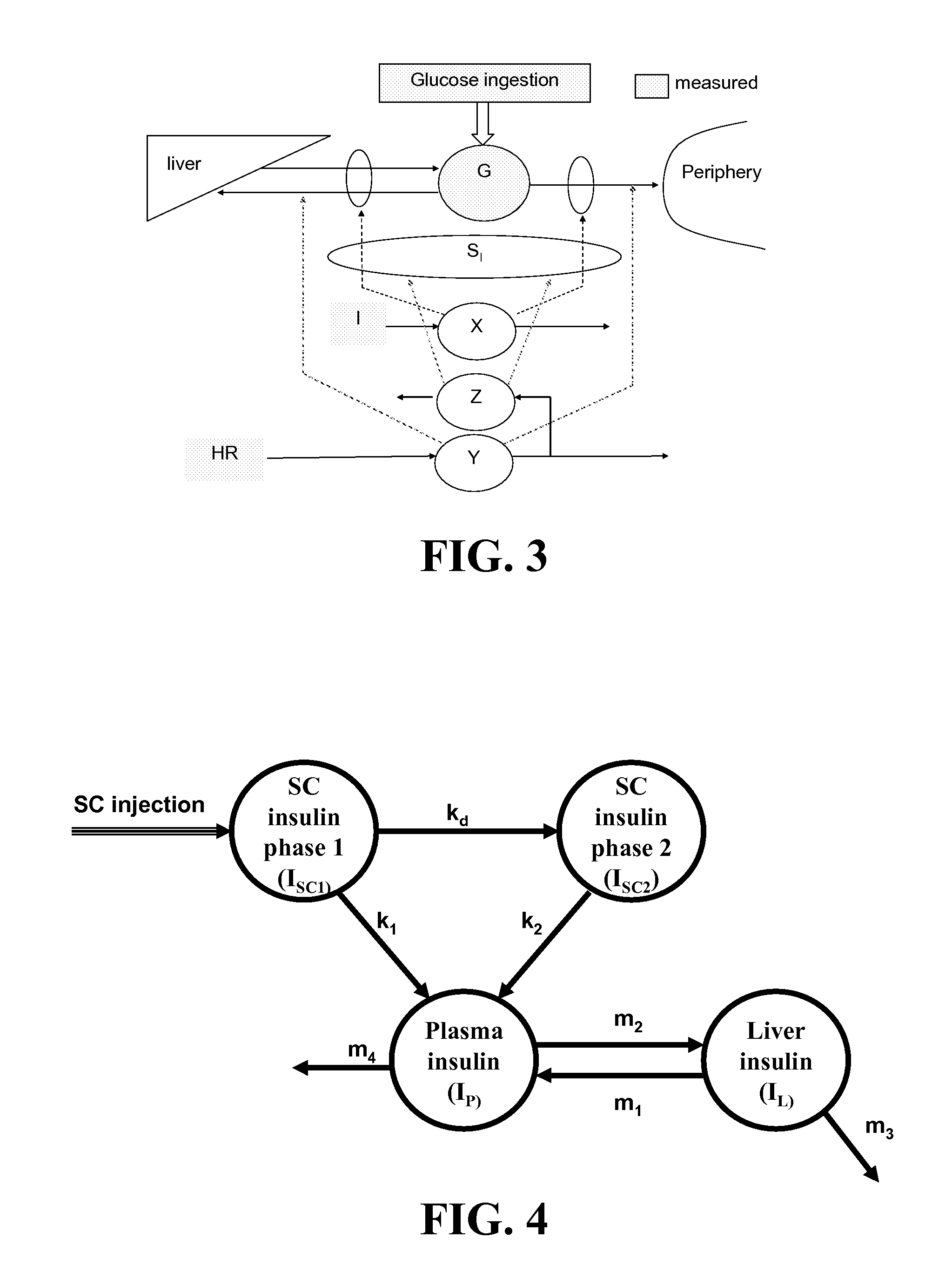
[0041]An aspect of various embodiments of the present invention method, system and computer program product comprises, but not limited thereto, the quantitative estimation of short-term and long-term changes in individual insulin sensitivity (SI) from heart rate. The computation of these changes may rely on the mathematical algorithm described below, which is derived from the classic MMGK. As shown in the literature, the parameters of the minimal model (SI but also SG ) can significantly change during and after physical activity [21],[34]. These changes are consequence from vascular and metabolic adaptations to increased energy utilization and storage described above, rendering the minimal model impossible to use during exercise without a precise description of the amplitude and dynamics of these changes. Moreover, without announcement, the timing of exercise is not known, making difficult any real-time exercise detection.
The Exercise Minimal Model of Glucose Kinetics (EMMGK):
[0042]...
PUM
 Login to View More
 Abstract
Description
Claims
Application Information
 Login to View More