Protein Phosphorylation By Basophillic Serine/Threonine Kinases
a phosphorylation site and protein technology, applied in the field of new products, can solve the problems of misdiagnosis, incomplete and inaccurate understanding of how, and not yet well understood
- Summary
- Abstract
- Description
- Claims
- Application Information
AI Technical Summary
Benefits of technology
Problems solved by technology
Method used
Image

Examples
example 1
Isolation of Phospho-serine and Phospho-threonine Containing Peptides Related To Basophilic Ser / Thr Kinase Signaling Pathways and Identification of Novel Phosphorylation Sites
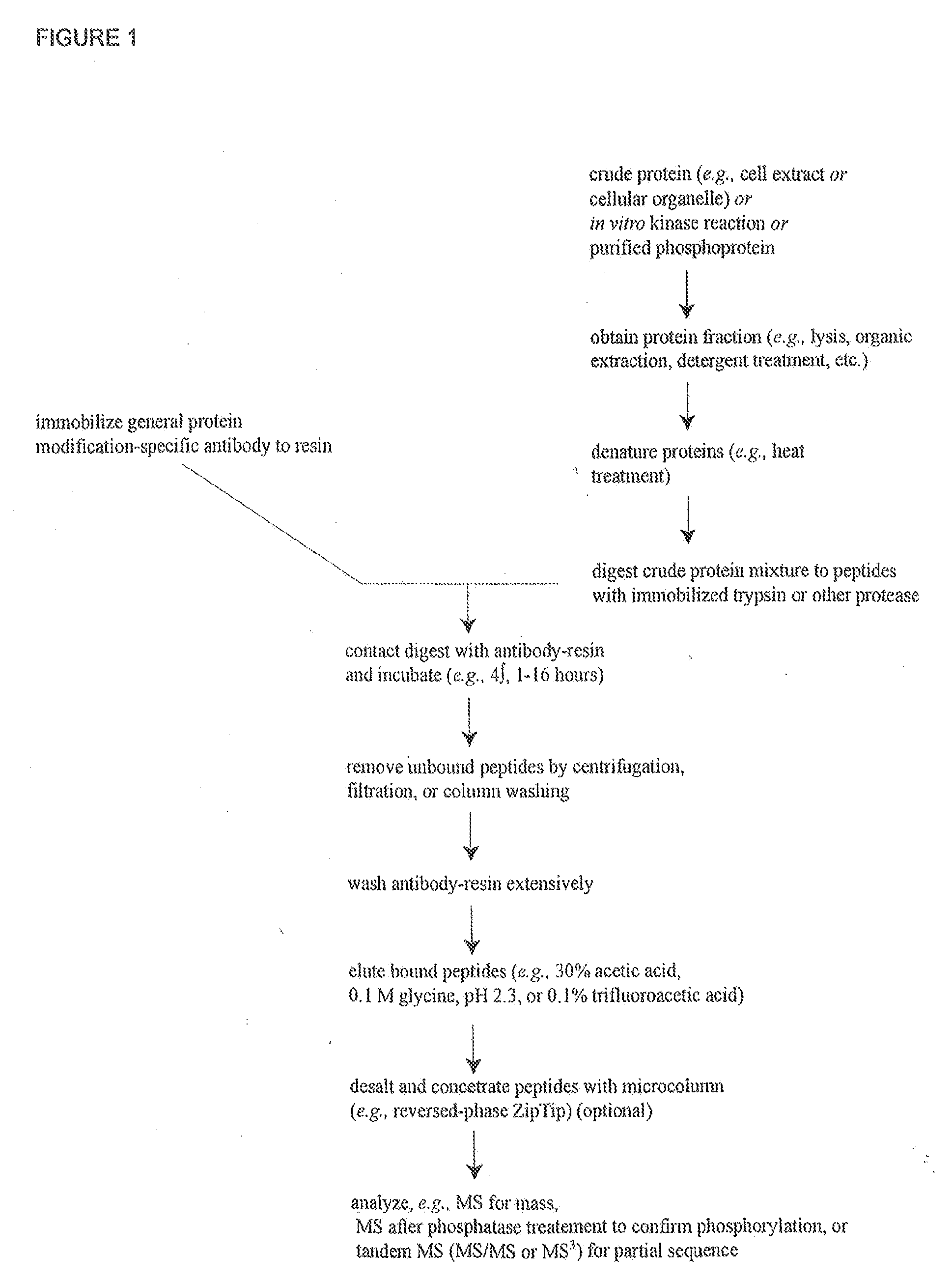
[0244]In order to discover novel serine and / or threonine phosphorylation sites in basophilic Ser / Thr kinase signaling pathways, IAP isolation techniques were used to identify phosphoserine and / or threonine-containing peptides in cell extracts from cellular extracts from basophilic Ser / Thr kinase signaling related tissue samples including: A 431; Adult mouse brain; Embryo mouse brain; H1373; H1703; H3255; H441; HCC1937; HCT 116; HeLa; Jurkat; K562; MKN-45; N06cs95; TH-HY2; XY3-130T; XY3-52-T; XY3-68-T; XY3-95N; mouse brain; mouse liver; xy380T. Tryptic phosphoserine and / or threonine-containing peptides were purified and analyzed from extracts of each of the cell lines mentioned above, as follows. Cells were cultured in DMEM medium or RPMI 1640 medium supplemented with 10% fetal bovine serum and penicillin / strept...
example 2
Production of Phosphorylation site-Specific Polyclonal Antibodies
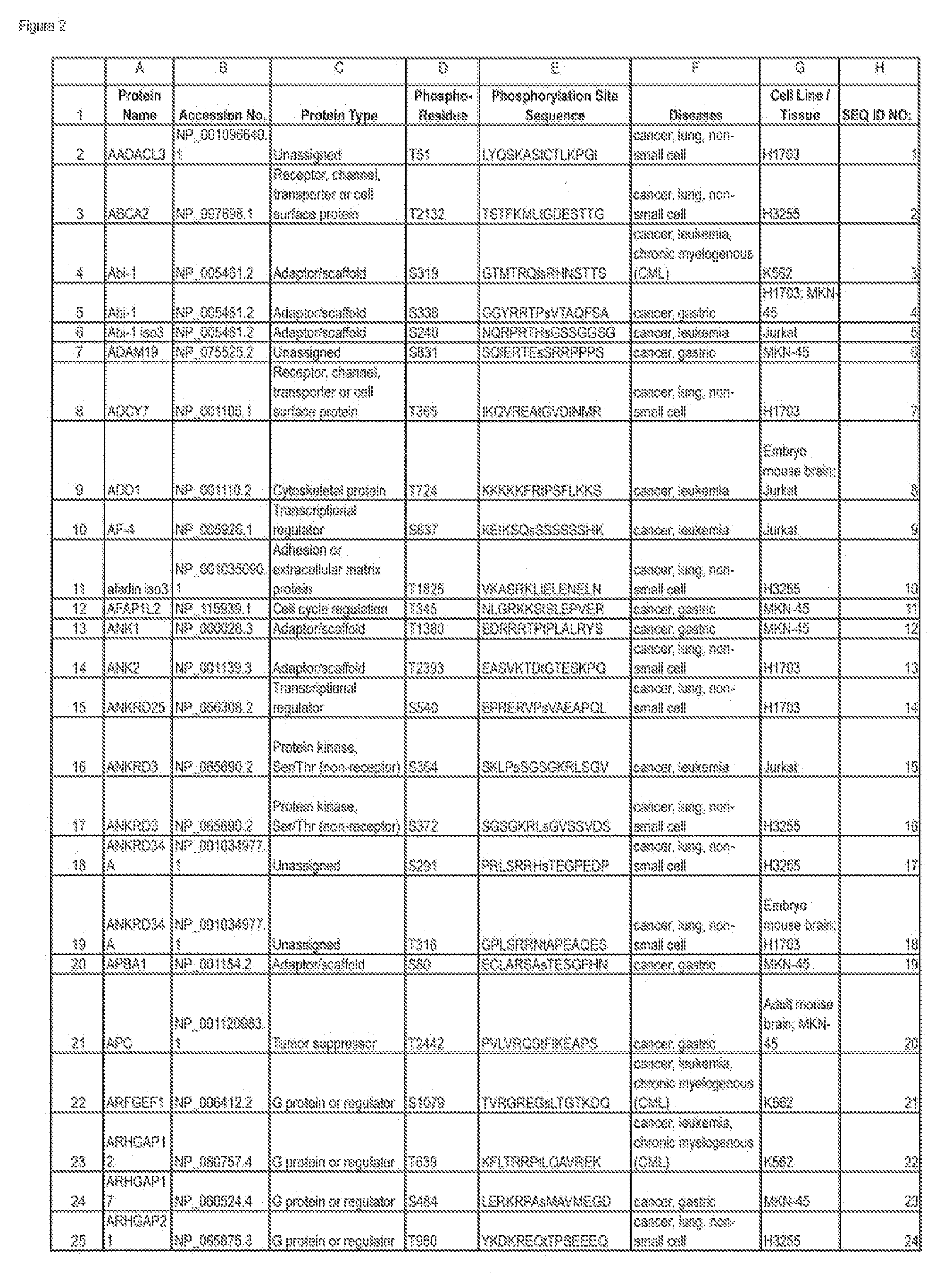
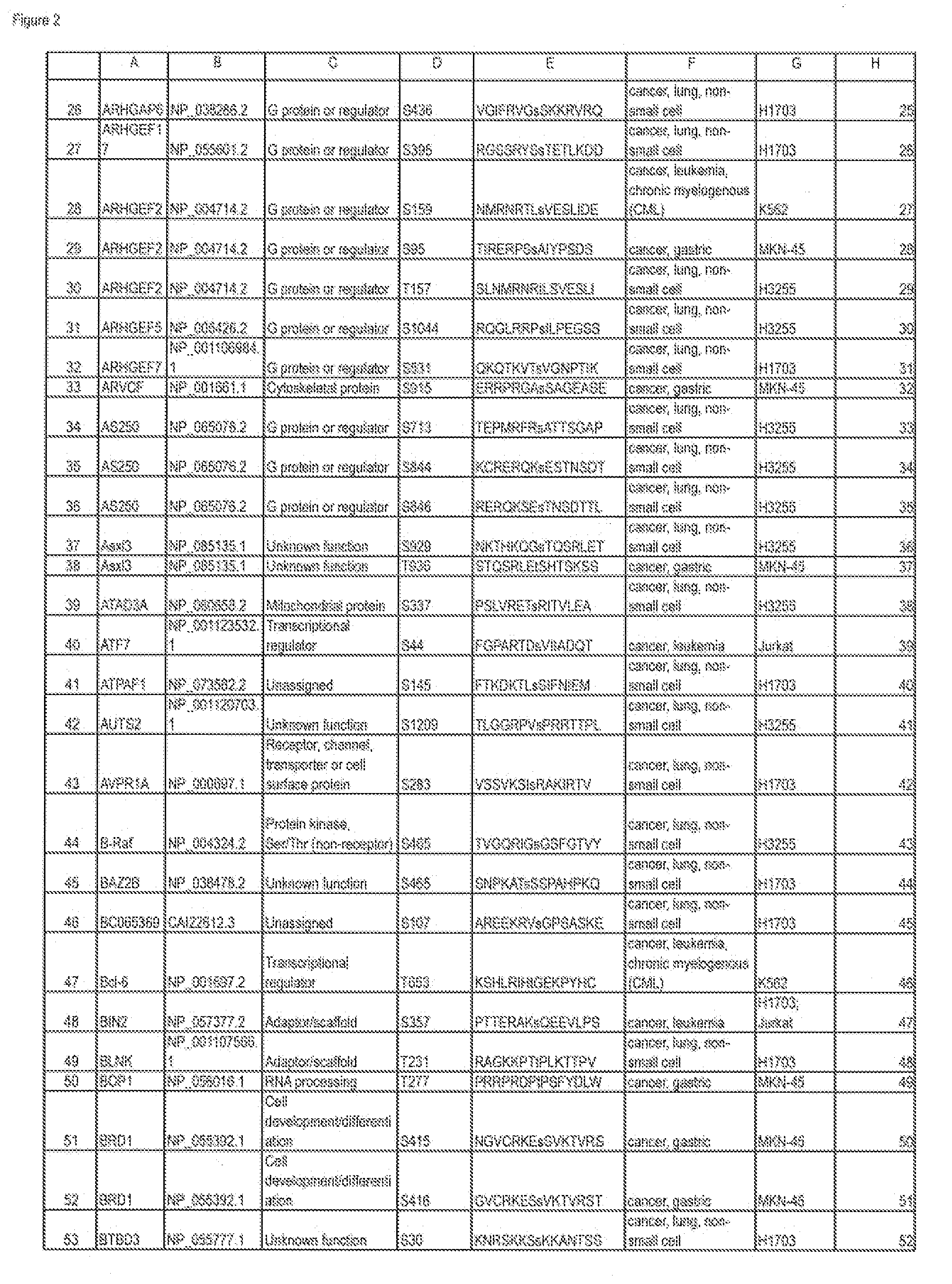
[0259]Polyclonal antibodies that specifically bind a novel phosphorylation site of the invention (Table 1 / FIG. 2) only when the serine and / or threonine residue is phosphorylated (and does not bind to the same sequence when the serine and / or threonine is not phosphorylated), and vice versa, are produced according to standard methods by first constructing a synthetic peptide antigen comprising the phosphorylation site and then immunizing an animal to raise antibodies against the antigen, as further described below. Production of exemplary polyclonal antibodies is provided below.
A. MAST3 (serine 157).
[0260]A 15 amino acid phospho-peptide antigen, RPRSRSLs*PGRATGT (SEQ NO: 266; s*=phosphoserine), which comprises the phosphorylation site derived from afadin iso2 (a protein kinase, ser 157 being the phosphorylatable residue), plus cysteine on the C-terminal for coupling, is constructed according to standard synthesis techniq...
example 3
[0267]Production of Phosphorylation Site-Specific Monoclonal Antibodies
[0268]Monoclonal antibodies that specifically bind a novel phosphorylation site of the invention (Table 1) only when the serine and / or threonine residue is phosphorylated (and does not bind to the same sequence when the serine and / or threonine is not phosphorylated) are produced according to standard methods by first constructing a synthetic peptide antigen comprising the phosphorylation site and then immunizing an animal to raise antibodies against the antigen, and harvesting spleen cells from such animals to produce fusion hybridomas, as further described below. Production of exemplary monoclonal antibodies is provided below.
A. ARHGEF2 (serine 159).
[0269]A 15 amino acid phospho-peptide antigen, NMRNRTLs*VESLIDE (SEQ ID NO: 27; s*=phosphoserine), which comprises the phosphorylation site derived from ARHGEF2 (a G protein or regulator protein, Ser 159 being the phosphorylatable residue), plus cysteine on the C-ter...
PUM
| Property | Measurement | Unit |
|---|---|---|
| concentration | aaaaa | aaaaa |
| dissociation constant | aaaaa | aaaaa |
| dissociation constant | aaaaa | aaaaa |
Abstract
Description
Claims
Application Information
 Login to View More