

Borehole compensated resistivity logging tool having an asymmetric antenna spacing
a resistivity logging and antenna spacing technology, applied in seismology for water logging, instruments, detection using electromagnetic waves, etc., can solve the problems of increasing the length of the tool, increasing the tool length, and other sensors being located, so as to achieve accurate borehole compensation and reduce the overall tool length
- Summary
- Abstract
- Description
- Claims
- Application Information
AI Technical Summary
Benefits of technology
Problems solved by technology
Method used
Image

Examples
Embodiment Construction
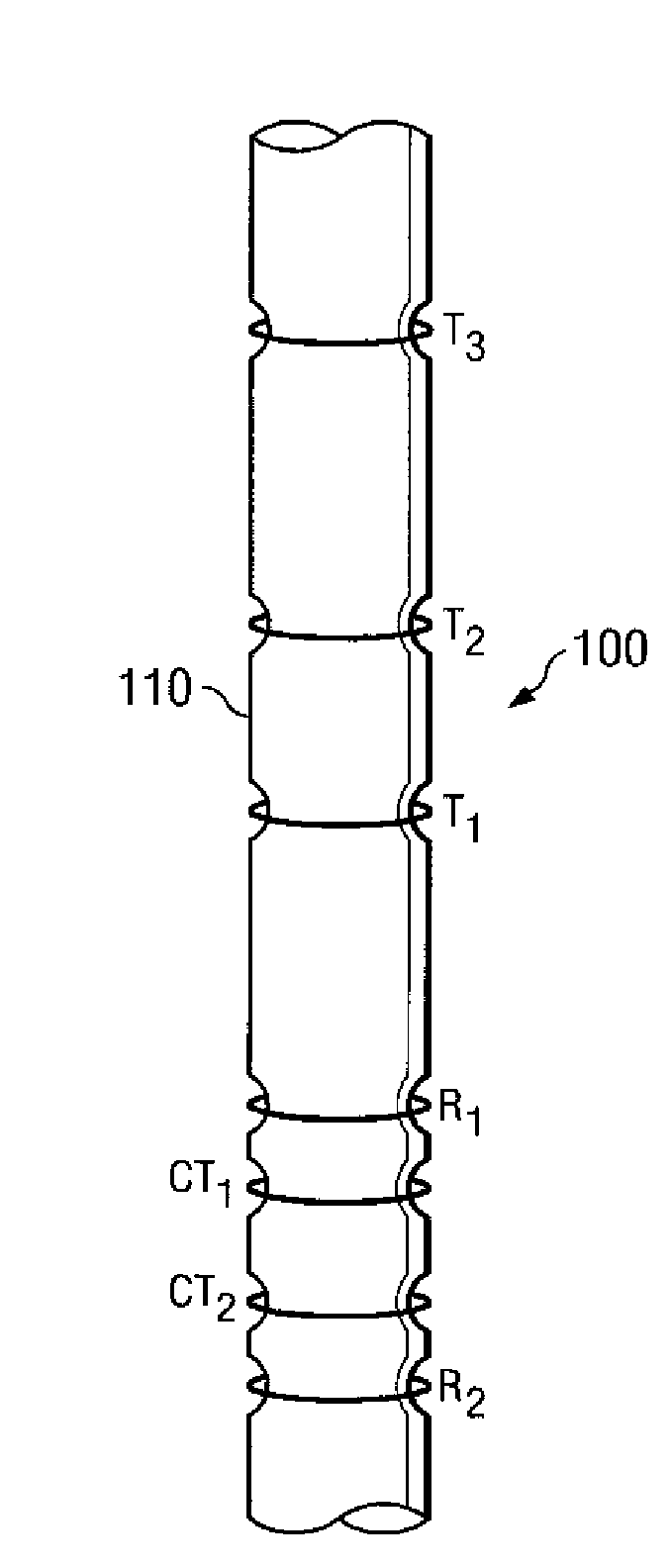
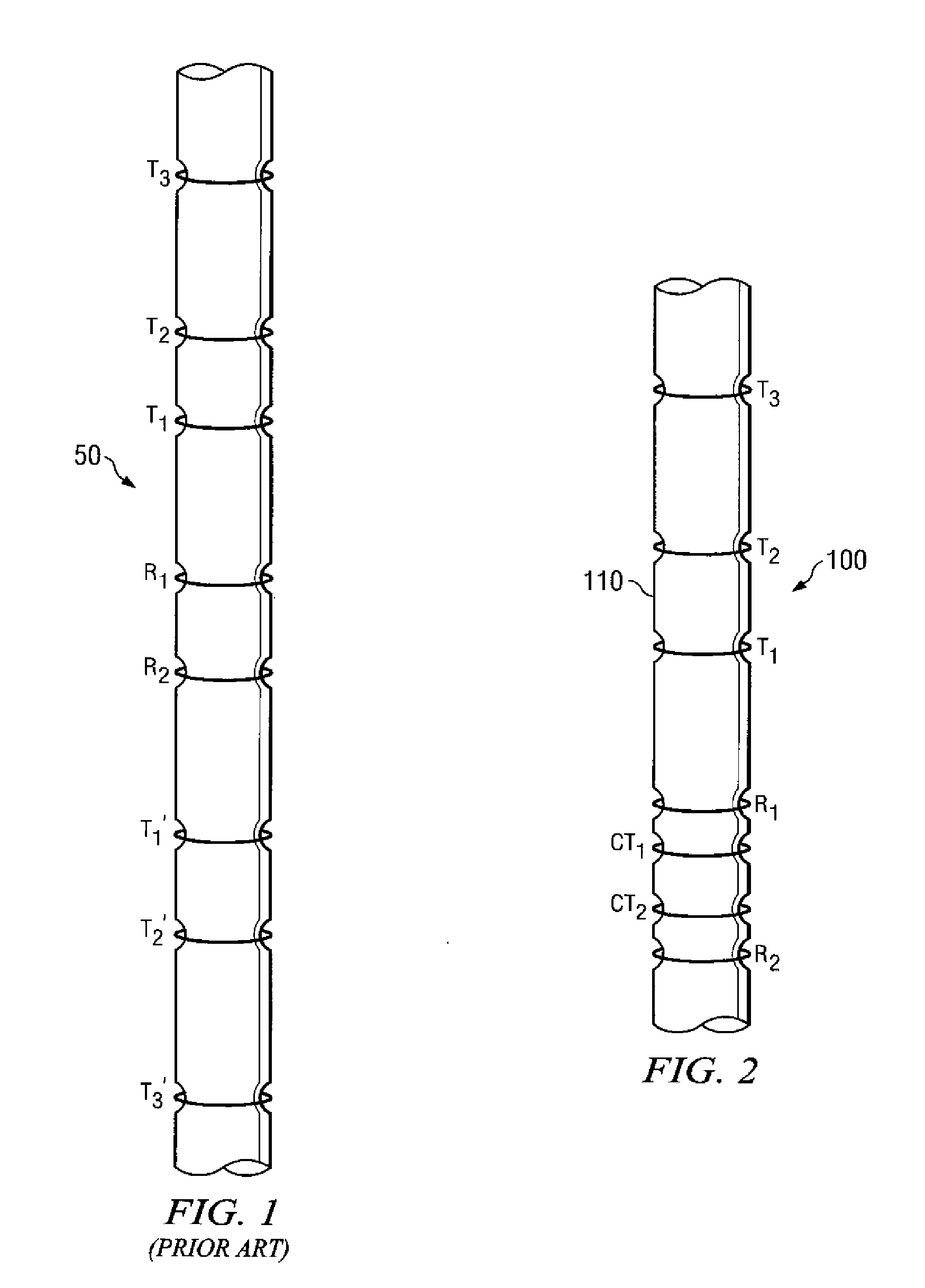
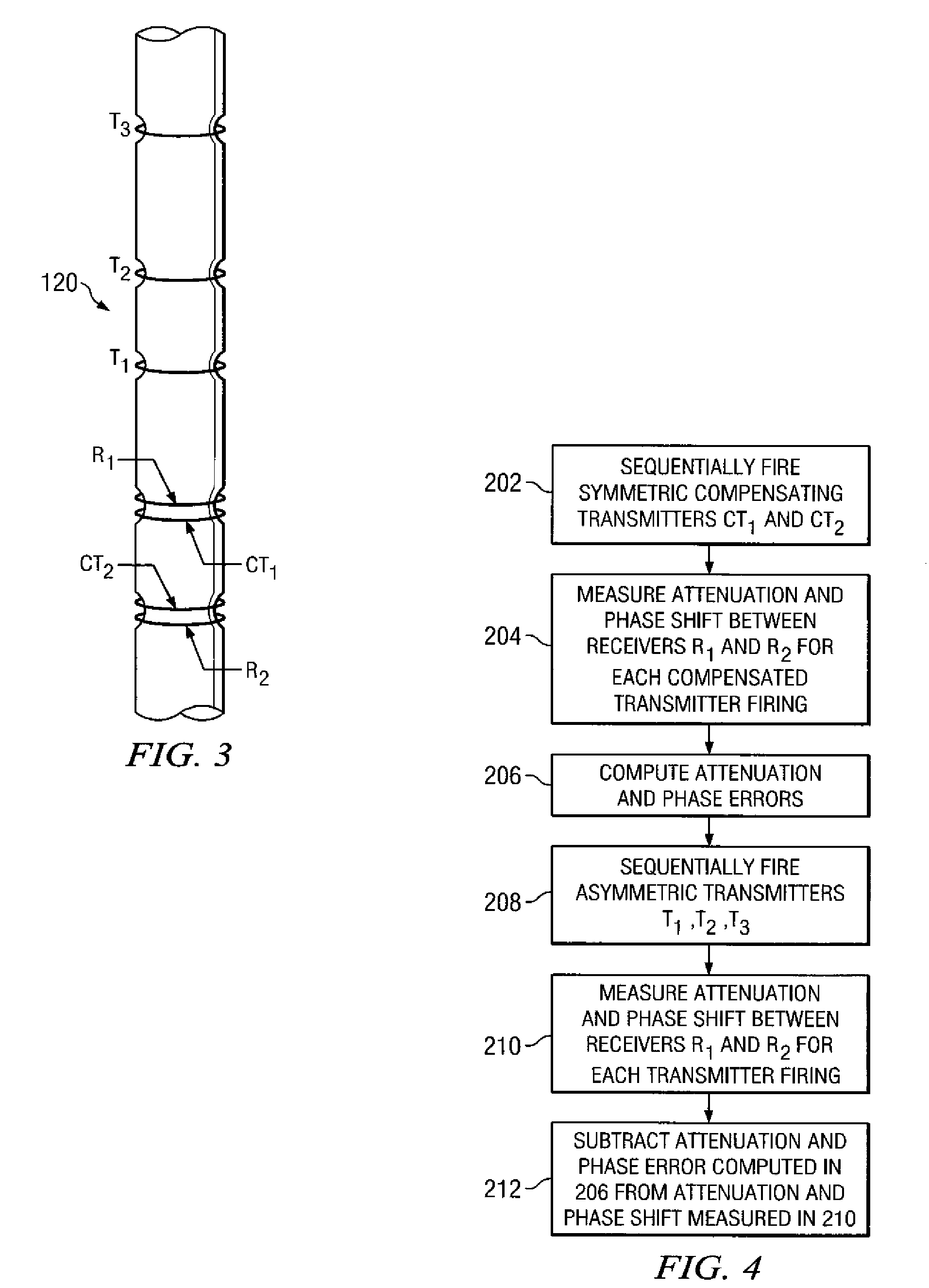
[0019]FIG. 2 depicts one exemplary embodiment of an LWD resistivity tool 100 in accordance with the present invention. Resistivity tool 100 includes a plurality of spaced transmitters T1, T2, and T3 and a pair of spaced receivers R1 and R2 deployed about a tool body 110. The transmitters T1, T2, and T3 may be thought of as being asymmetric in that they are deployed on one axial side of the receiver pair R1 and R2 and in that there are no corresponding symmetric transmitters deployed on the opposite axial side of the receivers. In contrast to the prior art resistivity tool 50 depicted on FIG. 1, the present invention does not include a second set of symmetric transmitters. Resistivity tool 100 further includes a pair of symmetric compensating transmitters CT1 and CT2. In the exemplary embodiment depicted on FIG. 2, these compensating transmitters CT1 and CT2 are deployed axially between the receiver pair R1 and R2. While the invention is not limited in this regard (the compensating t...
PUM
 Login to View More
 Abstract
Description
Claims
Application Information
 Login to View More