
Organic light-emitting device having improved light-emitting efficiency and method for fabricating the same
a light-emitting device and organic technology, applied in the direction of electroluminescent light sources, thermoelectric devices, electric lighting sources, etc., can solve the problems of reducing the intensity of light having the remaining wavelength, the small aperture ratio negatively affecting the consumption of driving power and a life span of the oled, so as to achieve the effect of improving the light-emitting efficiency of the organic light-
- Summary
- Abstract
- Description
- Claims
- Application Information
AI Technical Summary
Benefits of technology
Problems solved by technology
Method used
Image

Examples
Embodiment Construction
[0019]Hereinafter, the present invention will be described in detail.
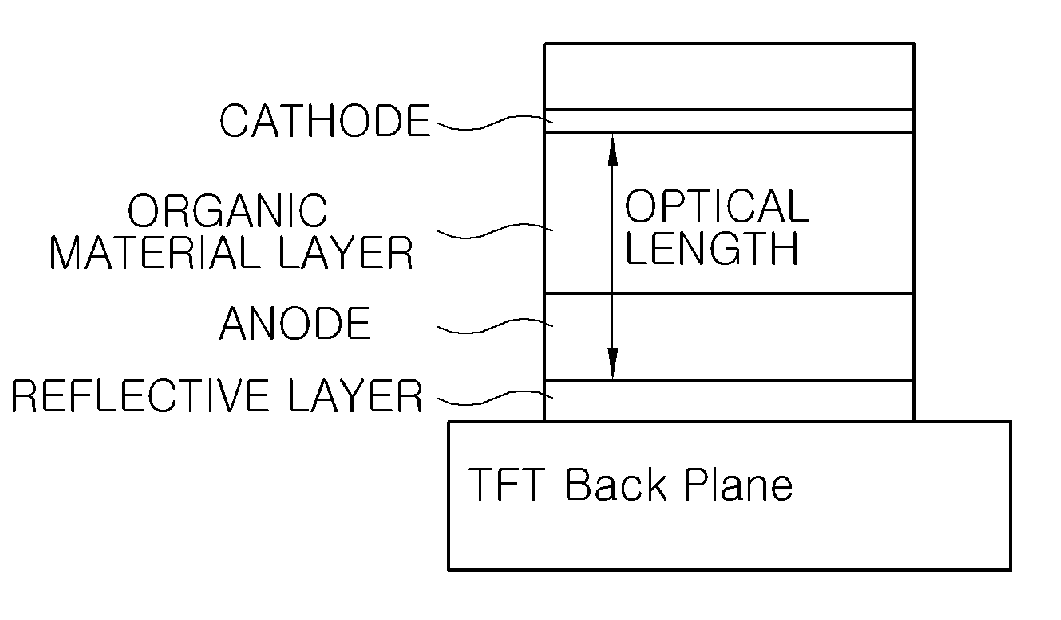
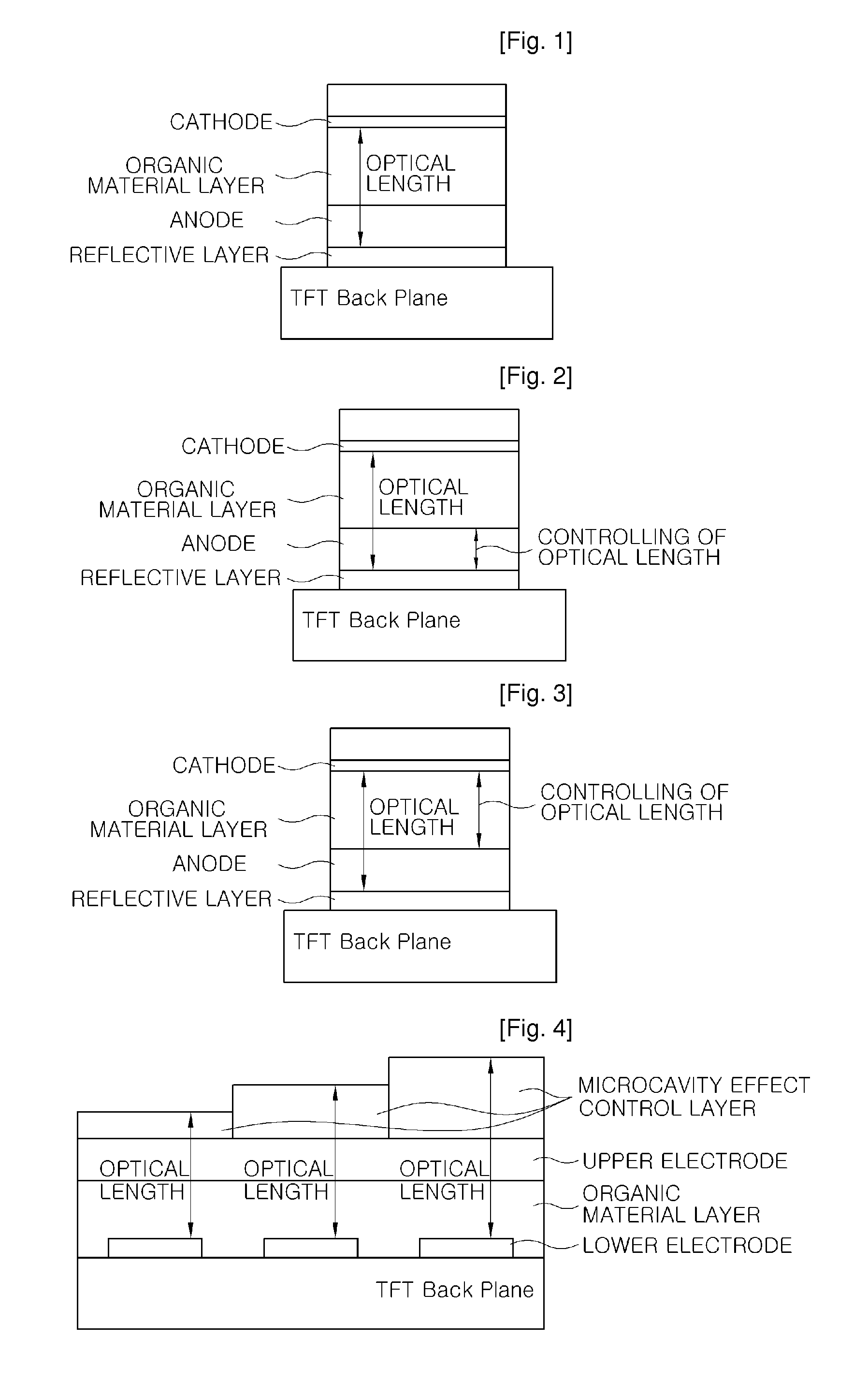
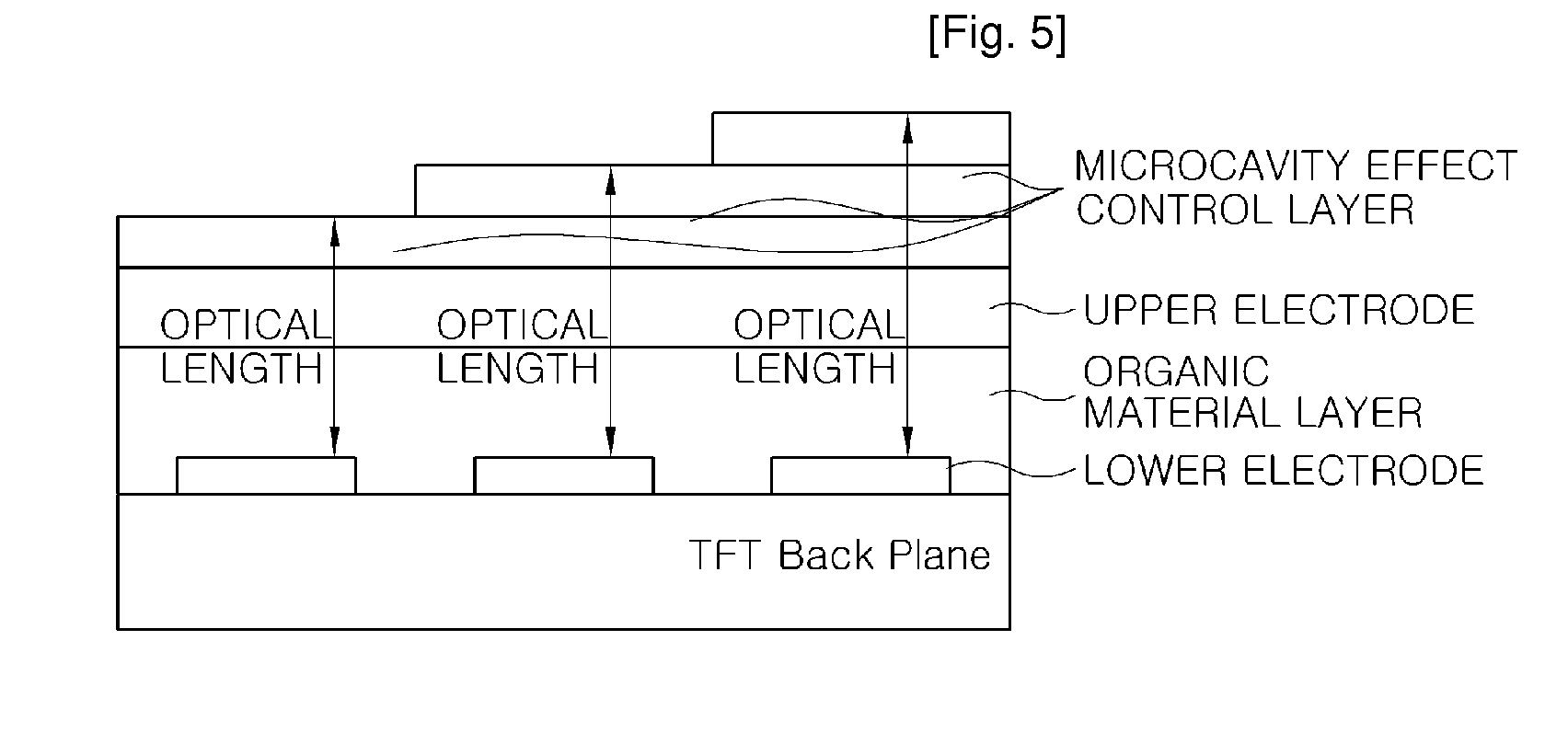
[0020]In an organic light emitting device according to the present invention, in the case of when an upper electrode having the transmittance of 80% or more is used in respects to light that is emitted from a light emitting layer of the device, the microcavity effect may be obtained due to a difference between the refractive index of the upper electrode and the refractive index of an air layer. In this case, an upper limit of an optical length regarding the microcavity effect is an interface of the upper electrode and the air layer. Unlike this, in a known art, the upper electrode that has the low transmittance in respects to light and acts as the reflective layer is used as the above upper electrode. Thus, the upper limit of the optical length regarding the microcavity effect is the interface of the upper electrode and the organic material layer.
[0021]Due to a difference between the present invention and the above...
PUM
 Login to View More
 Abstract
Description
Claims
Application Information
 Login to View More