
Antibacterial combination therapy
- Summary
- Abstract
- Description
- Claims
- Application Information
AI Technical Summary
Benefits of technology
Problems solved by technology
Method used
Image

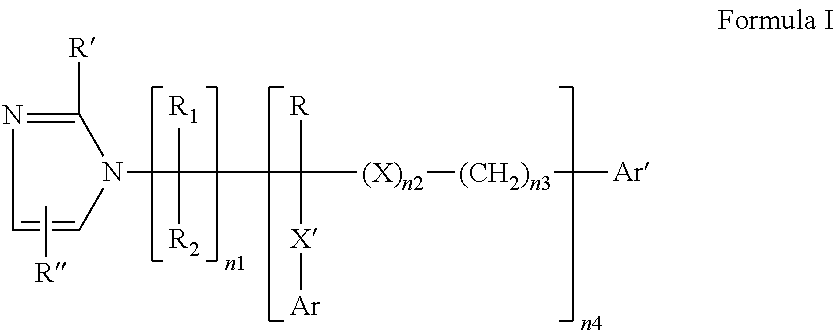
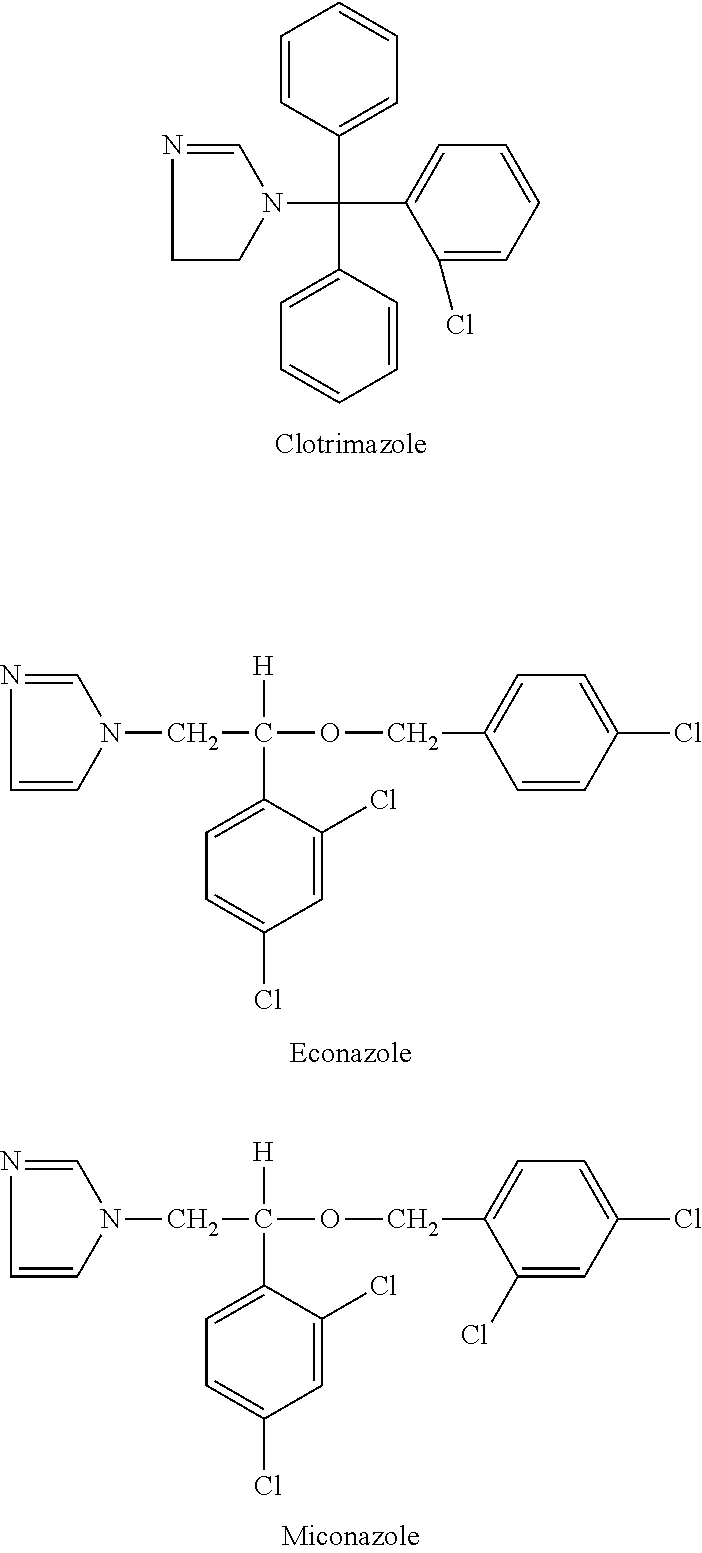
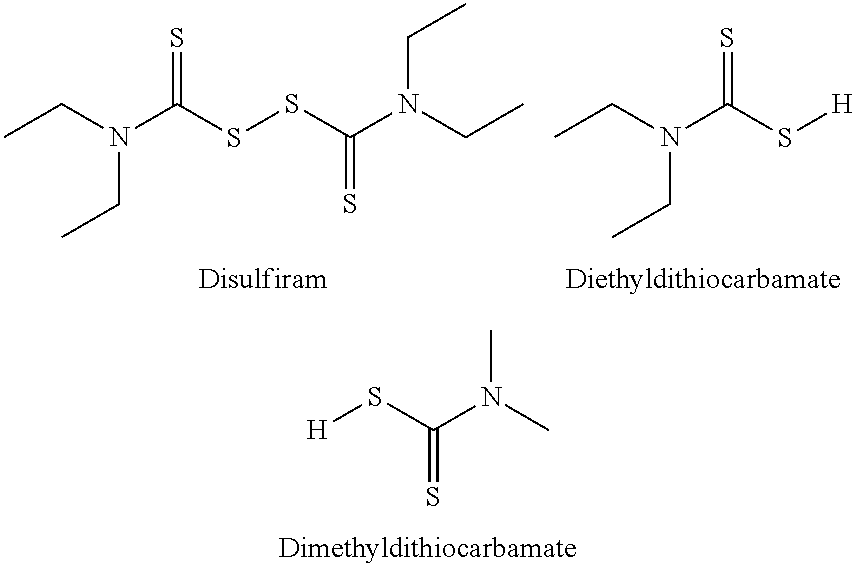
Examples
Embodiment Construction
Methods
[0052]In example experiments miconazole nitrate, econazole nitrate, clotrimazole, and disulfiram or DDS were dissolved in DMSO. Experiments were repeated with the disulfiram or DDS dissolved in ethanol. Other solvents that may be used include caster oil, pyridine, and 0.9% saline. For IV administration agents may be solubilised in polyethoxylated caster oil, or cyclodextrins such as sulfobutylether7-βcyclodextrin or hydroxypropyl-β-cyclodextrin and lactic acid. Minimum inhibitory concentrations (MICs) of a range of clinical and control bacterial organisms were measured according to BSAC (British Society for Antimicrobial Chemotherapy) guidelines (Andrews 2001), for single agents and combinations of agents, described briefly as follows. MICs were measured by agar dilution (Experiment A) and by broth microdilution (experiment B).
Preparation of Agar Plates and Broths.
[0053]Stock solutions of each agent were prepared using the formula:
1000P×V×C=W
[0054]Where P=μg of active compoun...
PUM
| Property | Measurement | Unit |
|---|---|---|
| Electrical resistance | aaaaa | aaaaa |
Abstract
Description
Claims
Application Information
 Login to View More