
Dual mode flyback converter and method of operating it
Patent Information
- Authority / Receiving Office
- US · United States
- Current Assignee / Owner
- Publication Date
- 2011-06-23
Smart Images
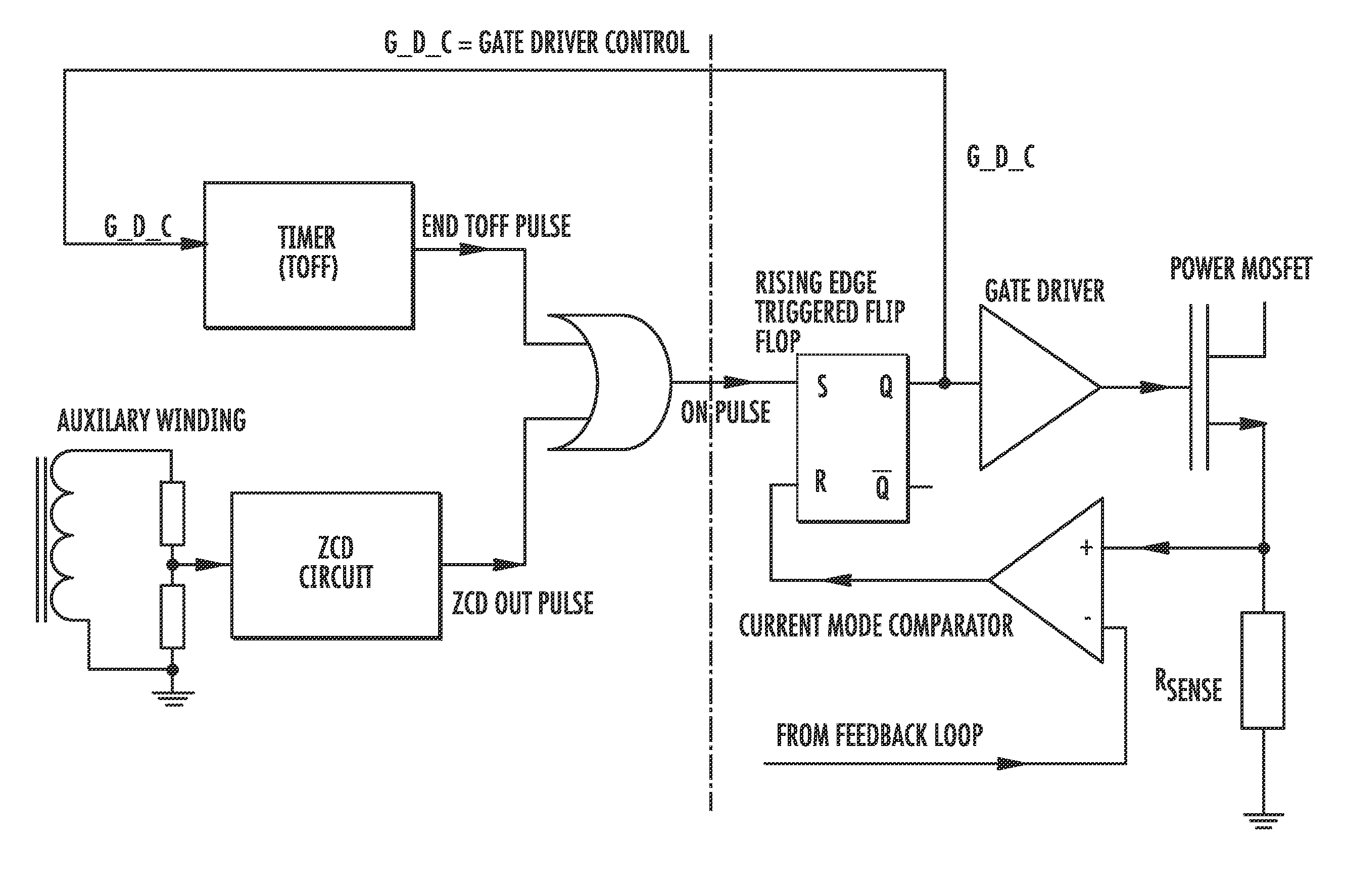
Figure 1 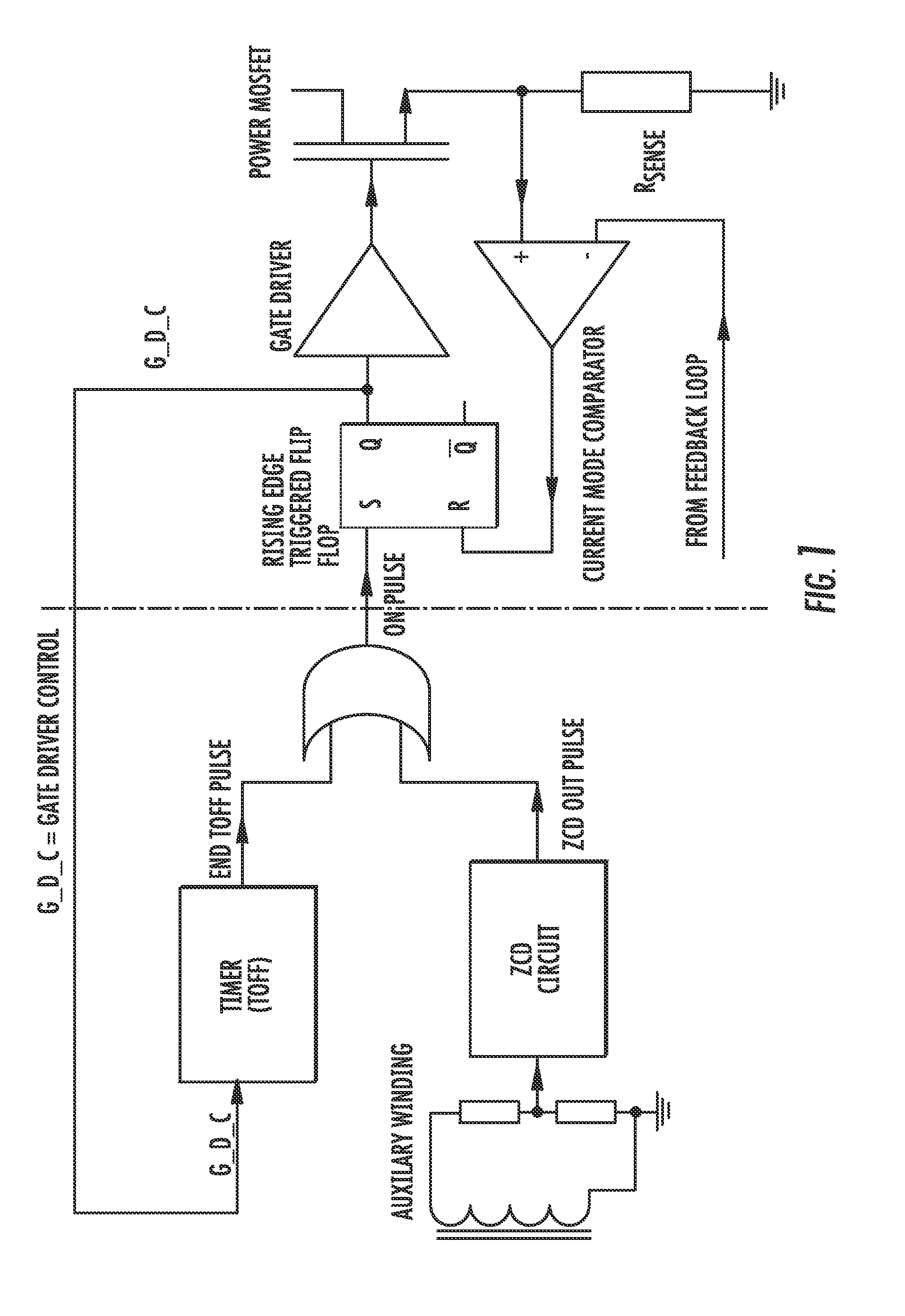
Figure 2 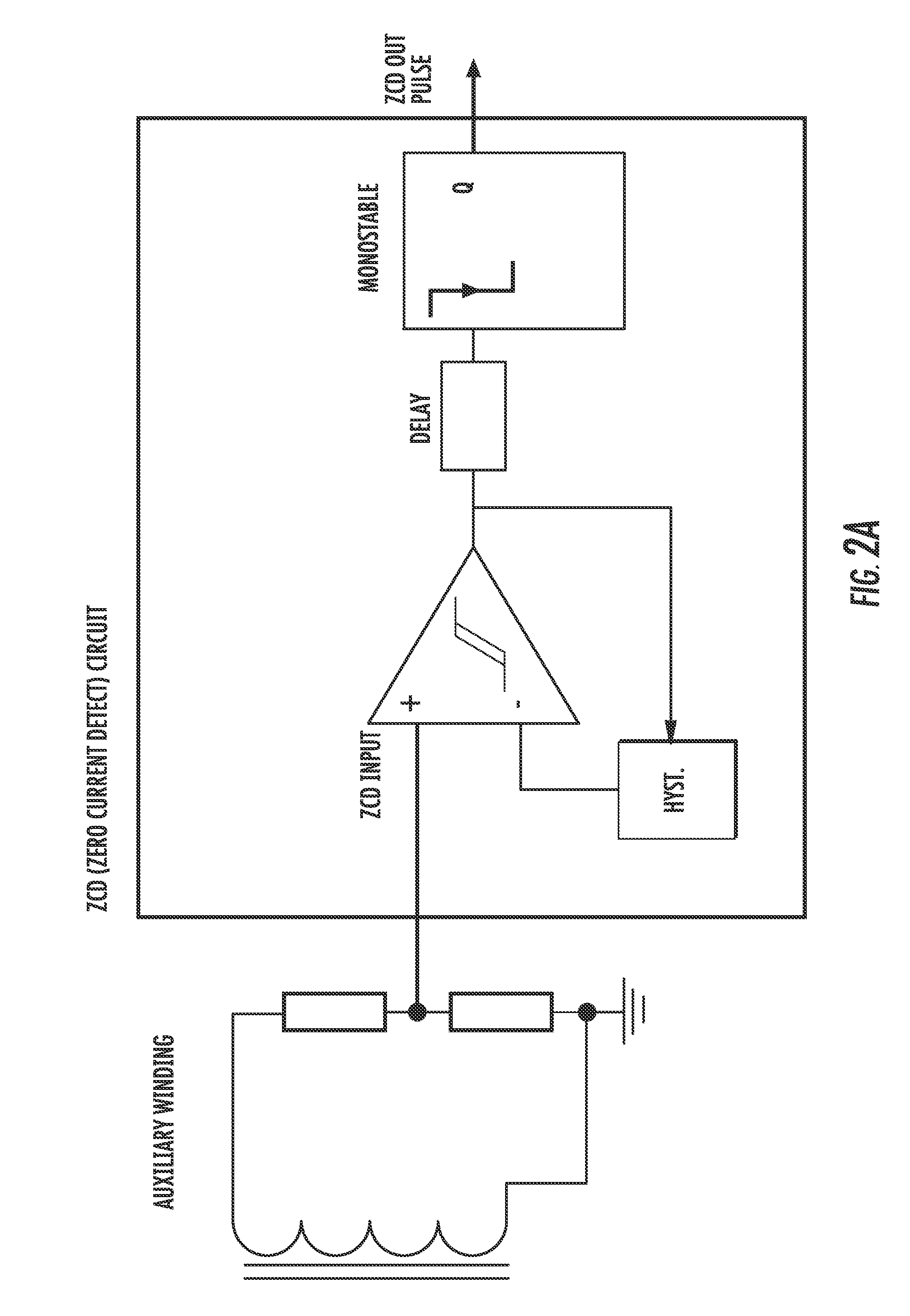
Figure 3
Abstract
Description
FIELD OF THE INVENTION
[0001] This invention relates, generally, to switching power supplies for electronic devices, and, more in particular, to the control circuit of a flyback DC-DC converter and a method of operating the converter.BACKGROUND OF THE INVENTION
[0002] Regulated power supplies are used in electronic devices and apparatuses. The core of so called switching power supplies that offer a more efficient conversion than classical linear transformer-based power supplies is a switched DC-DC converter. Switched DC-DC converters may be realized with one of many circuital topologies, the choice of which may be dictated by design considerations, convenience or specific requirements.
[0003] Generally, hard switching converter topologies give rise to transient signals, the spectrum of which contains high frequency components that may have effects of electromagnetic emissions, introducing noise in the area surrounding the converter circuit. The noise may interfere with information carryin...
Examples
Embodiment Construction
[0021]Basic and preferred embodiments of the flyback converter of this disclosure will now be described in detail for better illustrating the gist of the claimed invention and the manner in which it may be practiced. The description will be made with reference to the above listed figures though it is understood that alternative schemes may be devised for practicing the novel technique of this disclosure, on the basis of design preferences and / or requirements of the specific application. Therefore the invention is not intended to be limited to the exemplary embodiments described and illustrated herein.
[0022]A common way of controlling a flyback converter that will allow operation in a continuous conduction mode is the so-called fixed frequency mode, wherein an oscillator waveform within the controller decides the instant of switching on of the power switch.
[0023]A potential drawback is that in case a current mode control is implemented, according to which the switching off of the pow...