Method and system using hybrid forward osmosis-nanofiltration (h-fonf) employing polyvalent ions in a draw solution for treating produced water

US20110155666A1Inactive Publication Date: 2011-06-30CHEVROU USA INC

Image

Smart Image Click on the blue labels to locate them in the text.
Viewing Examples
Smart Image
  • Method and system using hybrid forward osmosis-nanofiltration (h-fonf) employing polyvalent ions in a draw solution for treating produced water
  • Method and system using hybrid forward osmosis-nanofiltration (h-fonf) employing polyvalent ions in a draw solution for treating produced water
  • Method and system using hybrid forward osmosis-nanofiltration (h-fonf) employing polyvalent ions in a draw solution for treating produced water

Examples

Experimental program
Comparison scheme
Effect test

Embodiment Construction

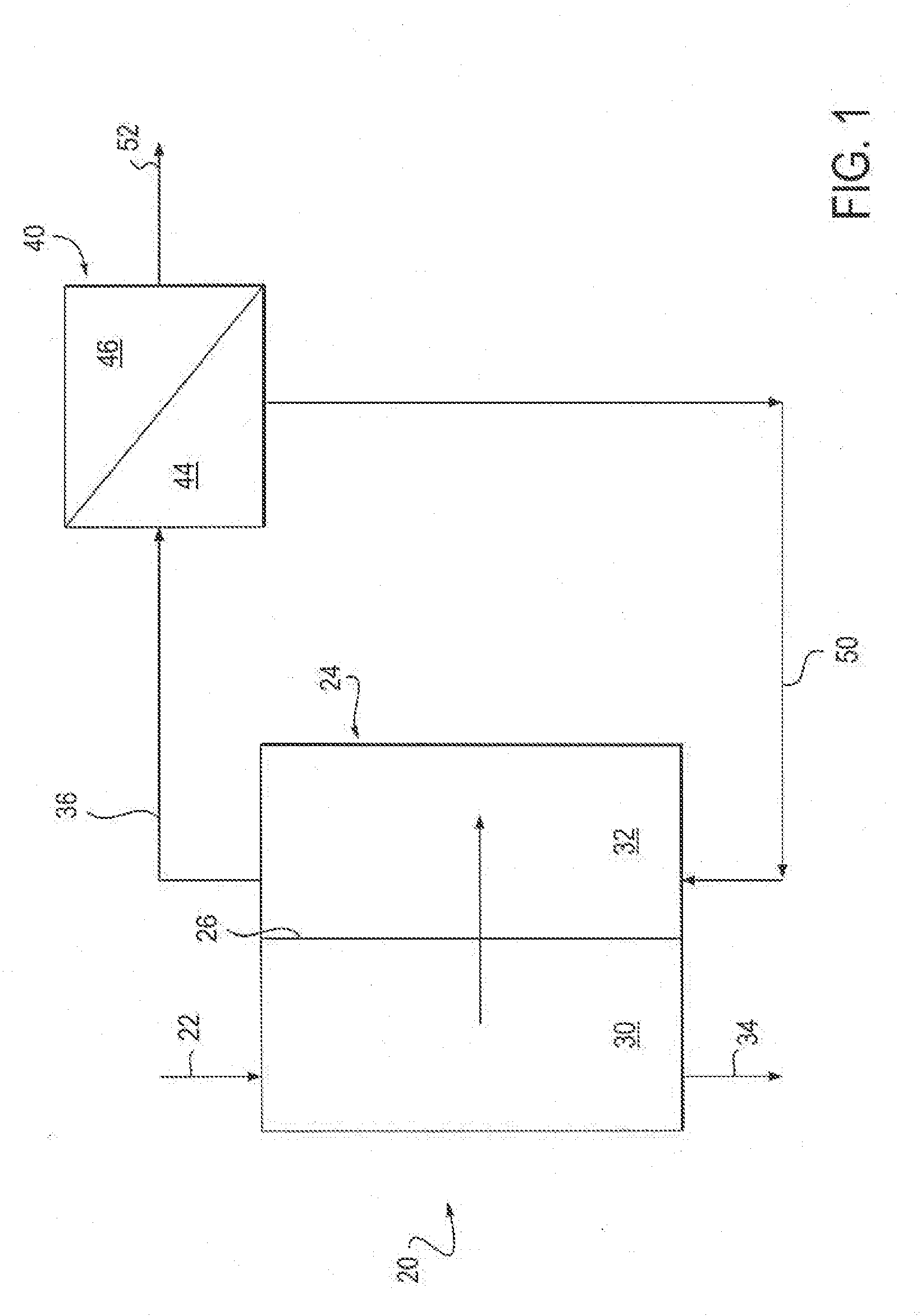
[0013]FIG. 1 shows one embodiment of a hybrid forward osmosis-nanofiltration system 20 made in accordance with the present invention. Particular details of system 20 will be offered below after some theoretical discussion is provided regarding the forward osmosis and nanofiltration processes used in the present invention.

Forward Osmosis:

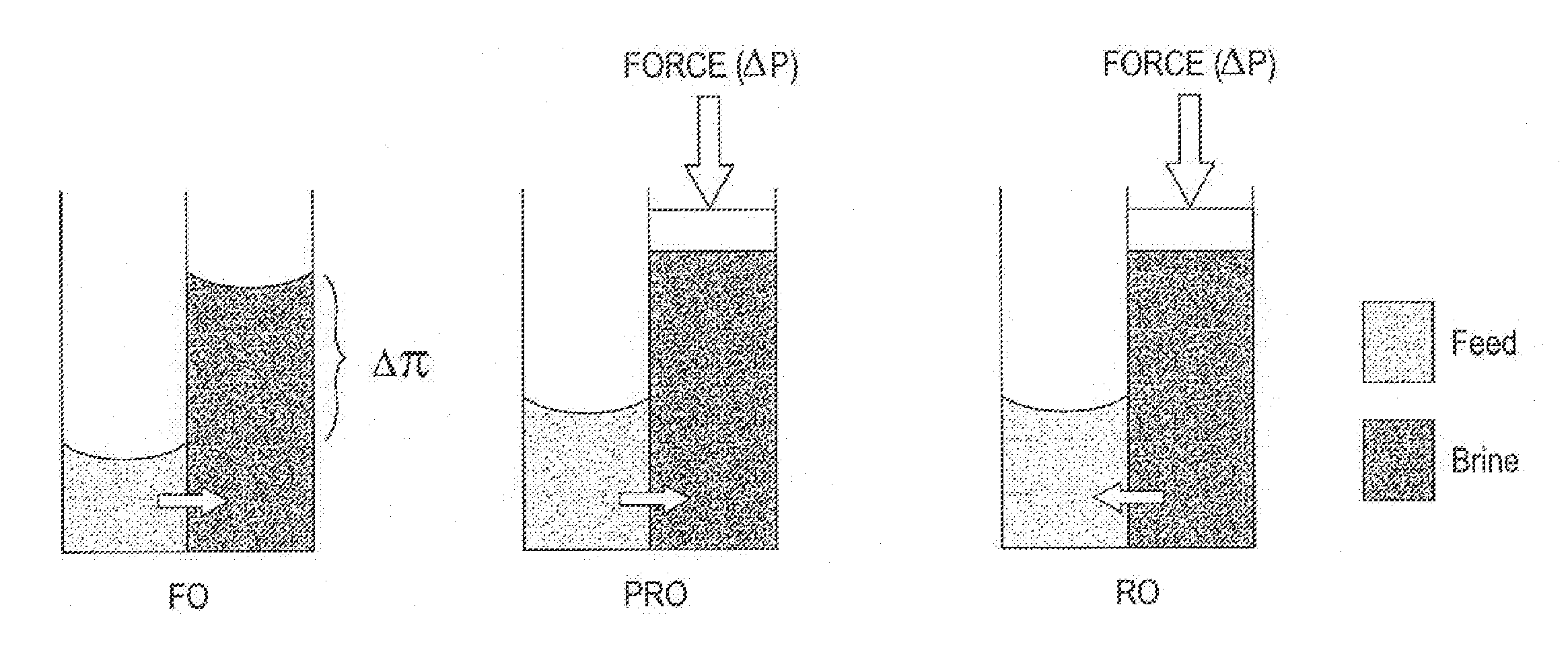
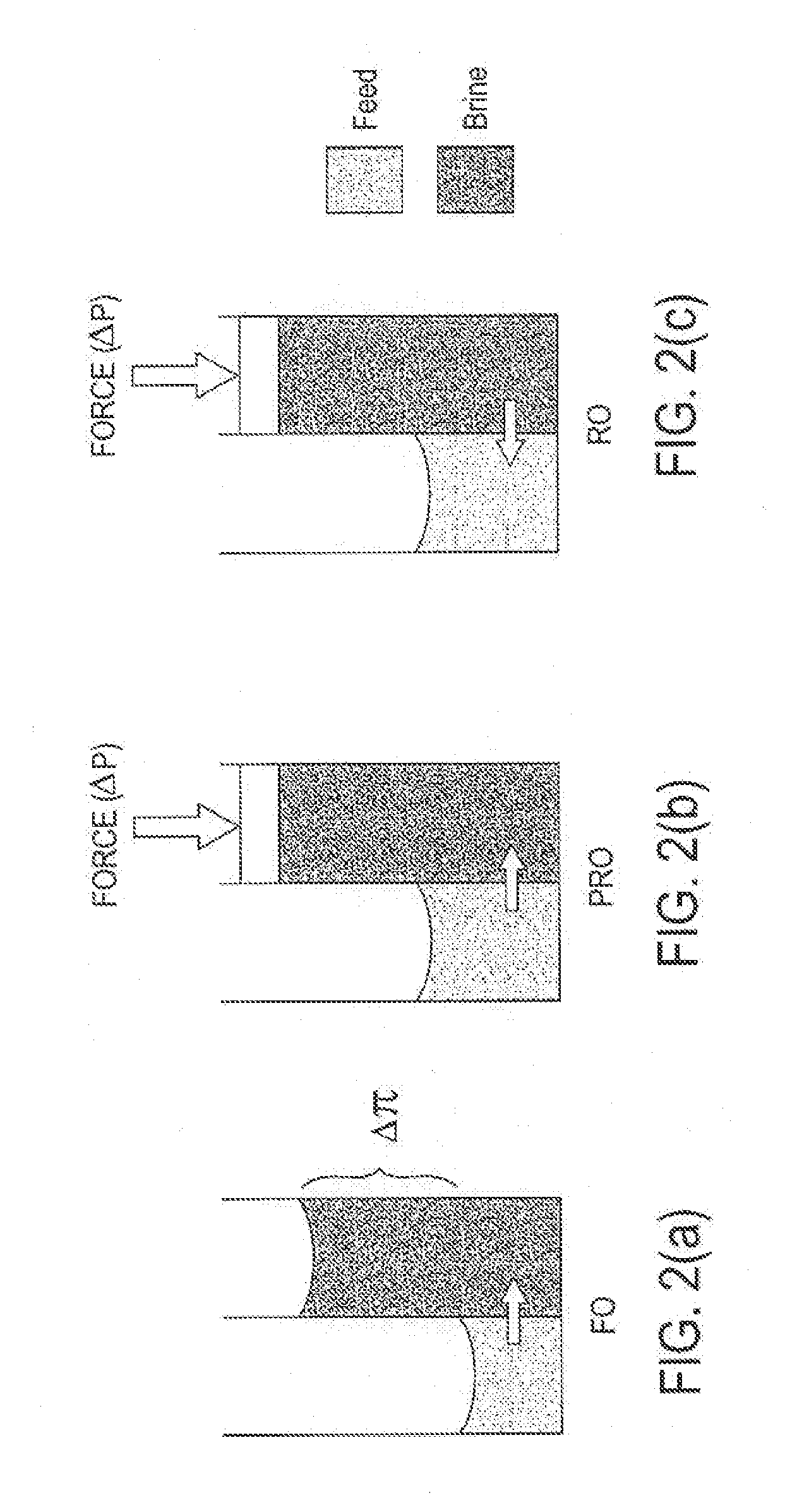
[0014]Osmosis is the molecular diffusion of a solvent across a semi-permeable membrane (which rejects the solute) and is driven by a chemical potential gradient. This gradient is caused by differences in component concentration, pressure and / or temperature across the membrane. In the non-ideal case, the use of solvent activity in lieu of the concentration accounts for the solvent-solute interactions. At a constant temperature, the chemical potential is defined by Eqn (1):

μi=μi°+RT ln ai+ViP  (1)

where

μ°i is the chemical potential of 1 mol of pure substance at a pressure P and temperature T,

ai is the activity of component i (1 for pure substances),

R is...

the structure of the environmentally friendly knitted fabric provided by the present invention; figure 2 Flow chart of the yarn wrapping machine for environmentally friendly knitted fabrics and storage devices; image 3 Is the parameter map of the yarn covering machine
Login to View More

PUM

No PUM Login to View More

Abstract

A method and system using hybrid forward osmosis and nanofiltration is disclosed for treating produced water containing contaminant species. The system comprises a forward osmosis cell and a downstream nanofiltration cell. A draw solution fluid cycles between the forward osmosis cell and the nanofiltration cell. The draw solution contains polyvalent osmotic agents producing polyvalent ions in the draw solution. The passage of monovalent ions through the nanofiltration membrane is hindered due to the presence of conjugate polyvalent ions.

Description

TECHNICAL FIELD[0001]The present disclosure relates generally to processes and apparatus to treat produced water from upstream operations in the oil and gas exploration industry, and more particularly, to those processes and apparatus that utilize membranes for separations.BACKGROUND OF THE INVENTION[0002]For every barrel of crude oil produced, three to ten barrels of water are also generated during oil exploration. Water needs to be separated from the produced fluids that include crude oil, gas, various contaminants and water. In the oil and energy industry, this water is referred to as “Produced Water.” Produced water contains large quantities of dissolved and suspended hydrocarbons. It also has a large concentration of inorganics and it often has a high degree of salinity.[0003]Produced water is generated in both on-shore and off-shore operations. Due to environmental concerns and increasing public interest in the need for water, there is wide interest in treating this produced w...

Claims

the structure of the environmentally friendly knitted fabric provided by the present invention; figure 2 Flow chart of the yarn wrapping machine for environmentally friendly knitted fabrics and storage devices; image 3 Is the parameter map of the yarn covering machine
Login to View More

Application Information

Patent Timeline
30 Jun 2011
Publication
US20110155666A1
IPC
C02F1/44; B01D61/18; C02F101/30; C02F101/10; C02F101/32
CPC
B01D61/027; B01D61/04; B01D61/58; C02F1/442; C02F1/445; C02F2103/365; C02F2101/108; C02F2101/30
Inventors
PRAKASH, PRAKHAR; PRUET, RANDALL BOYD