
Method and system for correlated noise suppression in dual energy imaging
- Summary
- Abstract
- Description
- Claims
- Application Information
AI Technical Summary
Benefits of technology
Problems solved by technology
Method used
Image

Examples
Embodiment Construction
[0014]The following description presents systems and methods for correlated noise suppression for multiple energy imaging. Particularly, certain embodiments illustrated herein describe correlated noise suppression at the object edges using correlated diffusion for dual energy imaging. Although the following description describes the correlated noise suppression technique in the context of medical imaging, the present technique may be implemented in various other imaging systems and applications to achieve substantially noise free images. By way of example, the present technique may be implemented in other non-invasive imaging contexts, such as security screening and industrial nondestructive evaluation of manufactured parts. An exemplary system that is suitable for practicing various implementations of the present technique is described in the following section with reference to FIG. 1.
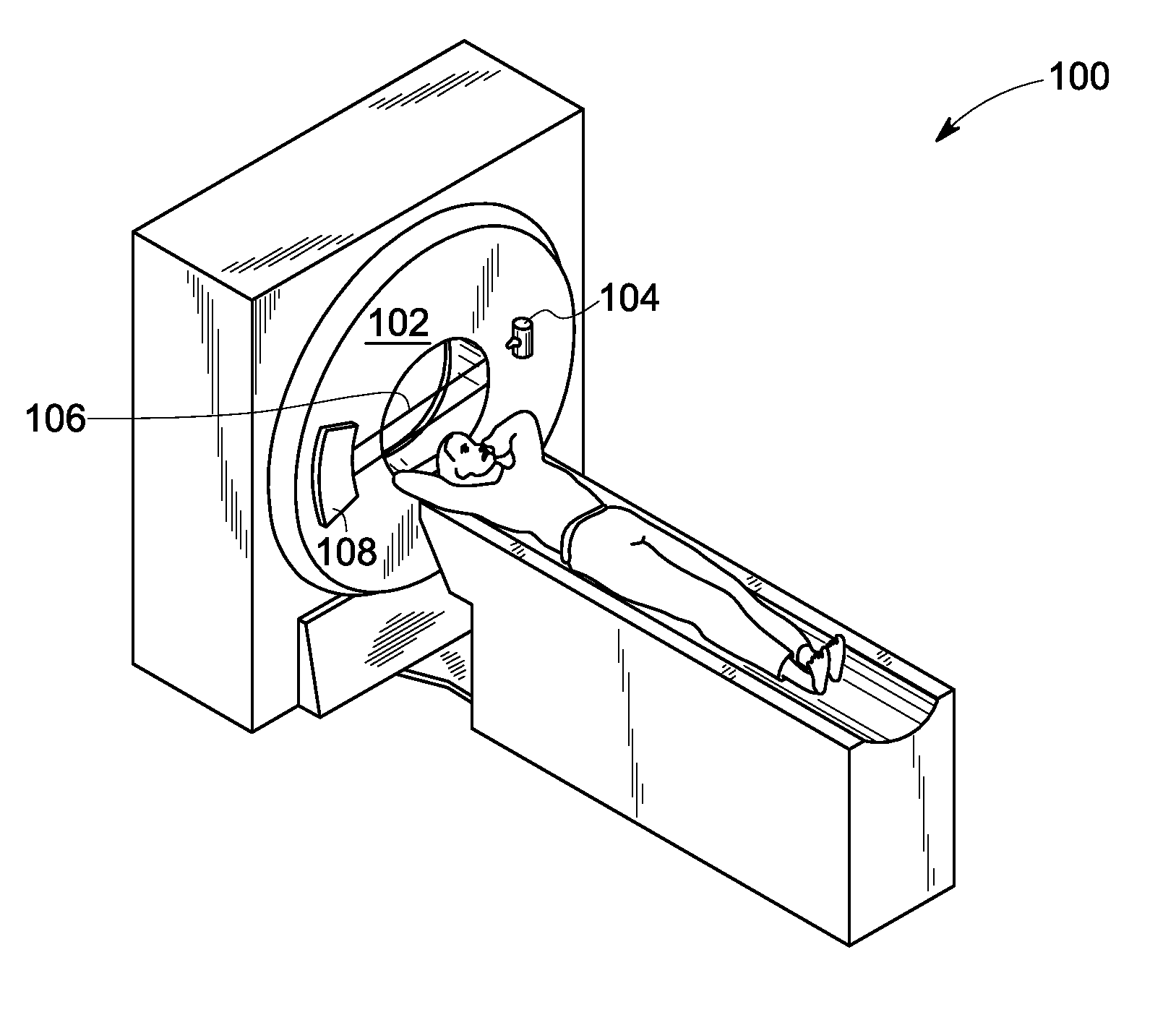
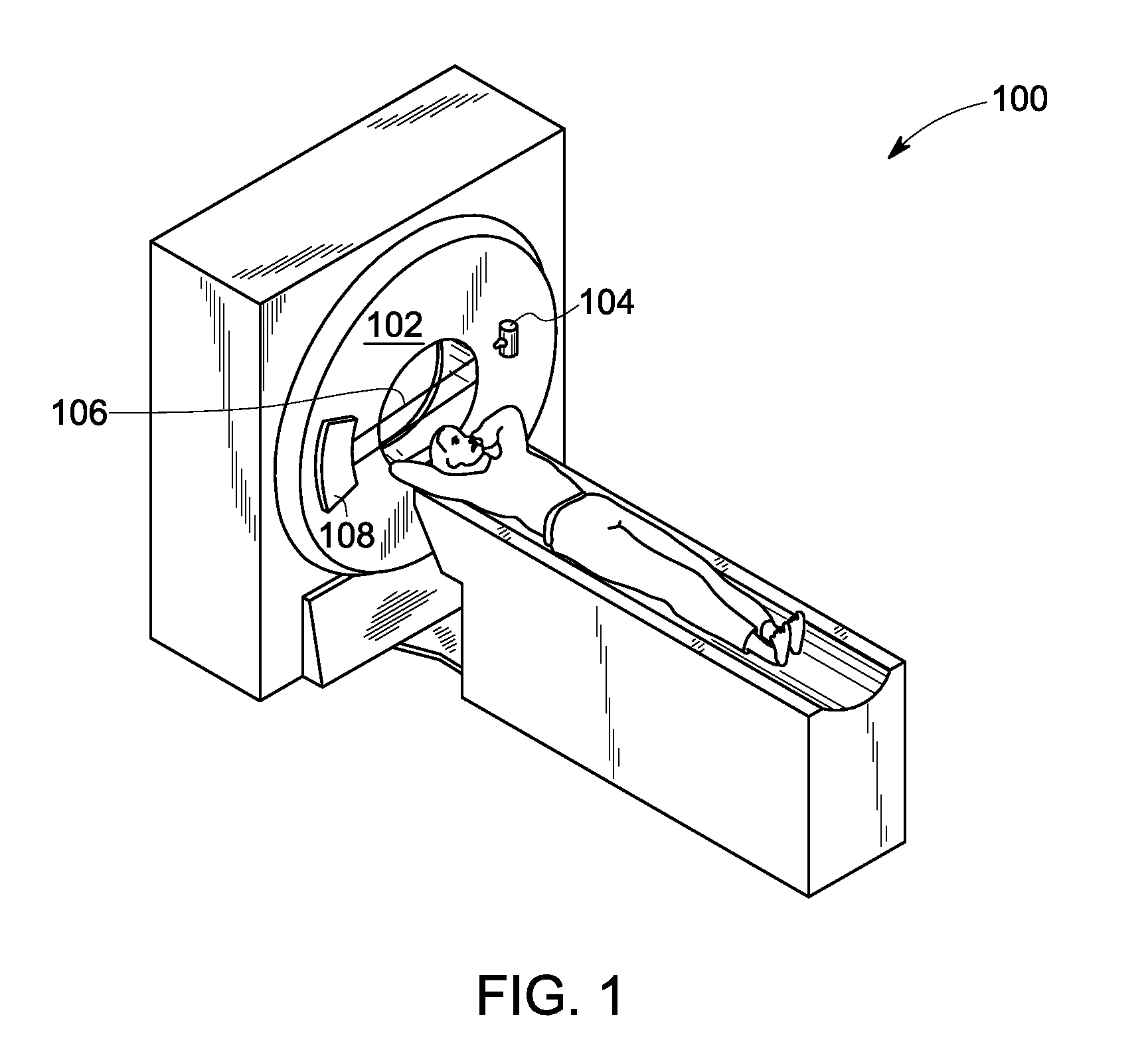
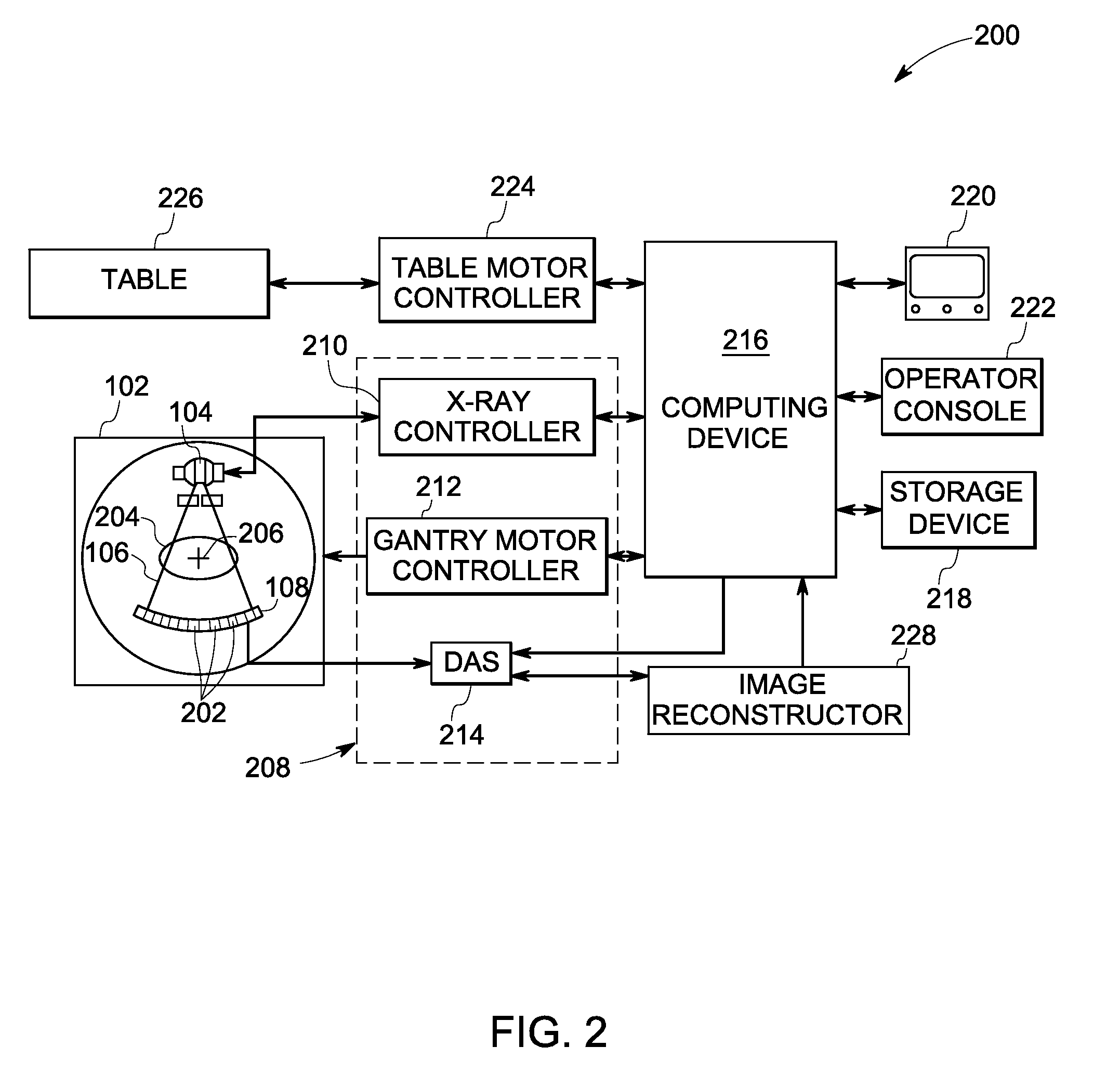
[0015]FIG. 1 illustrates an exemplary CT system 100 for acquiring and processing projection data. ...
PUM
 Login to View More
 Abstract
Description
Claims
Application Information
 Login to View More