So this represents a rather an elaborate and expensive approach.
Handling and transport loads, along with dynamic accelerations of stopping, starting and turning, will add to this. and exacerbate risks of permanent
distortion or deformation and even
structural failure.
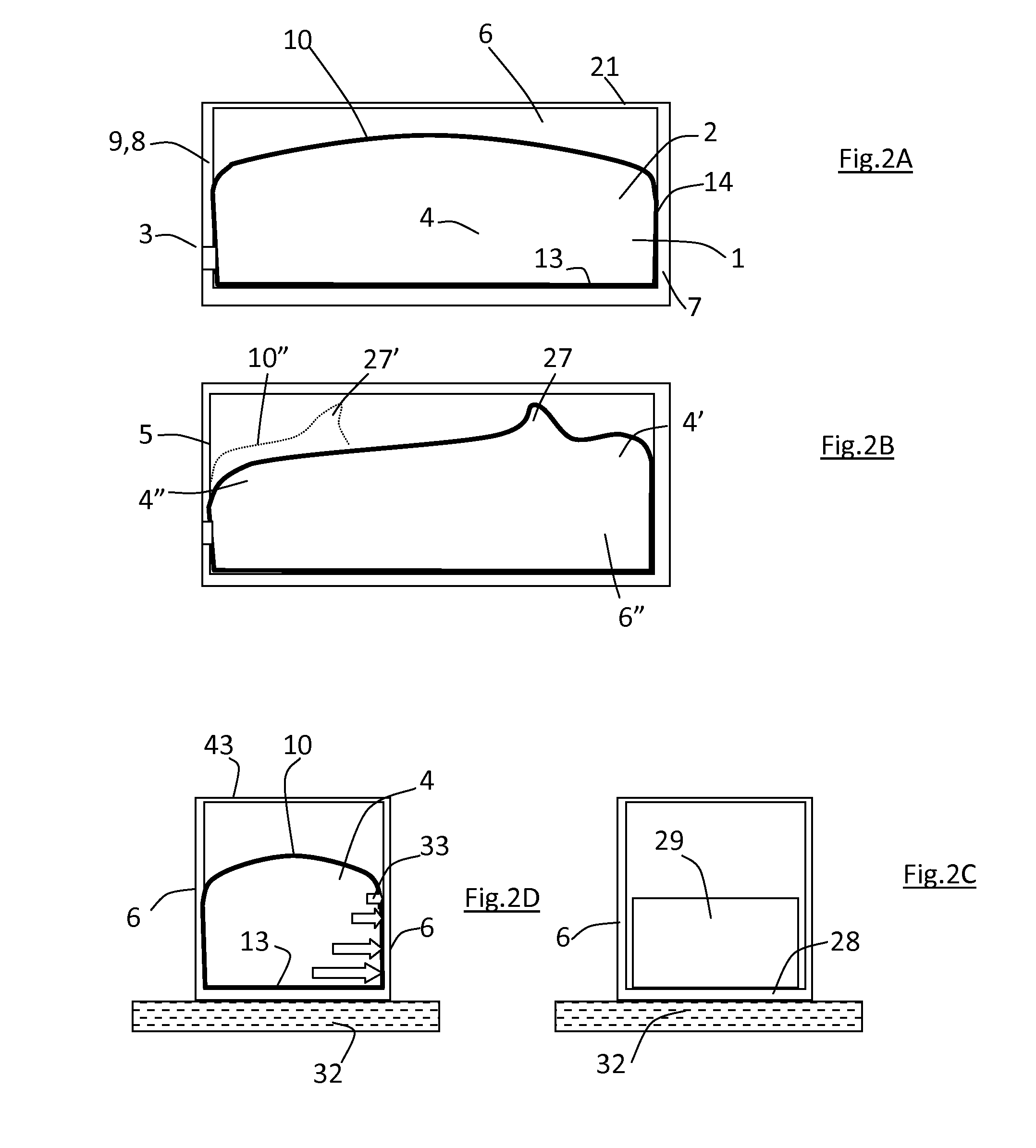
Similarly, when lowering or dropping the container down onto a concrete quayside, the concrete does not flex and nor can the container floor as it impacts the quay, with the result that the only place for the moving liquid to go is outwards into the side and end walls once again, and thus causing damage to the container.
But the side walls suffer as well, and these are not easily reinforced.
Surges and displacement
waves within the liquid cause instantaneous pressures, which act on the filling and
discharge valves of the tank, finding any weak path in the gaskets and joints causing them to leak.
The liquid surges also displace the tank
skin, which rubs, abrades and catches surface irregularities or projections on the walls of the container, leading to other potential leakage events.
Typically, the internal surfaces of containers suffer normal
wear and tear from the transport of general cargo and become snagged, dented and roughened.
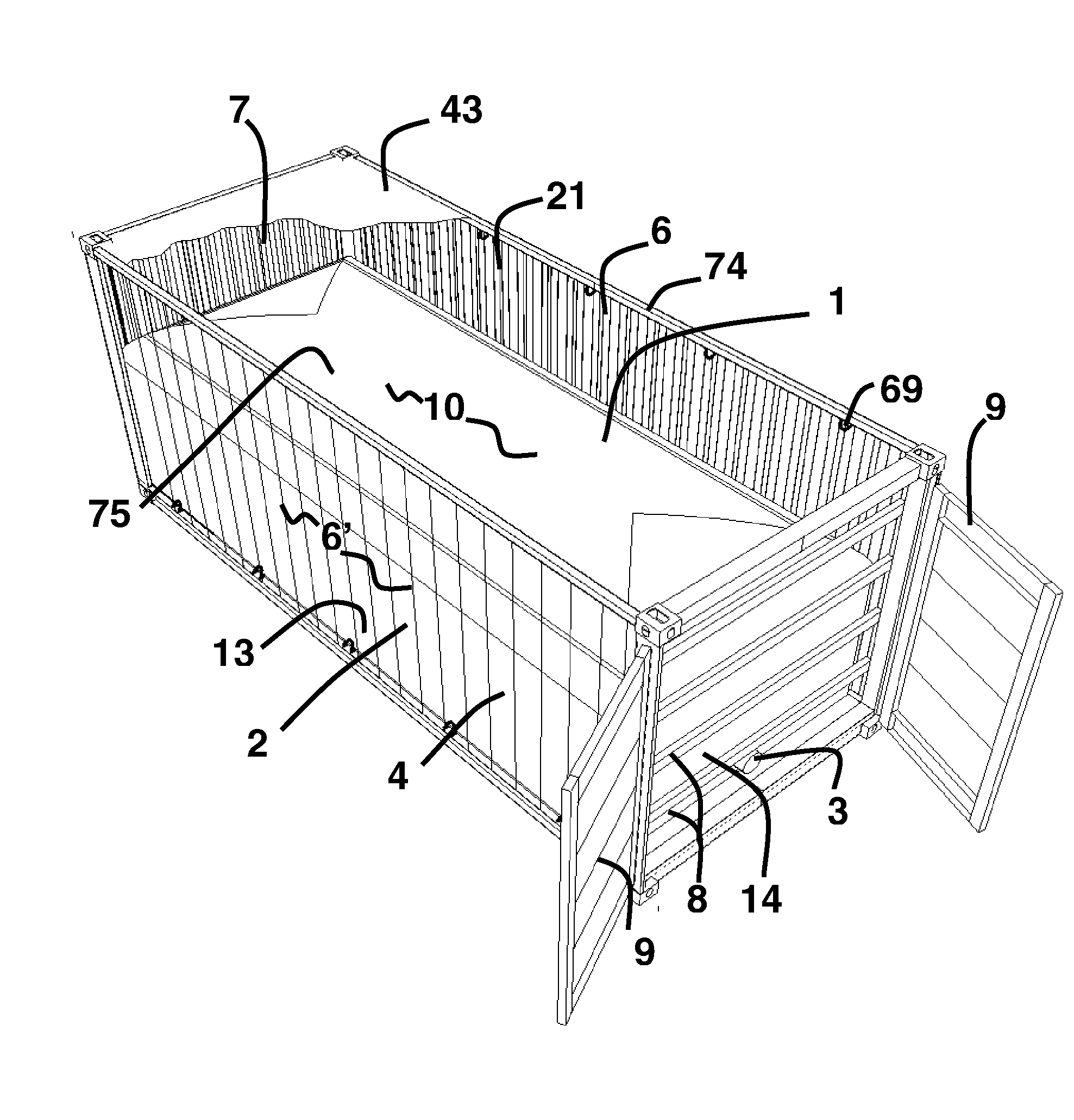
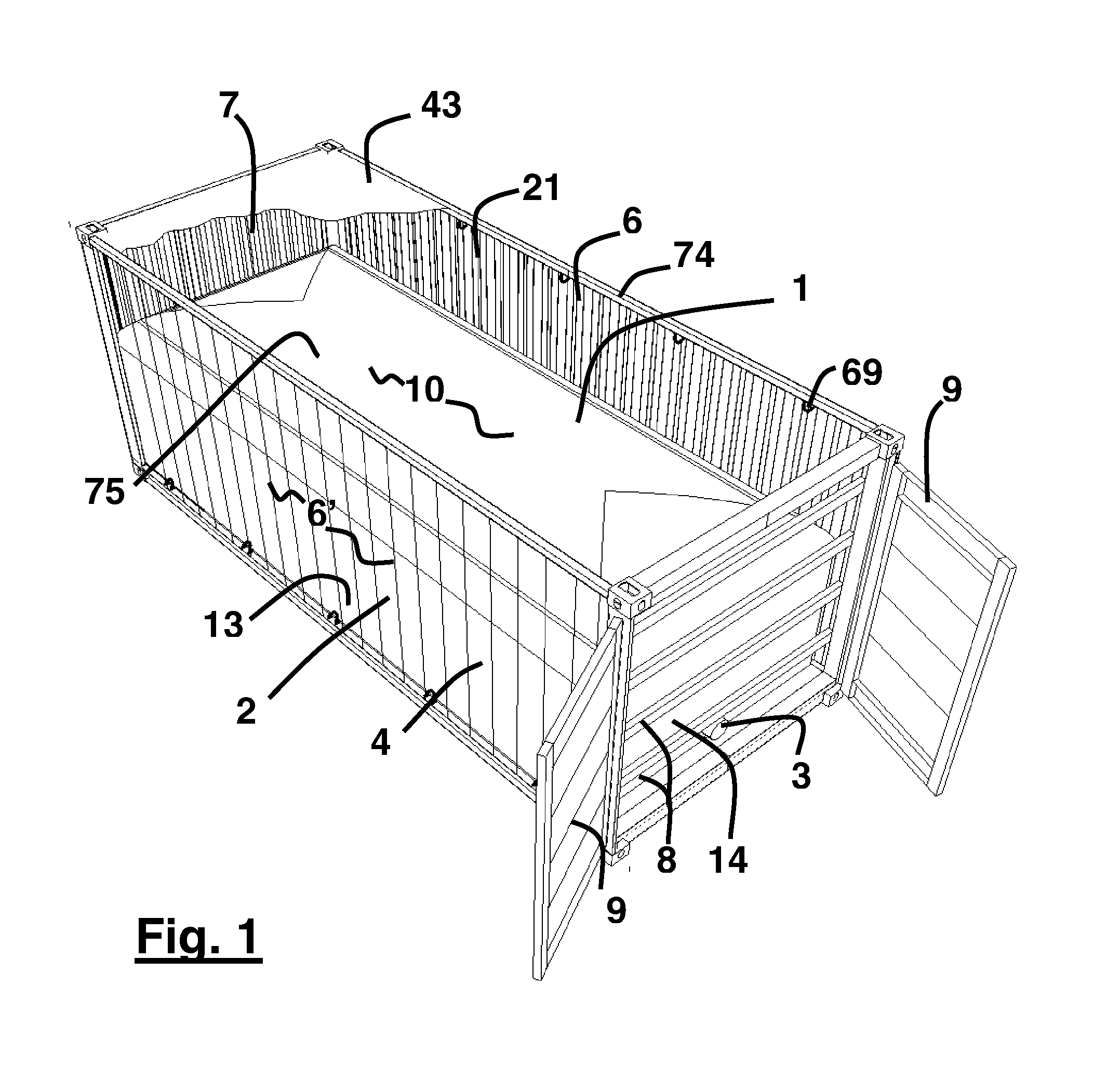
However the liner obscures the lashing hoops fitted to the bottom side rails leaving only the top rail hoops accessible for lashing.
The
cardboard is not re-used and has a cost of fitting and disposal, which adds to environmental damage costs as well as commercial.
However, liquid
payload limit, of typically 24000 kg, has already been reached and arguably exceeded; being that which causes unacceptable damage to a number of typical freight containers.
The
skin cannot be made tougher because it would
resist forming itself to the shape of the container and so lose the benefit of bracing and support by the container floor and side walls.
Being so thin, the
skin of the tank is vulnerable to local contact imperfections, projections and discontinuities or surface abrasion and so not conducive to being cleaned before filling the tank with another liquid.
So, to avoid cross-
contamination, the bags tend to be destroyed and re-cycled.
Thus, from operational considerations, a flexible tank bag occupying an entire container internal volumetric capacity would, when filled with liquid, take the loaded container beyond approved weight limitations and make the container unwieldy to
handle, let alone lift and stack to be safely supported by other underlying containers without
distortion and damage.
So in practice a hitherto unused and wasted or dead ‘headspace’ volume (necessarily) arises within container confines above a flexible tank.
For safety considerations, access to a tank within container confines is not acceptable once tank bag filling has commenced.


 Login to View More
  Login to View More