Adaptive visualization for direct physician use

US20130121548A1Active Publication Date: 2013-05-16AI VISUALIZE INC

Patent Information

Authority / Receiving Office
US Β· United States
Current Assignee / Owner
AI VISUALIZE INC
Publication Date
2013-05-16

Smart Images

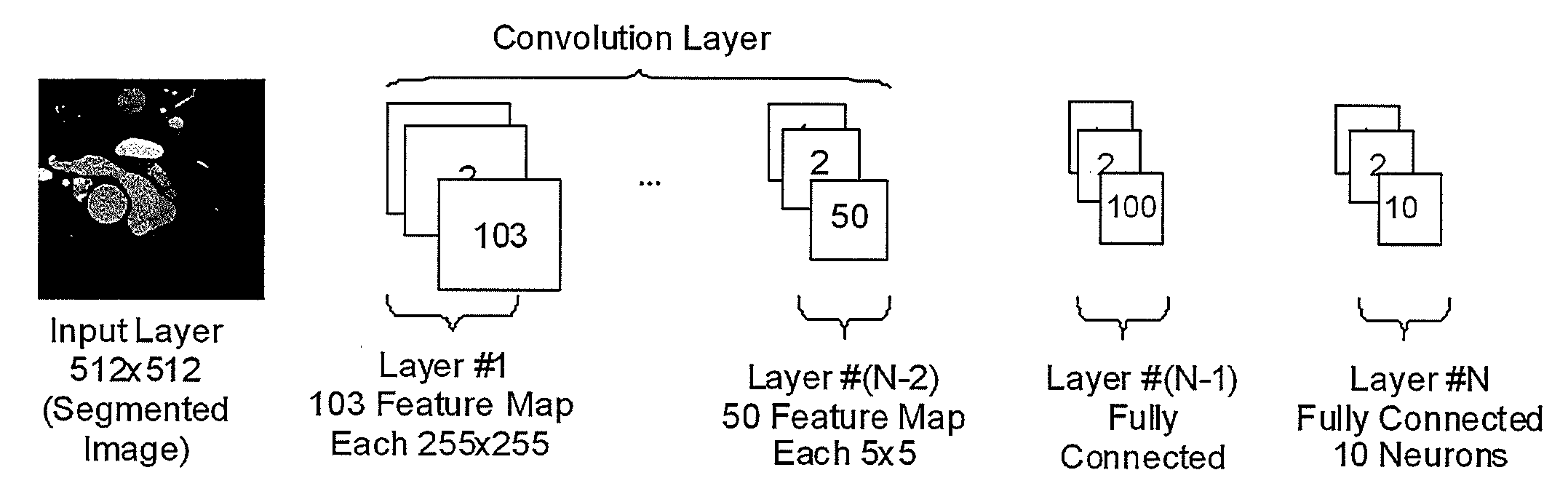
  • Figure 1
    Figure 1
  • Figure 2
    Figure 2
  • Figure 3
    Figure 3
Patent Text Reader

Abstract

A method of modifying a three dimensional (3D) volume visualization image of an anatomical structure in real time to separate desired portions thereof. The method includes providing a two dimensional (2D) image slice of a 3D volume visualization image of an anatomical structure, identifying portions of the anatomical structure of interest, and providing a prototype image of desired portions of the anatomical structure. The method then includes using an evolver to evolve parameters of an algorithm that employs a transfer function to map optical properties to intensity values coinciding with the portions of the anatomical structure of interest to generate an image that sufficiently matches the prototype image. If the parameters match the prototype image, the method then includes applying the transfer function to additional 2D image slices of the 3D volume visualization image to generate a modified 3D volume visualization image of the anatomical structure. The method includes using a pattern recognizer to assist the evolver, to classify whether a view is normal or abnormal, and to extract the characteristic of an abnormality if and when detected.
Need to check novelty before this filing date? Find Prior Art

Description

TECHNICAL FIELD

[0001] The present invention relates to computer processing of three dimensional medical images and, in particular, to a method and system for modifying a three dimensional (3D) volume visualization image of an anatomical structure in real time to delineate desired portions thereof.BACKGROUND ART

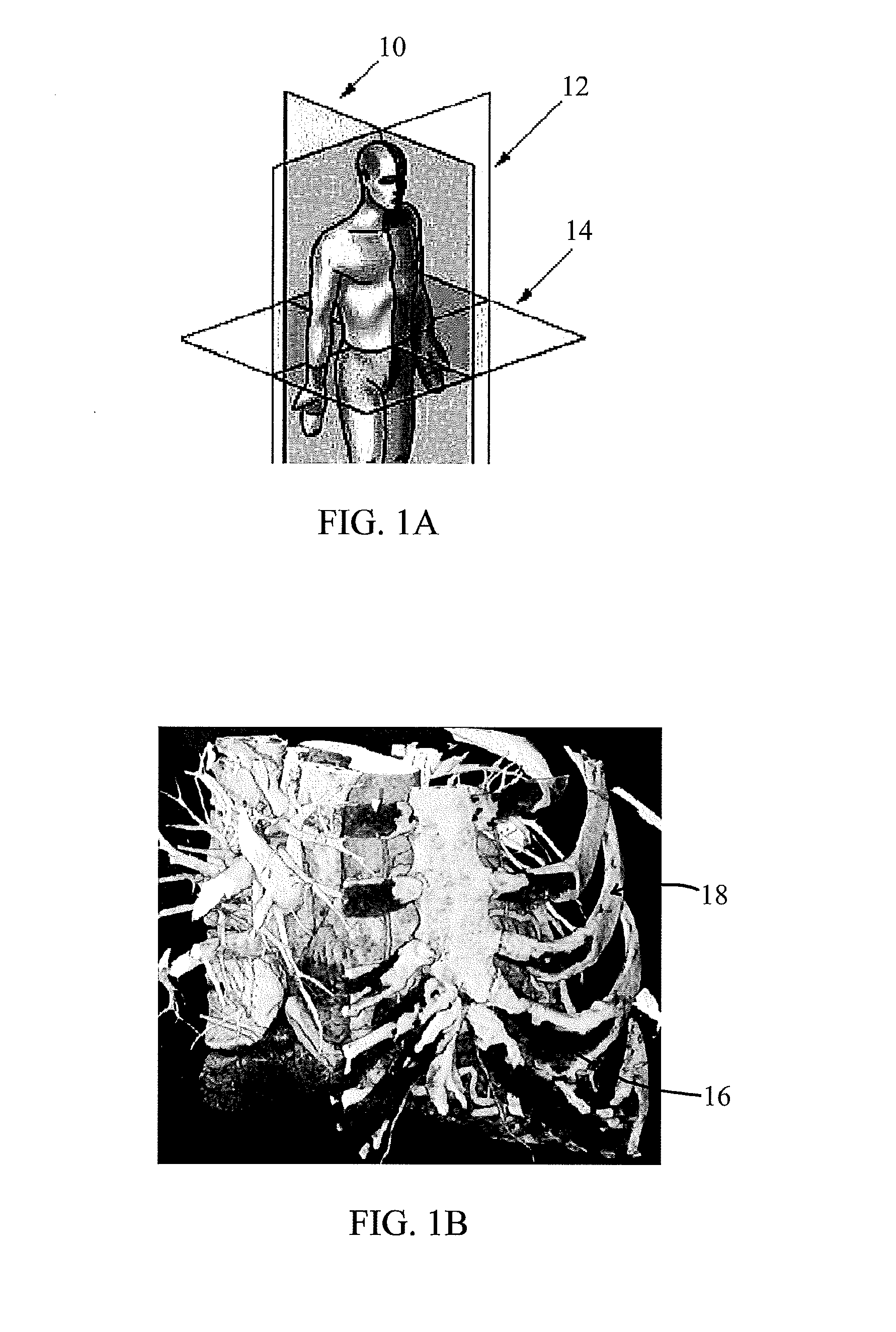
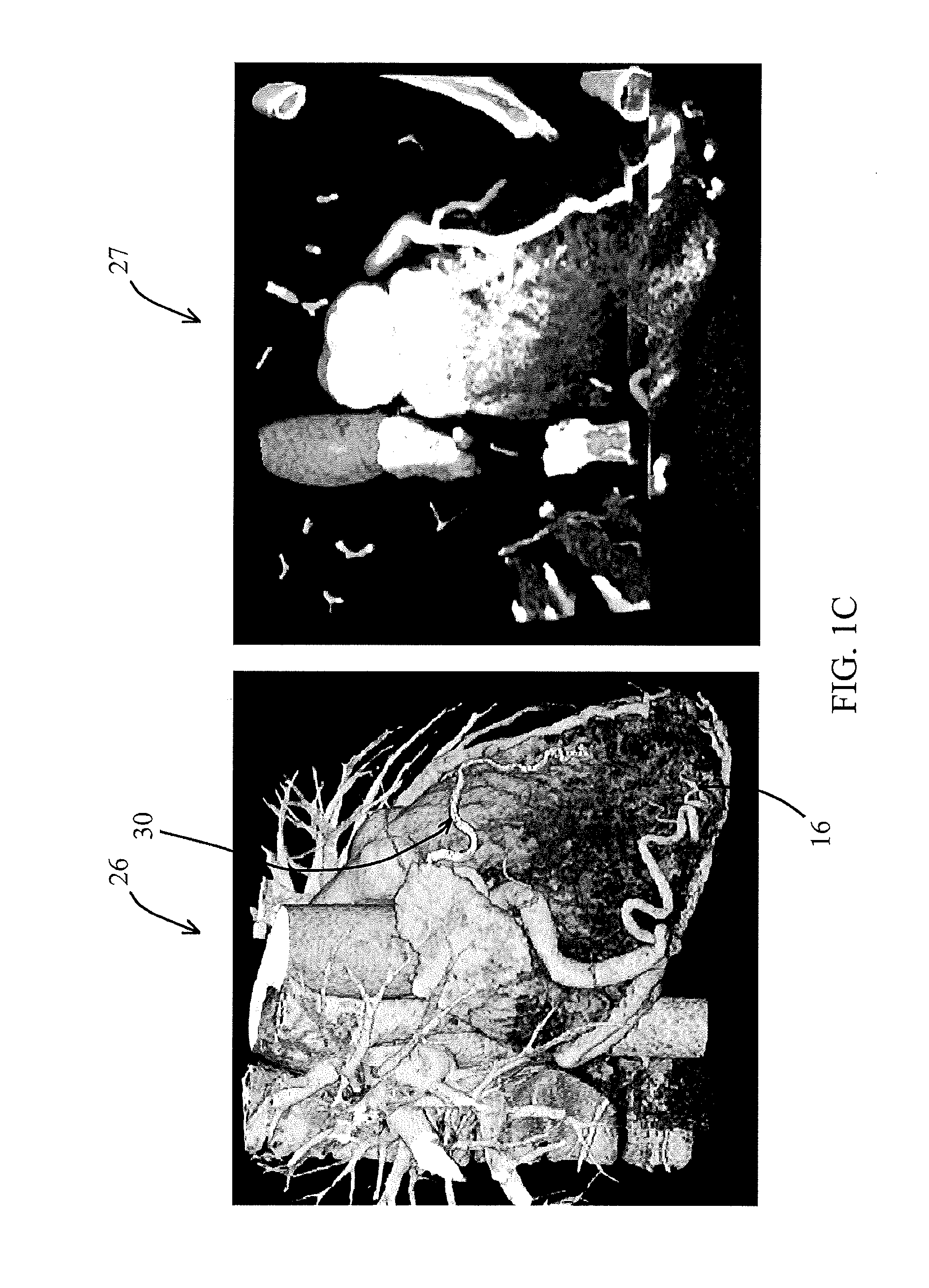
[0002] A visual medical scan such as computed tomography (CT) or magnetic resonance imaging (MRI) is acquired thru cross sections (FIG. 1A), for example CT scan has an axial cross sections acquisition. Sagittal 10, Coronal 12 and Oblique 14 sections and 3D visualizations may be generated automatically and on demand. However, the automatic 3D image may have the rib cage blocking the heart from being visible (FIG. 1B). A segmentation task would involve removing the bone from this view. According to standard practice, segmentations are prepared by scanner technologist and saved as snapshots for radiologists to view and use for diagnosis (FIG. 1D).). For instance, these series of im...

Claims

the structure of the environmentally friendly knitted fabric provided by the present invention; figure 2 Flow chart of the yarn wrapping machine for environmentally friendly knitted fabrics and storage devices; image 3 Is the parameter map of the yarn covering machine
Login to View More