When a customization does not match the level of quality of the rest of the vehicle, the customization has a similarly low value to the owner.
Owners value the time they have to use their vehicles, and so customizations that require excessive
downtime of the vehicle, i.e., that require the vehicle to be unusable for their intended purpose for a long period of time during the customization process, are undesirable.
Moreover, modifications that permanently alter original vehicle components prevent the owner from returning the vehicle to its original condition prior to sale, and also make it less likely that the owner can make additional or different modifications to that particular vehicle component in the future.
In order to be of a high quality, custom paint jobs must typically be performed by a professional, which can be cost prohibitive for many vehicle owners.
This type of customization also typically requires excessive
downtime, because the vehicle needs to be disassembled, parts thereof must be sent to a professional to apply paint, and the vehicle must be reassembled.
To return the vehicle to the original configuration, the owner would need to strip the paint from the repainted surfaces and have the original finish re-applied, which may or may not be possible, and again may be cost prohibitive.
However,
direct printing or decal application solutions still generally require the component to which the printing or decal is to be applied to be removed from the vehicle and sent to a printing professional, suffering similar
downtime and cost disadvantages.
Moreover, such printing screens and decals are typically not designed to be able to be removed from the surface of the component, once applied.
As a result, these techniques irreversibly alter the original paint or other surface application of the vehicle, making it difficult to return the vehicle to its original factory made condition.
However, there are still numerous problems associated with these types of shell covers.
In particular, the
adhesive used to adhere the shell cover to the surface of the original component may damage the original finish of the surface or make it impossible to remove the shell cover to return the vehicle to the original configuration.
These types of shell covers are also made of plastic or fiberglass, which detracts from the look or function of the original vehicle component because these shell covers must be constructed to be of unacceptable thickness to be sturdy enough for mounting on the vehicle.
In particular, shell covers made of plastic or fiberglass must be manufactured to be of a minimum thickness on the order of ¼ inches, which when applied over the original vehicle component, such as a motorcycle tank, make the tank look unacceptably larger than the original, thereby detracting from the original design of the vehicle.
Moreover, in the case of a fiberglass tank shell such as those disclosed in U.S. Pat. No. 7,857,928, the tank shell is installed by placing the tank shell down on top of the original shell, which means that the tank shell cannot be formed to match the shape or curves of the original tank on all sides thereof, again altering the look of the original design of the vehicle in an unacceptable manner.
Moreover, in this case, the bottom of the tank shell forms a straight edge that easily catches and
tears the clothing of the rider.
Moreover, these techniques again require modification of the original vehicle components, and prevent or reduce the ability of the owner to return the vehicle to its original configuration.
The original components may also be damaged by the
welding process and may not function as designed by the OEM.
Modification options that
cut away portions of the vehicle components to provide, for example, backlighting or other lighting effects on the vehicle suffer similar issues because the vehicle component cannot be returned to its original configuration, and the vehicle component may be damaged during modification.
In any event, these products suffer from not being securely fastened to the vehicle
chassis and as having a tendency to move during operation of the vehicle, possibly preventing the
safe operation of the vehicle.
These types of vehicle modifications also suffer from having an unprofessional or inferior look.
While there are services that print custom images onto vehicle surface pads which are then shipped to consumers, these pads typically are installed with
adhesive and thus cannot be removed without damaging the finish of the vehicle component surface.
Vehicle component coverings mounted with straps or fasteners can change the appearance of the component and can move or become untied during operation, leading to a potential
hazard.
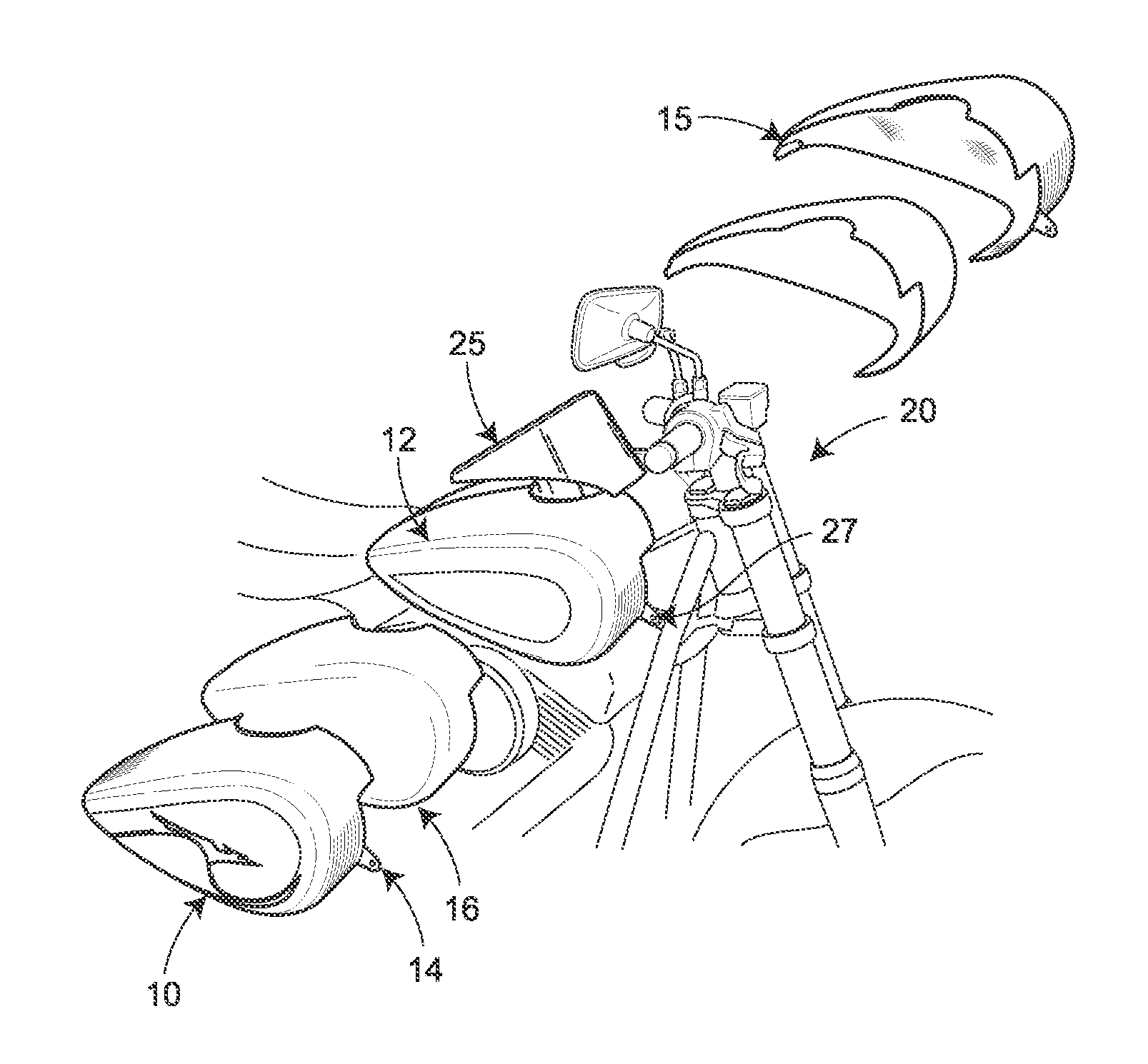
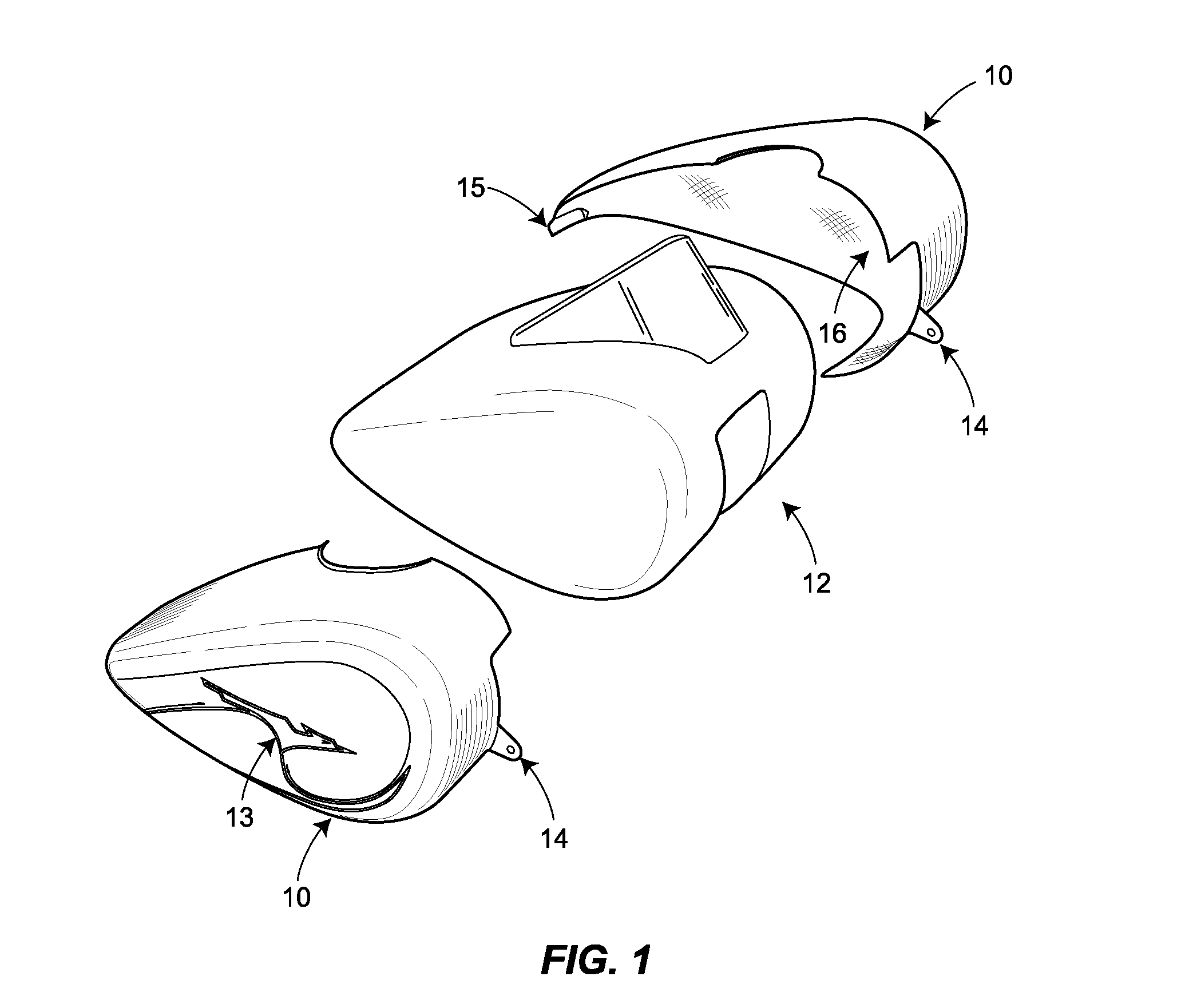
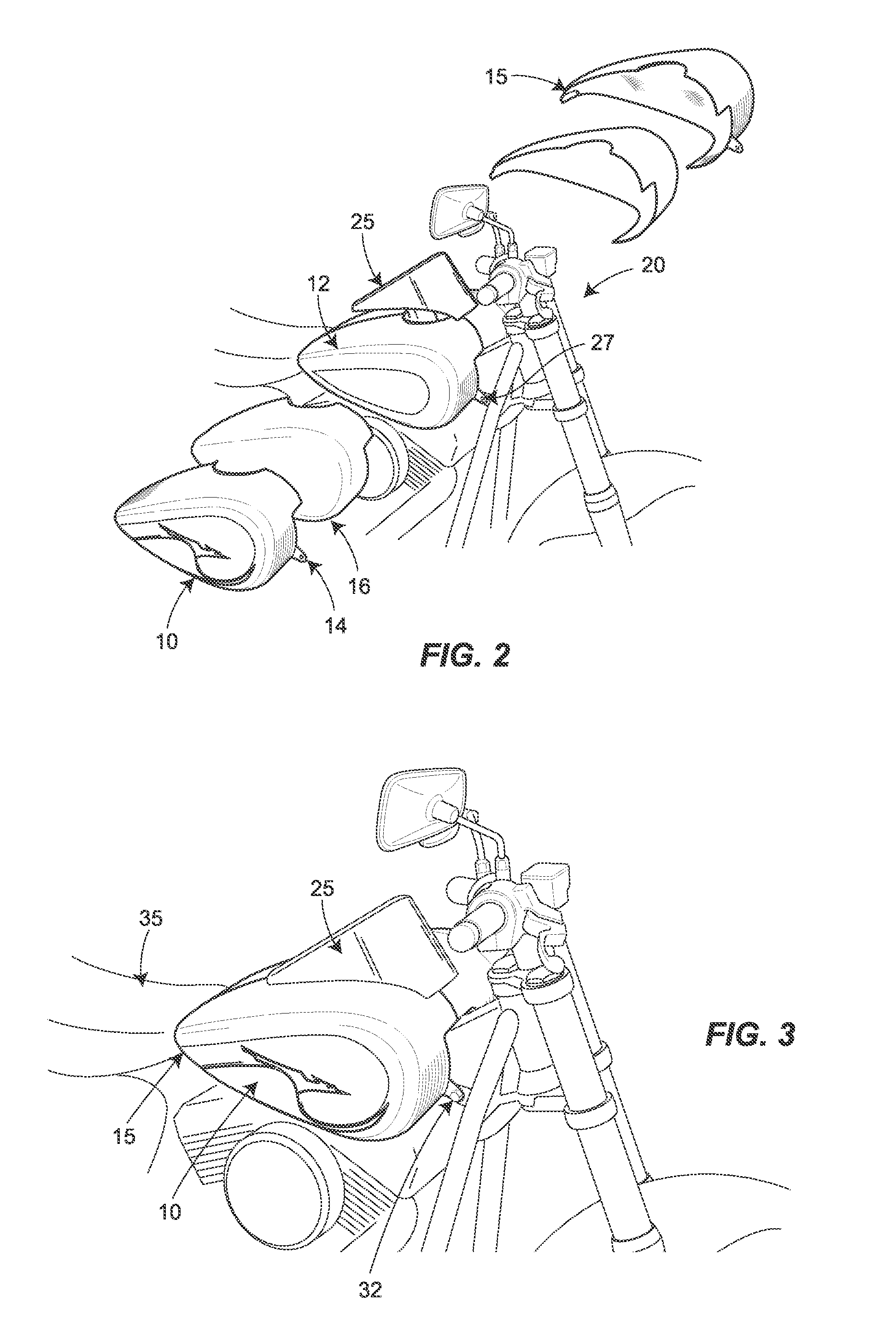
The only down time of the vehicle occurs during the installation of the preformed carbon fiber shell onto the vehicle, which typically takes under a couple of hours.



 Login to View More