Bis-biotinylation tags

a technology of biotinylation and tags, applied in the field of bisbiotinylation tags, can solve the problems of cumbersome process, cumbersome purification of labeled proteins, cumbersome methods, etc., and achieve the effect of enhancing the desired interaction

a technology of biotinylation and tags, applied in the field of bisbiotinylation tags, can solve the problems of cumbersome process, cumbersome purification of labeled proteins, cumbersome methods, etc., and achieve the effect of enhancing the desired interaction

US20150011433A1Active Publication Date: 2015-01-08PACIFIC BIOSCIENCES

Image

Smart Image Click on the blue labels to locate them in the text.
Viewing Examples
Smart Image
  • Bis-biotinylation tags
  • Bis-biotinylation tags
  • Bis-biotinylation tags

Examples

Experimental program
Comparison scheme
Effect test

Embodiment Construction

I. Definitions

[0027]For purposes of understanding the present invention, the following terms are defined.

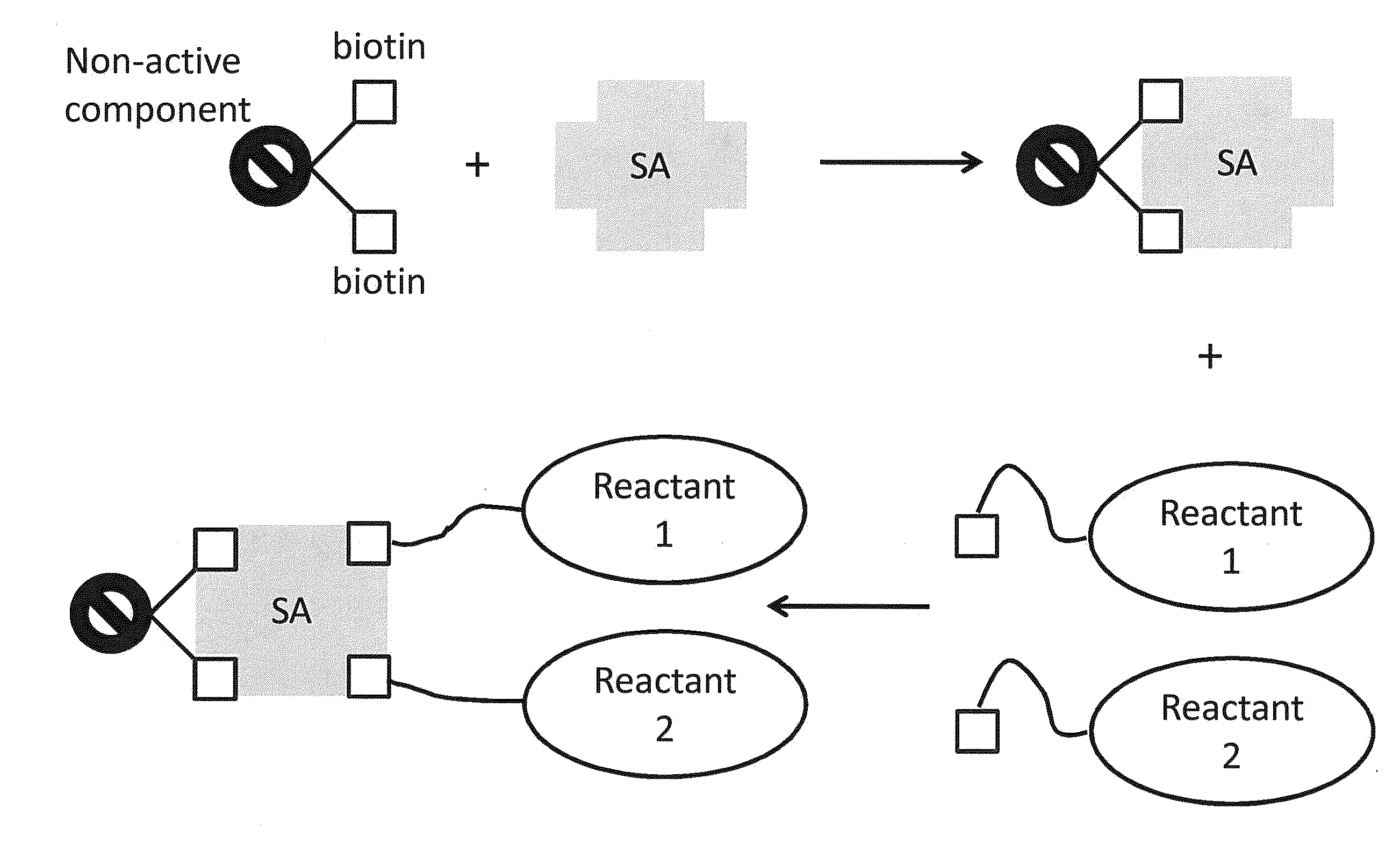
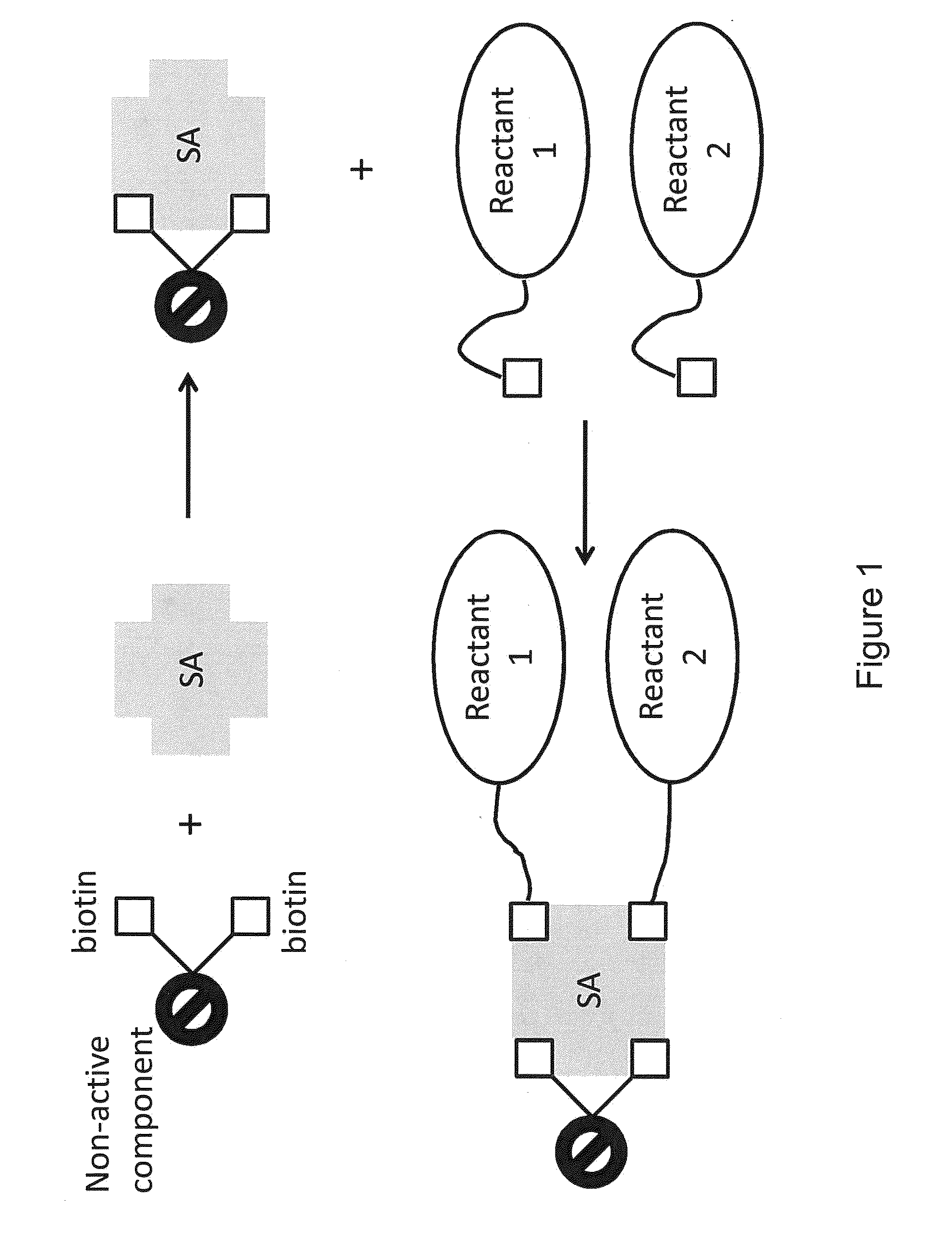
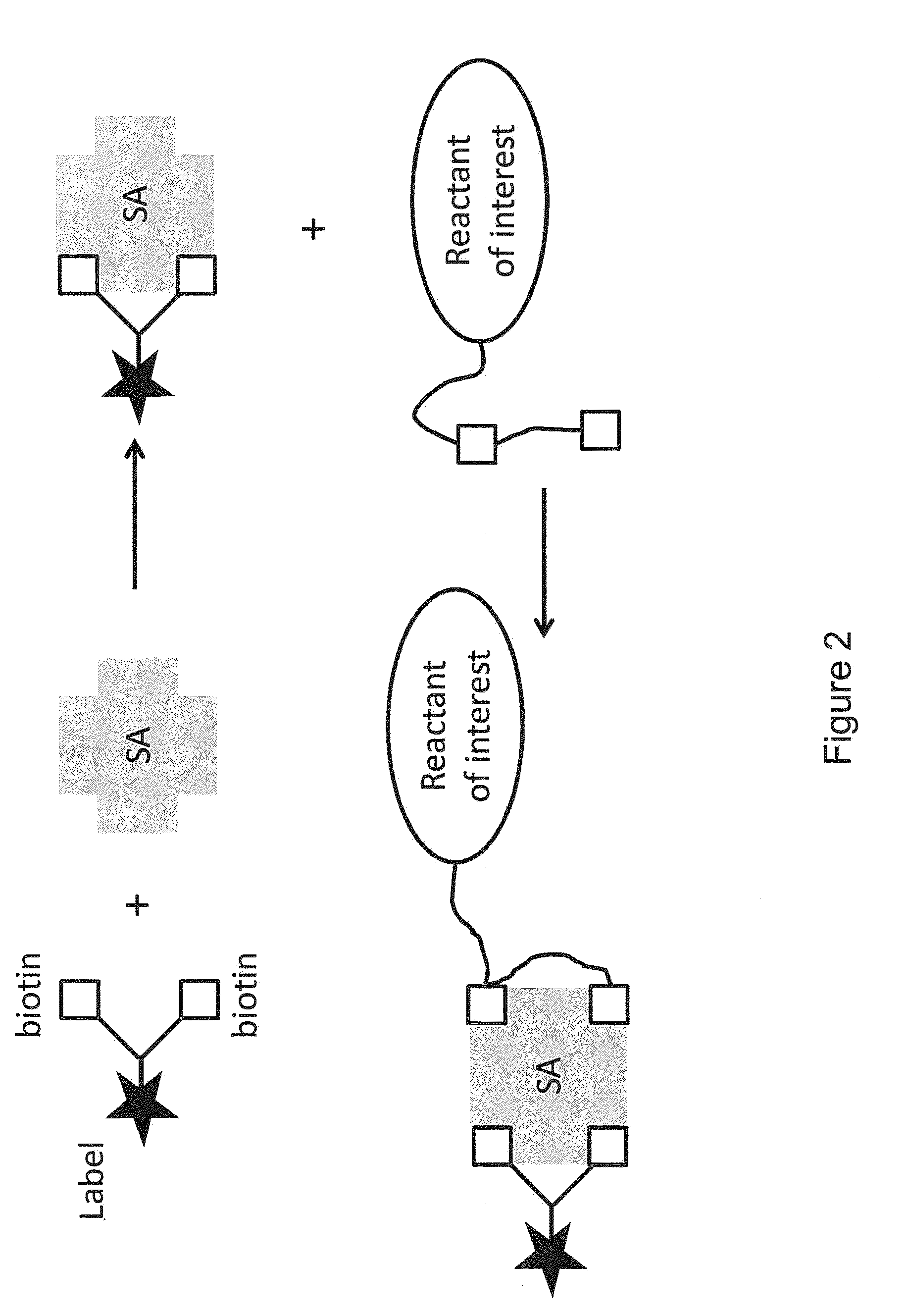
[0028]The terms “bis-biotin,”“bis-biotin tag,”“bis-Btag,” and “bis-biotin moiety” can be used interchangeably and generally refer to two covalently-linked biotins linked (optionally, covalently linked) to a reactant of interest. In certain preferred embodiments, a reactant of interest comprises a sequence that is recognized by a biotin ligase, which catalyzes a covalent linkage between the sequence and a biotin molecule. Such a sequence is generally referred to as a biotin ligase recognition sequence. Each biotin ligase recognition sequence in a reactant of interest can be covalently linked to a biotin moiety, so a reactant having multiple biotin ligase recognition sequences can be covalently linked to multiple biotins. A region of a reactant having one or more biotin ligase recognition sequences is generally referred to as a biotinylation region of the reactant. For example, a b...

the structure of the environmentally friendly knitted fabric provided by the present invention; figure 2 Flow chart of the yarn wrapping machine for environmentally friendly knitted fabrics and storage devices; image 3 Is the parameter map of the yarn covering machine
Login to View More

PUM

PropertyMeasurementUnit
distanceaaaaaaaaaa
linker lengthaaaaaaaaaa
distanceaaaaaaaaaa
Login to View More

Abstract

Multi-biotinylated reactants are provided which can be used in divalent complexes for various applications such as colocalization, labeling, immobilization, and purification. Methods for constructing, purifying, and using the bis-biotinylated reactants are also provided. In certain embodiments, two bis-biotinylated reactants are bound to a single streptavidin tetramer to provide a complex having a 1:1 stoichiometry with respect to the bis-biotinylated reactants.

Description

CROSS-REFERENCE TO RELATED APPLICATIONS[0001]This application claims the benefit of U.S. Provisional Application No. 61 / 835,311, filed Jun. 14, 2013, the full disclosure of which is incorporated herein by reference in its entirety for all purposes.STATEMENT REGARDING FEDERALLY SPONSORED RESEARCH[0002]Not Applicable.DESCRIPTION OF THE BACKGROUND ART[0003]A common task in molecular biology is to identify and quantify the presence of a protein in a complex mixture. For example, to identify the level of expression of a protein of interest, a western blot can be performed in which a protein extract is run on a gel and stained with antibodies against a defined epitope of the protein of interest. The defined epitope can be a particular sequence or structure found in the native protein, or can be a tag introduced during cloning, e.g, a “FLAG tag” for which specific antibodies are commercially available. A secondary peroxidase-conjugated antibody specific for the primary antibody bound to th...

Claims

the structure of the environmentally friendly knitted fabric provided by the present invention; figure 2 Flow chart of the yarn wrapping machine for environmentally friendly knitted fabrics and storage devices; image 3 Is the parameter map of the yarn covering machine
Login to View More

Application Information

Patent Timeline
08 Jan 2015
Publication
US20150011433A1
IPC
G01N33/58
CPC
G01N33/582; G01N33/581; G01N33/58; C07K14/36
Inventors
MILLER, ERIK; KAMTEKAR, SATWIK