
Multi-channel low power wake-up system
a low-power wake-up and multi-channel technology, applied in sustainable communication technology, climate sustainability, high-level techniques, etc., can solve the problems of high power consumption or possibly poorer performance in low-power consumption configurations, and the actual channel of such a transmission, so as to reduce current consumption and reduce power consumption
- Summary
- Abstract
- Description
- Claims
- Application Information
AI Technical Summary
Benefits of technology
Problems solved by technology
Method used
Image

Examples
Embodiment Construction
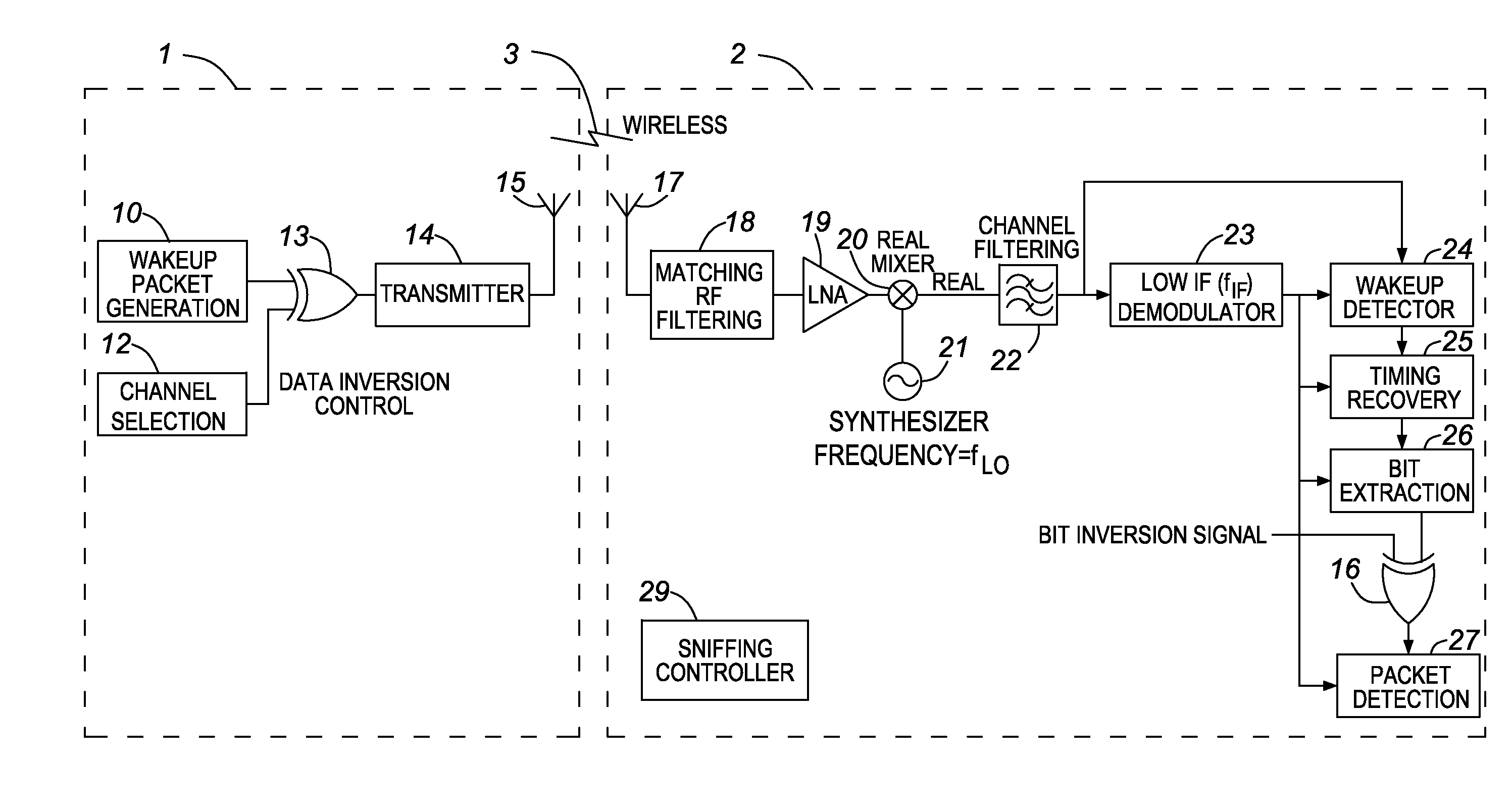
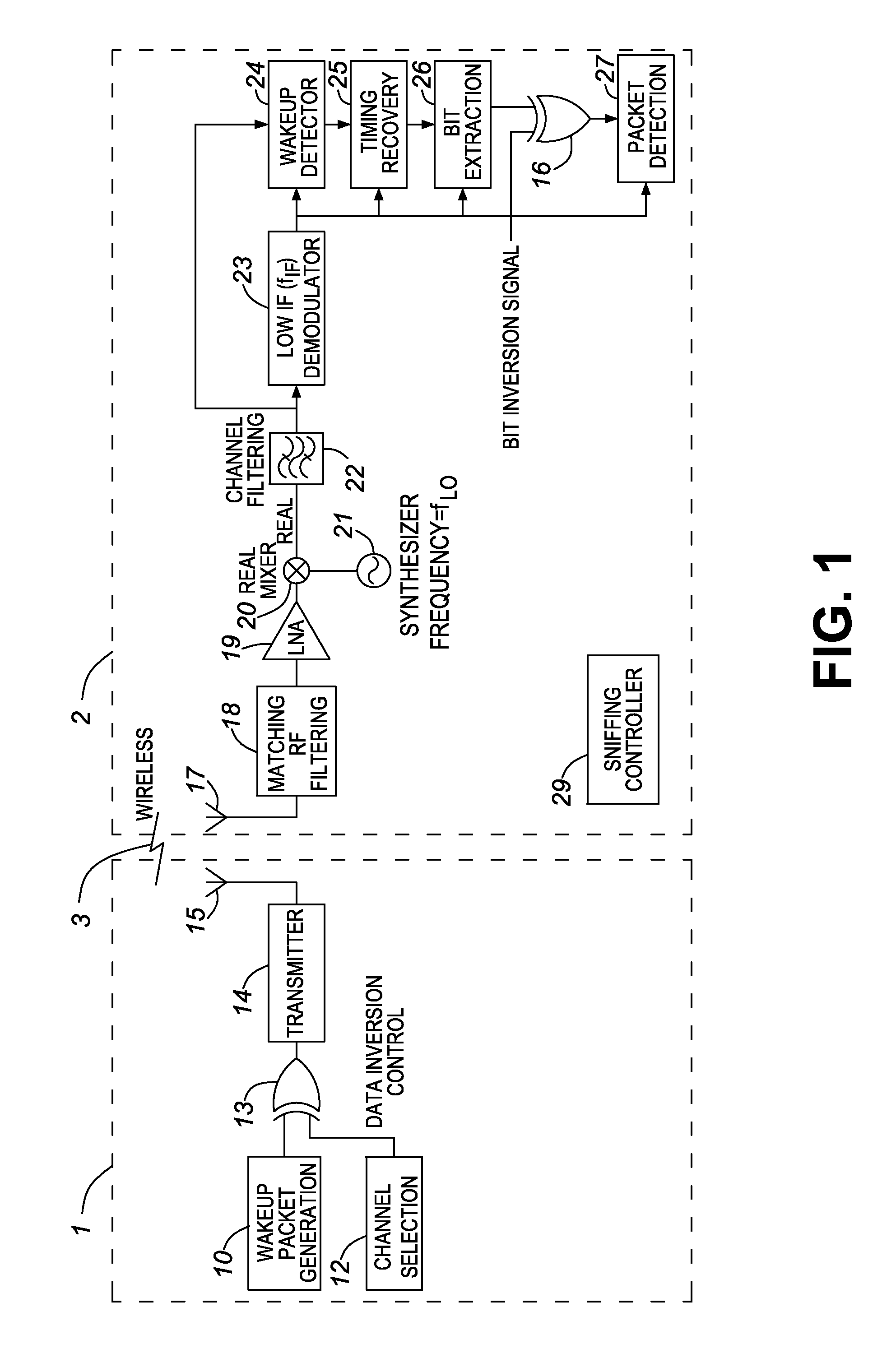
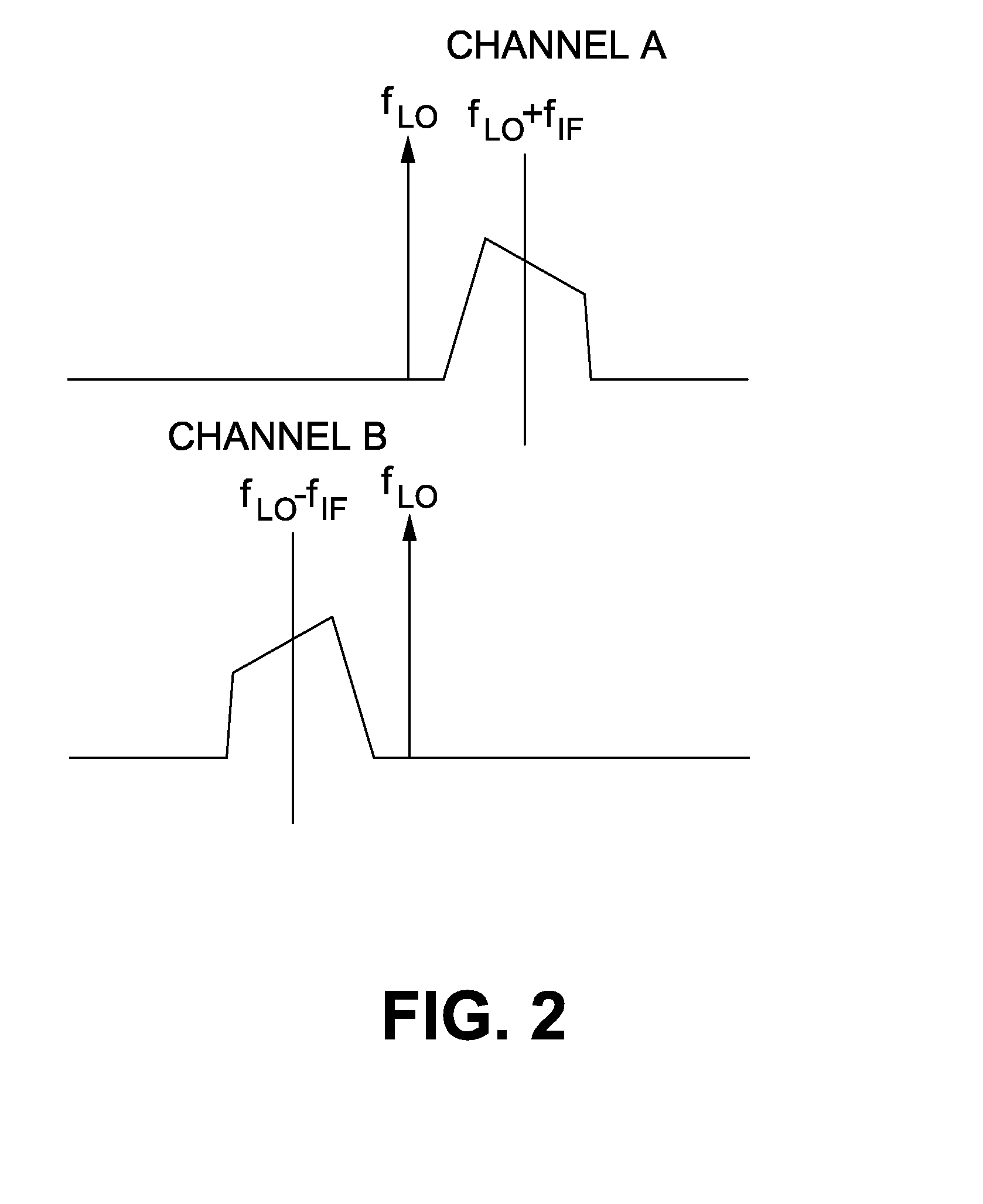
[0037]Embodiments of the invention comprise a low-IF architecture configured with a real mixer and relatively low IF frequency. Unlike conventional super-heterodyne radio architectures, which place great emphasis on removing the image frequency, explicit use is made of both the image channel and its corresponding non-image channel for two-channel sensitivity without additional hardware requirements. Ordinarily, a wanted signal transmitted in the image channel will have a spectrum that is mirrored with respect to the same signal in the normal (non-image) channel. In a conventional receiver, the IF frequency is set at a value that makes the non-image and image channels sufficiently far apart to permit easy removal of the image channel by the RF front end filter. The use of a relatively low IF makes the normal and image channels reasonably close and allows them both to be passed by the RF frontend filter.
[0038]In accordance with one embodiment of the invention, the polarity of the data...
PUM
 Login to View More
 Abstract
Description
Claims
Application Information
 Login to View More