
Laying of conduit at sea using horizontal reels
- Summary
- Abstract
- Description
- Claims
- Application Information
AI Technical Summary
Benefits of technology
Problems solved by technology
Method used
Image

Examples
Embodiment Construction
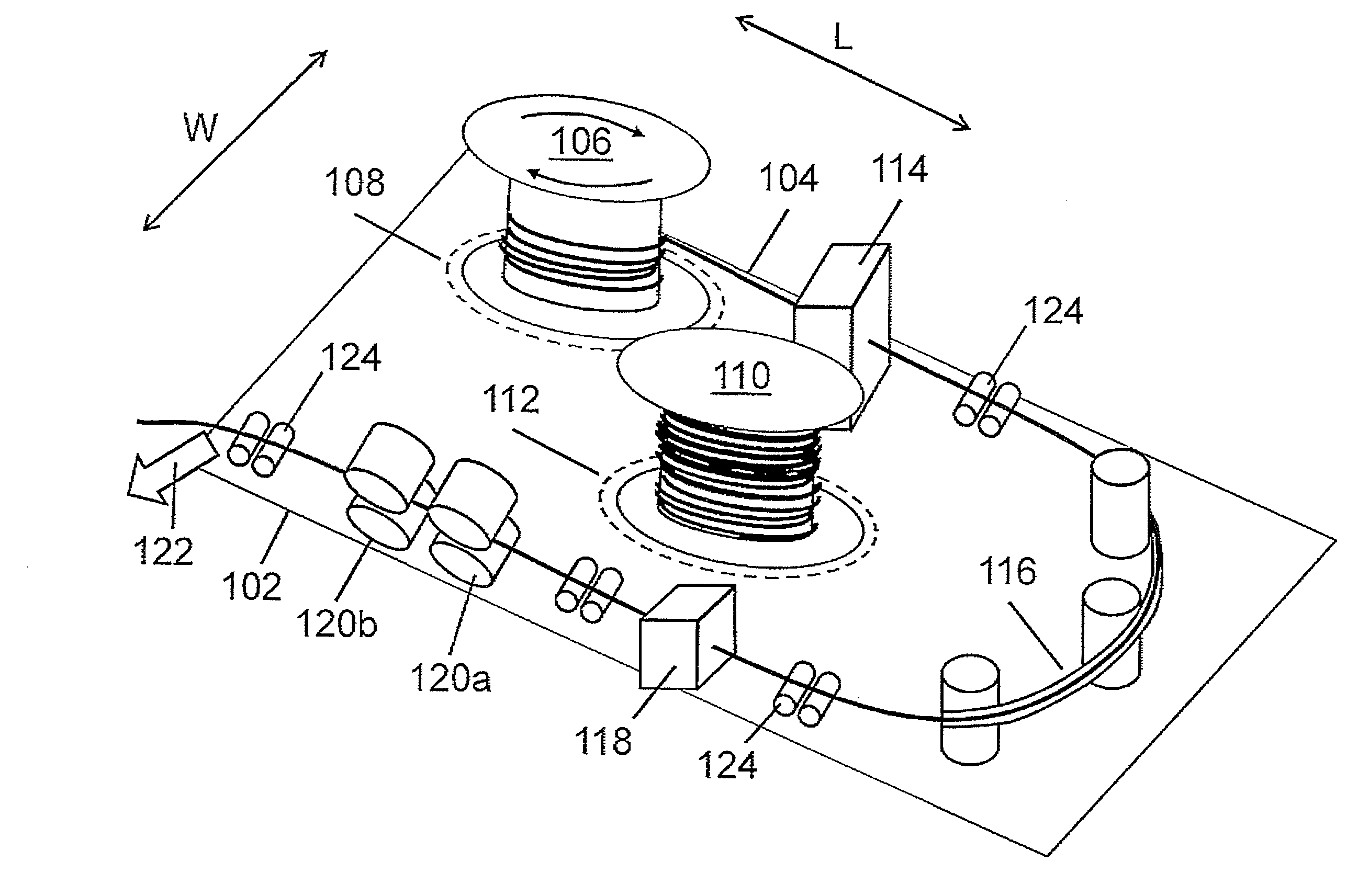
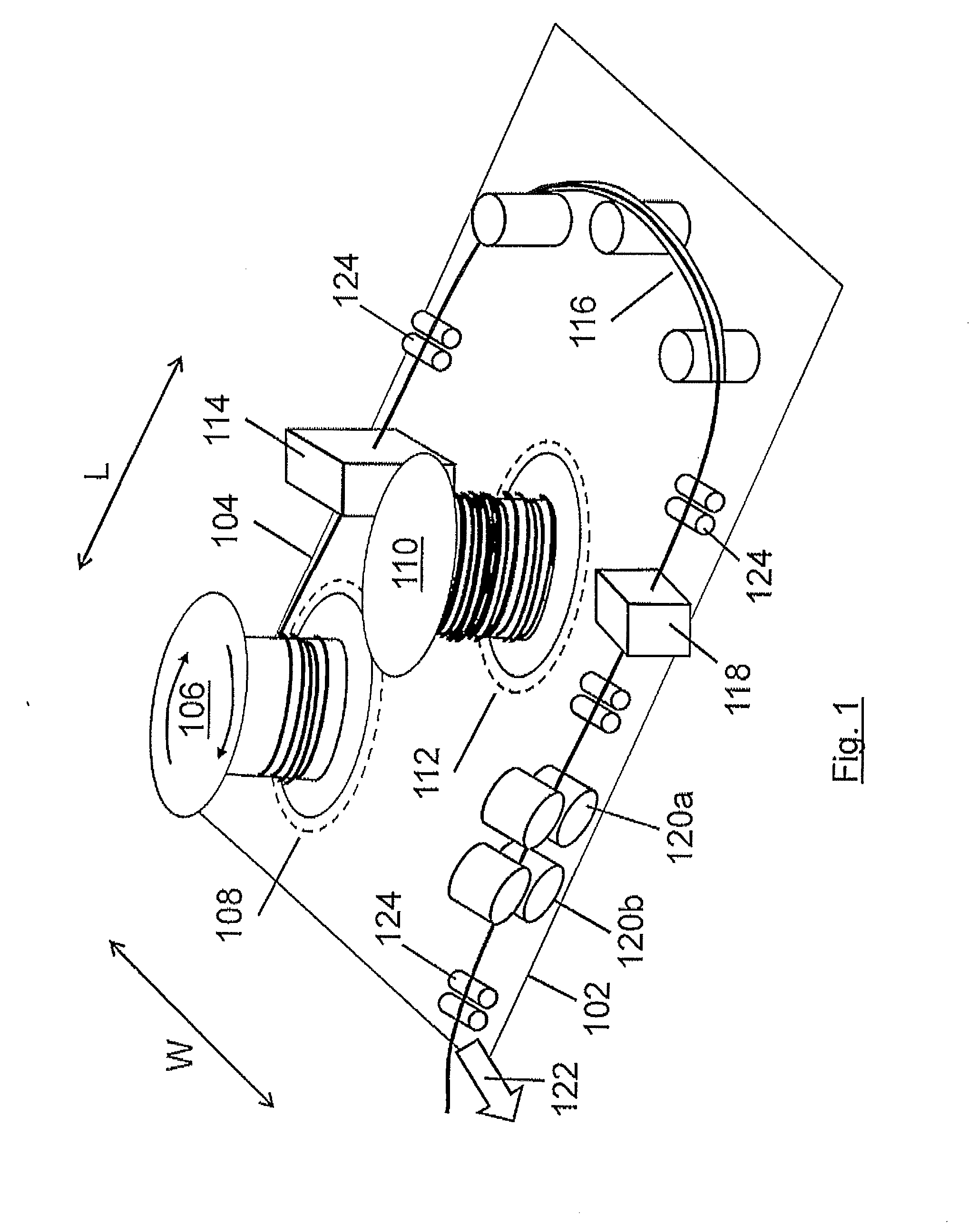
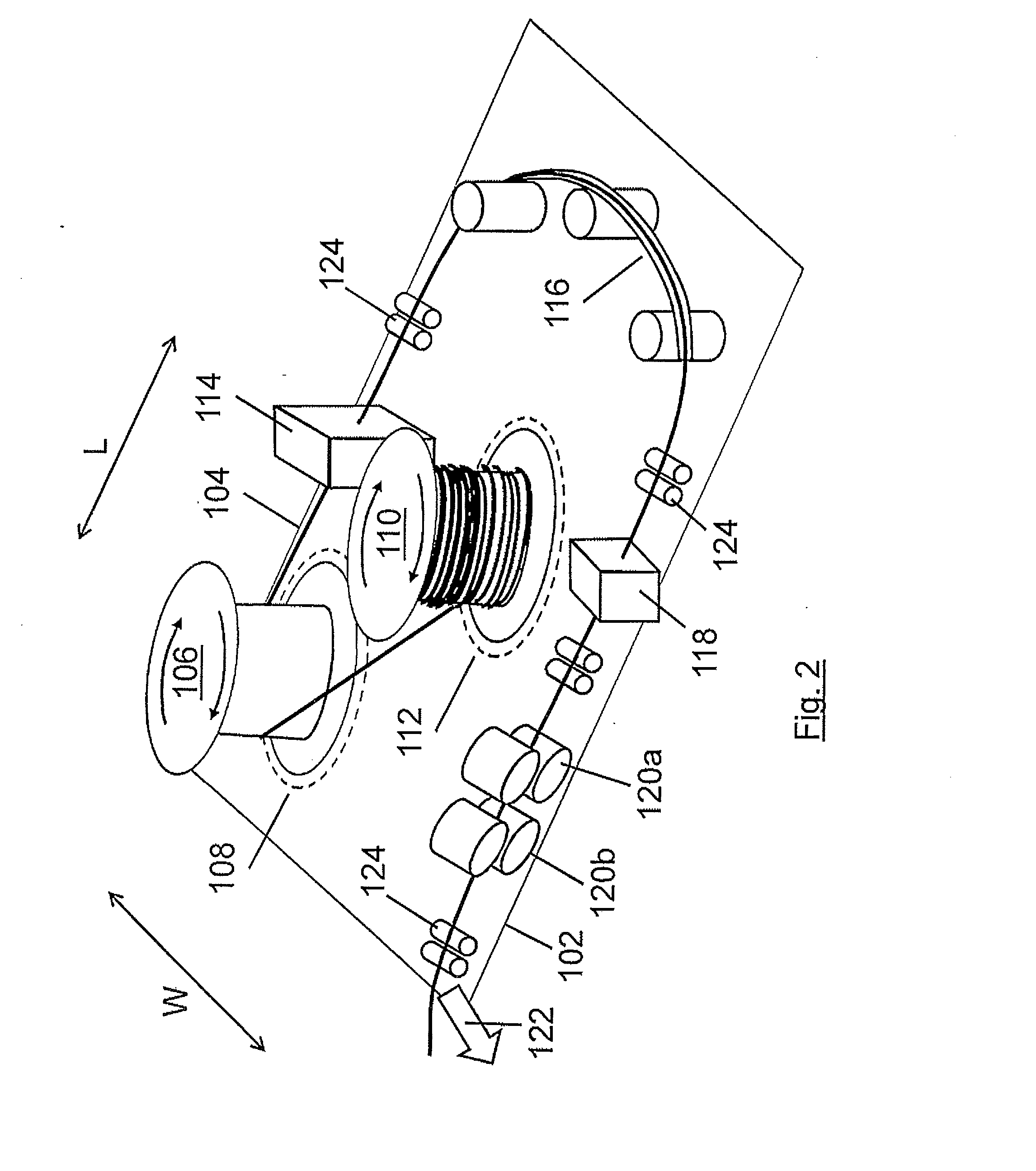
[0031]FIG. 1 shows a vessel (part only of the deck 102 being shown in FIG. 1) for laying rigid pipe 104 according to a first embodiment of the invention. The vessel includes a first horizontal pipe reel 106 at a first reel station 108 and a second horizontal pipe reel 110 at a second reel station 112. Both reels are permanently mounted on the deck 102 of the vessel for rotation about respective vertical axes spaced apart both with respect to the length L of the vessel and the width W of the vessel.
[0032]The use of the vessel to lay rigid pipe from the first reel will now be described. Rigid pipe 104 is paid out from the first reel 106 and passes via a spooling tower 114, and via an arcuate chute 116, to a pipe straightening apparatus 118. The pipe then passes via two sets of pipe tensioners 120a, 120b before exiting the vessel via a stinger ramp (not separately shown in FIG. 1 but illustrated schematically by arrow 122). The pipe is additionally supported by rollers 124 as it passes...
PUM
 Login to View More
 Abstract
Description
Claims
Application Information
 Login to View More